8 hours ago
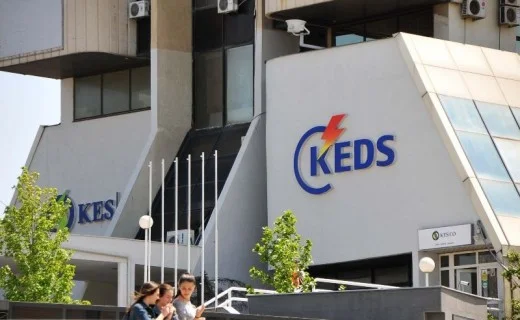
KEDS/ KESCO doesn't raise prices or change tariffs
Periskopi(4 years ago)
(4 years ago)KEDS and KESCO clarify that they do not raise prices, nor are they responsible for the tariff structure. This facility is built after applying for Allowed Maximum Enteres (MAR). In the tariff application, all sides of interest, including us, have the right to submit our proposals. But it's Z. THREE what makes the decisions. [...]
KEDS and KESCO clarify that they do not raise prices, nor are they responsible for the tariff structure. This facility is built after applying for Allowed Maximum Enteres (MAR). In the tariff application, all sides of interest, including us, have the right to submit our proposals. But it's Z. THREE what makes the decisions. So far, 95 percent of our proposals have not been taken into account. So the lifted fee block in 2017 was and remains the exclusive responsibilities of the ZERE. We're not policymakers, but we're only operating companies.
No country has seen him point his finger at the distributive company for the crisis. The distributive company distributed the power available to it. If there is sufficient production and if the import cost is covered, the system is not infected. In Kosovo the opposite occurred: Import costs were not covered for months, while when electricity was needed most, local production was significantly reduced. Neither import nor local production prices are in our hands.
When the costs are not covered, it comes to the crack of electrical links. The accumulated debt to COST and KEK has come just because of the lack of long-term import costs. If this debt were paid to companies, electricity restrictions would begin as early as September.
We've used all the tools and warned since August that import prices were growing significantly and had to be acted. Nobody did anything. We had also applied for extraordinary consideration so that the system would not be infected and consumers would continue to receive adequate services, but nothing was taken. Z THE RHR reasoned: The electricity prices in the bell are speculative and will fall!
Meanwhile, in practice the opposite happened, they grew away. We continued to carry the burden until we ran out of all financial resources and opportunities. Had policymakers acted on time and considered our demands and warnings, we would not have put ourselves into this situation. It would be much easier to face.
We, we've done exactly as much as we had in hand. KED profits and losses/ KESCO is regulated and if exceeded, then it returns to the system next year by 8 percent interest. So everything is a mathematical formula! Otherwise, both companies have closed last year with losses.
Meanwhile, all that has been earned so far has gone to the benefit of Kosovo citizens. We have invested for eight years of our operations about 190m euros in the country's electricity grid, which we found in serious condition. He has already improved significantly. As a result of efficient operations and investments, electricity prices have not changed for many years. At the same time, owners have given out their pockets so far over 60m euros for non-formal losses.
Under these circumstances, KEDS/ KESCO wants all policymakers to do the best possible for the functioning of the system, as adequate decisions and policies benefit Kosovo consumer directly. Under crisis, when each does his work with dedication and responsibility, it is much easier to handle.