9 minutes ago
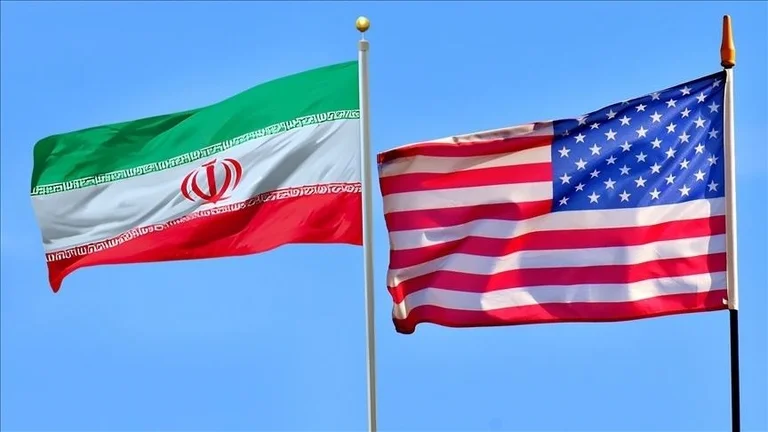
US, Iran sign agreement electronically before official ceremony
Periskopi(13 hours ago)
(13 hours ago)The United States and Iran have electronically signed the Framework Agreement to end the quarterly war and reopen the Hormuz Strait, senior US administration officials said on June 15th.
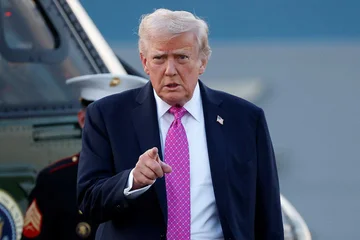
Speaking to reporters, officials said US President Donald Trump, and Vice President JD Vance, virtualally signed the agreement, meanwhile the Iranian chief speaker -- at the same time Tehran's chief negotiator, Mohammad Bacher Qalibaf -- signed it on behalf of the Islamic Republic.
The agreement is expected to be signed officially during a ceremony in Geneva, Switzerland, on 19 June.
The full text of the memorandum is expected to be published within 24-48 hours, officials said, insisting there will be “full transparency”.
The Framework Agreement gives Washington and Tehran 60 days to negotiate a permanent agreement, including other issues like Iran's reserves with highly enriched uranium.
Hormuz Strait
Earlier on June 15th, Washington and Tehran confirmed that the agreement was reached.
The Iranian state news agency Mehr published what it said are details of the 14-point memorandum of understanding, saying it envisions 60 days of negotiations on nuclear issues and the complete removal of sanctions on Tehran.
Trump has stressed that the essence of the comprehensive peace agreement will be ensuring that Iran will never develop nuclear weapons, and that Hormuz Strait will remain open to free ship flow.
The storm, a key artery to global oil and gas supplies, has been virtually closed by Iran since the US and Israel launched attacks on the Islamic Republic on 28 February. Its closure shocked energy markets and the global economy.
Trump has stressed that the essence of the comprehensive peace agreement will be ensuring that Iran will never develop nuclear weapons, and that Hormuz Strait will remain open to free ship flow.
The storm, a key artery to global oil and gas supplies, has been virtually closed by Iran since the US and Israel launched attacks on the Islamic Republic on 28 February. Its closure shocked energy markets and the global economy.
Two senior American officials said they expect sea traffic through the straits to rise significantly over the next two weeks.
If you think that the traffic prior to the conflict was 140 ships a day, I think it would take two weeks to get to this level”, an official said.
The administration has said that about 25 ships are currently passing a day and are expected to spend between 40 and 50 per day by the end of the week. Officials said the strait will be fully opened by 19 June.
Washington insists that the passage through Hormuz should be free of tariffs for 60 days, according to the memorandum, meanwhile, regional talks will determine how to do in long term terms.
But the uncertainty about crossing with or without tariffs has continued.
The Fars news agency, which is close to the Islamic Revolutionary Guard Corps, said that “has been decided that sea traffic across the Persian Gulf is regulated by Iran in co-ordination with Omanin”. This conflicts with Washington's earlier statements.
Esmail Baqaei, spokesman for Iran's Foreign Ministry, said at a news conference June 15th that “over a certain period of time, we will organise safe circulation in the Hormuz Strait, in line with the actions of the other side”.
“We've always said that we don't intend to collect crossing fees, but we will determine and collect the necessary tariffs for the services we will provide, such as navigation services, environmental protection, perhaps shipping and other services that will be provided by Iran and Oman”, he said.
Frozen Assets
The Reuters agency quoted a senior Iranian official as saying that under the terms of the deal, the US will release $25 billion in frozen Iranian assets, while Tehran will agree not to produce or secure nuclear weapons.
American officials flatly denied that any amount of money had been transferred, despite speculation that billions of Iranian assets had already been unblocked.
The response to that is zero.”, an official said when asked whether any part of Iranian frozen assets had been unblocked.
US officials said the ease of sanctions would occur only in phases and would be linked to “verifiable progress”, especially in terms of Iran's nuclear activities and its conduct in the region.
Washington said its first priority is to ensure that Iran does not rebuild what officials described as a enrichment programme “systematically destroyed”.
The more he behaves like a normal state on the international stage, the more we will be willing to open his economy”, an American official said.
US officials stressed that the withdrawal of Israeli troops from Lebanon was not a condition of agreement, but presented the deal with Iran as part of a broader effort to reduce tensions in the region.
They said the “framework agreement is not a unilateral ceasefire”, warning that Israel will preserve the right to retaliate if the attacks backed by Hezbollah, supported by Iran, continue.
Hezbollah is a militant group and political party that controls most of southern Lebanon. It is considered a terrorist organisation by the United States, while the European Union has only put its armed arm on the blacklist.
However, Pakistan's Prime Minister, Shebas Sharif, said on June 15th that Tehran and Washington had agreed to an immediate and permanent “suspension of military operations “on all fronts, including Lebanon”.
The US administration also found that direct talks between Israel and Lebanon are under way, naming them historical.
Officials said the goal is to create a new <x0).
West Welcomes Agreement
Earlier, Western leaders welcomed the US-Iran agreement and said the Hormuz Strait should be open for duty-free navigation and that Tehran should never own nuclear weapons.
French President Emmanuel Macron, who will welcome the G7 summit on Monday, said the agreement “should allow urgent and unconditional reopening of the Hormuz Strait, which the international mission established with the United Kingdom is ready to support”.
“Managers are available and ready to engage. Returning maritime traffic, without restrictions or tariffs, is essential to regional stability and the global economy”, he added.
British Prime Minister Keir Starmer said that “we are clear that free duty-free navigation must now return to the Hormuz Strait”, adding that “Iran should never have nuclear weapons”.
UN Secretary General Antonio Guterres welcomed the agreement as a “vital step” towards the Middle East resolution of war.
The American Democrats said they welcome diplomatic efforts, but that they are awaiting concrete details of the agreement before deciding whether to support it or not.
Representative Gregory W. Meeks, the highest Democrat on the House of Representatives Foreign Affairs Committee, said in a statement that “the terms of the agreement, not press release, will determine whether it serves American interests”.
Any final agreement must be stable, applicable, transparent and subject to rigorous supervision by Congress. The American people deserve more than vague announcements or political propaganda”, he said.
Republican Senator Lindsey Graham, a vocal supporter of Trump and fierce critic of the regime in Tehran, said it was “who rejoiced” when he heard of the Framework Agreement, but that he was waiting for full details.
I am happy to hear that the memorandum of understanding with Iran to allow the opening of the Hormuz Strait has been reached. He will closely follow the subsequent negotiations on Iran's nuclear programme and other questions”, he wrote on X.
“I am somewhat concerned that the way Iran views the agreement seems different from what the American team is claiming to be”, he added. /Radio Free Europe