an hour ago
Gunpowder: This is the history of the Russian conflicts.
Periskopi(4 years ago)
(4 years ago)Tensions between Russia and Ukraine have a prehistoric history, reaching as far as the Middle Ages. Both countries have common roots in the Slavic state “Emperor Kiev”, to Russia's President Valdimir Putin today prefers to refer to “to a people”. Indeed, the streets of two centuries have been divided, two [...]
Tensions between Russia and Ukraine have a prehistoric history, reaching as far as the Middle Ages.
Both countries have common roots in the Slavic state “Emperor Kiev”, to Russia's President Valdimir Putin today prefers to refer to “to a people”.
In fact, the streets of both nations for centuries have been divided, two languages were created, and two cultures closely familiar yet different.
As Russia politically developed into the empire, Ukraine failed to build its own state.
In the 17th century, large territories in modern - day Ukraine were part of the Russian Empire.
After its break-up in 1917 Ukraine for a short time became independent until Soviet Russia recaptured it militarily.
In December 1991, Ukraine, along with Russia and Belarus, was part of the three republics as sisters, which sealed the breakup of the Soviet Union.
Moscow wanted to preserve its influence and saw the founding of the Community of Independent States (GUS) as an instrument for its purpose.
The Kremlin also believed that the neighboring country through convenient gas supplies could keep this community connected with Russia. But it was different.
As Russia and Belarus formed a close alliance, Ukraine was increasingly oriented by the West.
This irritated the Kremlin, but until the 1990s there was no conflict.
Moscow seemed calm because the West did not want to integrate Ukraine. Russia itself had weakened economically and preoccupied with the war in Chechnya.
In 1997 with the signing of the so-called “big accordion” Russia recognised the borders of Ukraine, including the predominantly inhabited peninsula by ethnic Russians.
First Tests in Post-Soviet Friendship
Vice President Putin created the first major diplomatic crisis between Moscow and Kiev. In autumn 2003 Russia suddenly began to build a dam in the Strait of Kerchi, heading towards Ukrainian island of Kosa Tusla.
Kiev saw this as an attempt to redefine the border. The conflict escalated and was resolved only after a personal meeting between the two presidents. Construction was banned, but the established friendship between the two countries suffered a break.
In Presidential Elections in Ukraine in 2004 Russia massively supported pro-rus candidate Viktor Janukovic. But “orange revolution” prevented the manipulated victory, the election won by pro-Western politician Viktor Yushenko.
During his mandate Russia twice suspended gas supplies to Ukraine in 2006 and 2009. EU transit supplies were cut off.
In 2008, former US President George Bush tried to bring Ukraine and Gjergji to NATO by accepting them into an official preparation programme. Putin protested. Moscow then made it clear that Ukraine's independence was not fully accepted. Germany and France thwarted Bush's initiative. At the NATO summit in Bucharest, Ukraine and Georgia were given a membership perspective, but without setting a date.
Since it didn't work quickly with NATO, Ukraine tried to push the connection with the West through the EU association agreement. In the summer of 2013, a few months before the signing, Moscow exerted massive economic pressure on Kiev and prevented Ukrainian imports. In this context the government of former President Janukovic, who had won the elections in 2010, suspended the negotiated signing agreement. Janukovic triggered this protest, which in February 2014 led to his escape to Russia.
Returning Crime Alex
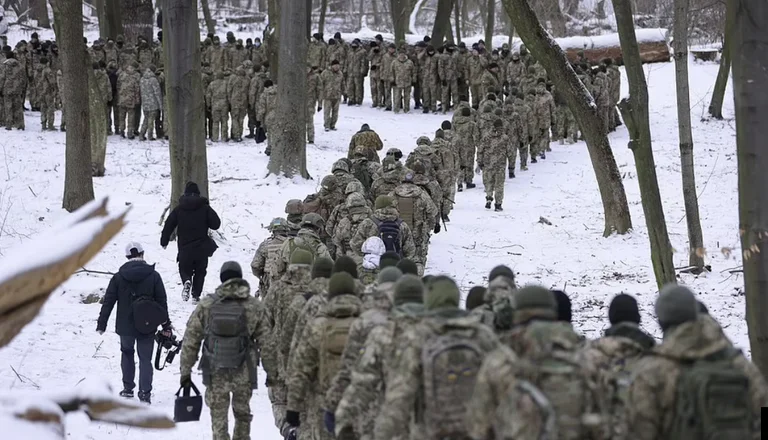
The Kremlin used power vacuum in Kiev to annex in March 2014 Crime. It was a turning point, an undeclared war. At the same time, Russian paramilitary forces in the Donbas coal mining region began mobilizing for uprisings.
The People's Republics” were declared in Donjeck and Luhansk with the Russians at the helm. The government in Kiev waited until after the presidential elections in May 2014 before launching a major military offensive, which it called “mobiliation anti-terror”.
In June 2014, Ukraine's newly elected president Petro Porosenko and Putin met for the first time in German and French mediation at the ceremony on the occasion of the 70th anniversary of D-Days, the day of the Allied forces landing that ended World War II in Normandy. This led to the so - called Norman form.
The Ukrainian army could then deter separatists, but in late August Russia intervened militarily in Kiev's view. Moscow rejects this. Ukrainian units in Ilowesk, a town east of Donjeck, suffered losses. It was a turning point. The war on the wide front ended in September with the signing of the truce in Minsk.
Then came the interlogue war, which continues today. Early in 2015, separatists again appeared in the offensive, and according to Kiev, the Russian army took action by not using its symbols. And indeed, the Moscow denied it. Ukrainian Armed Forces suffered a second defeat, this time in the important strategic city of Debalze, where they were forced to leave immediately. At the time with Western mediation in the Minsk-2 round, an agreement was agreed on, which today still serves as the basis of peace efforts but has not been realised.
Finally in autumn 2019 there was a ray of ambush. Then troops were managed, respectively, to withdraw from certain positions from the line of division. But since the Normandy summit in Paris in December 2019 there has been no meeting. Putin does not want to meet Ukrainian President Volodymyr Selensky for now, because from Russia's perspective he is not implementing Minsk's agreements. Since December 2021 Russia's president, Putin, has been urging the US to never enter NATO and receive military aid. NATO has rejected that requirement. (Failedche Welle)