18 minutes ago
Once again, the government has become clear to Kurt. UN: Kosovo, Serbia have dialogue priority
Periskopi(4 years ago)
(4 years ago)The United States calls on Kosovo and Serbia to engage in dialogue mediated by the European Union in “the breath of the necessary compromise” to reach an agreement to normalise reports. “We continue to call on Kosovo and Serbia to have the priorities dialogue mediated by the European Union work on [...]
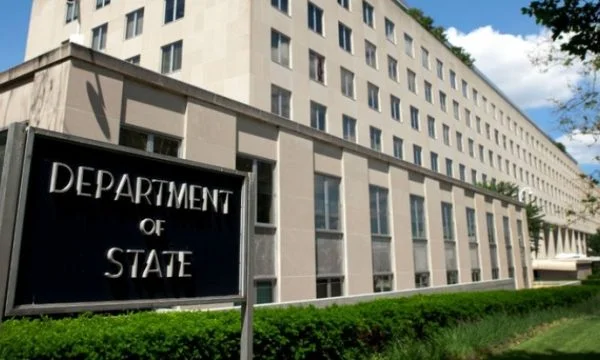
“We continue to call on Kosovo and Serbia to have the priorities mediated dialogue by the European Union, work on minimising tensions and pursue the negotiations with flexibility and in the spirit of compromise needed to reach a comprehensive normalisation agreement that will enable their respective European” path, an American State Department spokesman told Radio Free Europe.
This response was given by the UN, answering REL questions about a recently published report by the Johns Hopkins University Foreign Policy Institute (SAIS) and the Wilson Centre, which recommended to the American administration the establishment of sanctions for Kosovo and Albanian politicians who, by their statements, promote the union of both states.
We appreciate the academic and organisation's view of these issues. The United States is committed to a sovereign, independent, multi-ethnic Kosovo, as envisioned in its Constitution”, the spokesman said. The UN, not commenting on this report.
One of the contributors to the report, titled “from the convergence crisis strategy to address its instability and source in the Balkans”, Lulzim Peci, told Radio Free Europe that he sees it as a real opportunity for the US to sanction politicians promoting Kosovo's “reunification” and Albania.
“in the near future, if the main political actors do not change their political positions, I think this option is very real because, practically, such rhetoric prevents the stabilisation of the Balkans, but also the achievement of the solution between Kosovo and Serbia”, said Peci.
“The United States has no practice sanctioning opinions. In such cases the avoidance of visits or political isolation” is practiced, Maliqi told Radio Free Europe.
Recently, the United States has imposed sanctions on politicians in the Western Balkans over allegations of their involvement in corruption.
In May 2021, former Albanian President Sali Berisha was declared persona non gratay (a person unwanted) because of, as Washington said, involvement in widespread corruption.
Meanwhile, on January 5, 2022, the US expanded sanctions on Serbian Bosnia and Herzegovina Presidency member Milorad Dodik for involvement in corruption and minimising the stability of Bosnia and the region.
Deputy Secretary for European and Eurasian Affairs Gabriel Escobar has warned that the US will sanction other politicians in the region simultaneously.
The UN said the US is committed to the success of the entire Western Balkans region and the integration of these states into the EU, including Kosovo “as an independent, sovereign and democratic state”.
“The United States is deeply devoted to all levels for the success of the region and the Deputy Secretary for European and Eurasian Affairs, simultaneously the special envoy for the Western Balkans [Gabriel Escobar], along with US ambassadors in Pristina and Belgrade, remains the main US co-ordinators on these issues”, said an American State Department spokesman.