 7 hours ago
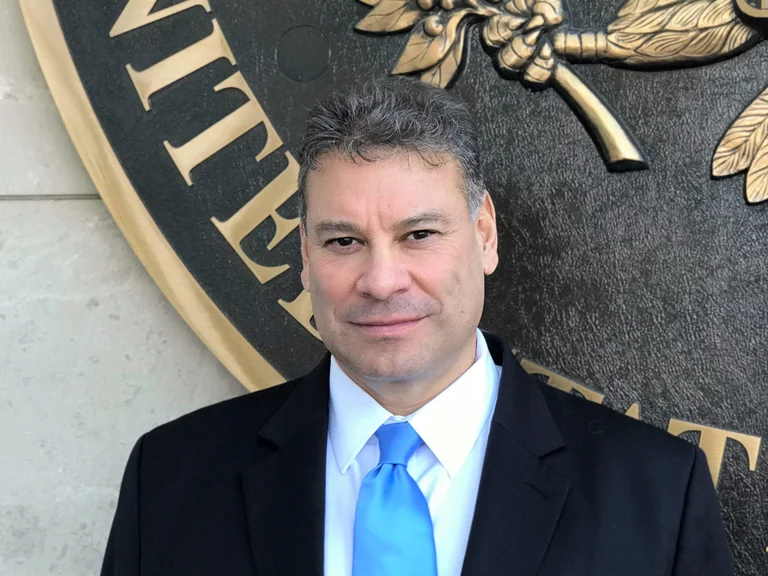
Gabriel Escobar: Association does not violate sovereignty
Periskopi(4 years ago)
(4 years ago)Current frozen state, status quo, in Dialog is not working. The ongoing Exodus of Kosovo youth is continuing. We expect both Kosovo and Serbia to respect previous pledges for each other. The Kosovo government has pledged to have an Association of Serb majority municipalities (AKS). Urgently [...]
These are the messages that Gabriel Escobar, the envoy of President Joe Biden for the Western Balkans, conveyed in the exclusive interview for Online Reporter.net, the first given to a Kosovo media medium.
According to him, the Association of Serb majority municipalities does not violate Kosovo's sovereignty. Deputy Assistant- US Secretary of State for Europe and Eurasia says any final agreement that will be acceptable to the people of Kosovo and Serbia's will be acceptable to the US as well.
Escobar also speaks of U.S. government reports Kurti. He is still unaware that Kosovo Prime Minister Albin Kurti could travel to the US for an official visit.
He firmly urges the Kosovo government to implement the Constitutional Court's 2016 decision on the lands of the Serbian Church at the Decani Monastery. It requires Kosovo to adhere to the 4 September 2020 pledges in Washington.
A few days before coming to Pristina, where he will stay for three days in a row, Gabriel Escobar, exclusively talking about the Online Reporter Journal.net, stresses that the United States will continue to use all available tools, including sanctions, to punish those he calls bad and destabilising actors and organisations and businesses supporting them.
He has also talked about the situation in countries in the region. He has said the US will not co-operate with former Albanian Prime Minister Sali Berisha if he comes to the helm of the DP. He has also talked about the conflict in Ukraine and the situation in Bosnia and Herzegovina.
Read full sub-help interview- US Secretary of State for Europe and Eurasia:
Is your official visit to Pristina confirmed on January 31st and February 1st? If so, what will be the agenda of this visit? Who are you meeting, and what are the main topics of discussion?
Gabriel Escobar: I will travel to Brussels, Pristina and Belgrade from January 30th to February 4th and plan to stay in Pristina from January 31st to February 2nd. This will be the first trip to Kosovo in my new role as Special Representative for the Western Balkans, and I look forward to it. I will travel together with EU Special Representative Miroslav Lajcak. In Pristina, I plan to meet with Kosovo's political leaders for advancing EU-enlightened dialogue. The US's goal is a comprehensive agreement that normalises Serbia-Kosovo relations, focused on mutual recognition.
After Pristina, will you continue your visit to Belgrade or not? Will the dialogue be the focus of your meetings? What exactly would you ask officials in Pristina? What about Belgrade?
Escobar: On February 2nd, I will travel to Belgrade and leaders in the two capitals will be delivered the same message: the best way the leaders of the two countries can fulfil promises before their citizens is by giving priority to EU facilitated dialogue. This present frozen state, the status quo, is not functioning, as we see from the ongoing ecstasy of young people who believe their future is elsewhere. I hope that leaders in Serbia and Kosovo will understand the importance of moving forward, not backward, through the EU facilitated dialogue towards the sweeping normalisation of their relations, which remains essential for their relevant travel towards the EU.
In terms of dialogue, there are currently no high-level meetings between the parties. How do you evaluate the approach of the parties in this process?
Kosovo and Serbia culturally are Europeans, in historic terms are Europeans, and their economies are related to Europe. Their citizens deserve to enjoy European values of rule of law, freedom, and respect of human rights.
We continue to call on both Kosovo and Serbia to fully implement the agreements and pledges made in Brussels. This requires flexibility, creativity and in some cases compromise. We expect and hope that chief negotiators and leaders in Belgrade and Pristina will engage with each other in sincerity, openness and spirit of compromise.
Last year, in an interview with the country's press, former negotiator in Kosovo-Serbia dialogue Robert Cooper said „The U.S. during my time was not officially on the negotiating table, but it was there. I remember one occasion when the situation between the parties was tense, the meeting was interrupted and they did not want to continue the dialogue. But after a phone call from the White House, I don't know what happened, but the parties turned to table”. Will this role of America be restored to the current process of EU-brokered dialogue?
Dialogue is developing between the two sides: Kosovo and Serbia. The EU is the logical actor for facilitating dialogue since the future success of Kosovo and Serbia is directly linked to Brussels and their future EU membership. The United States, however, remains strongly supportive and influential of this relaxed dialogue by the EU, and we support efforts to reach a comprehensive normalisation agreement, which President Biden has said would have to focus on mutual recognition”.
Is there any alternative to establishing the Association of Serb-run municipalities? After receiving the second mandate, Prime Minister Kurti has several times stated that „would not have ethnic association”, implying rejection of the agreement reached in Brussels, first in 2013 and then 2015.
We expect both Kosovo and Serbia to respect previous pledges. The Kosovo government has pledged to have an Association of Serb majority municipalities (AKS). The United States does not have and will not dictate what this Association should do, nor what its competencies should be; this is the sovereign decision the Kosovo government must make. There are many models operating, including numerous models that would allow better local co-ordination without another level of government or executive power. We encourage the Kosovo government to examine these models carefully.
The US has stressed that the final agreement requires compromise on both sides. Prime Minister Kurti has said Kosovo has made enough compromises with the Ahtisaari Pact. How do you think agreement can be reached when parties are rigidly positioned in their attitudes?
Things may seem impossible until they are no longer impossible. It's all about political will.
Let me be clear ? No one is asking Kosovo to put “compromis” its sovereignty or territorial integrity; those issues are clearly set. Nevertheless, it is important to conclude these negotiations with comprehensive agreements on normalisation [of relations] focused on mutual recognition. Young people in the Western Balkan region are leaving their countries to find jobs and opportunities elsewhere and are doing so simply because they do not have enough opportunities in their country. The time has come for these young people to be given the opportunity to use their energy and intelligence to build up the future and to advance in their countries. We encourage the leaders of Serbia and Kosovo to find proactive solutions, which put citizens and their own first place and to cultivate European integration and economic prosperity with this in mind.
And with reference to time, do you believe that this process, which began ten years ago, will be concluded with final agreements during 2022?
As long as there is no deadline for success, we encourage Kosovo and Serbian leaders to engage urgently, creatively and transparently in EU facilitated dialogue. The status quo does not help the people of Kosovo or Serbia. It hinders the future economic progress of the two countries, hinders regional integration, and makes it extremely challenging to see any other road ahead where the two countries are fully integrated into the EU and other Euro-Atlantic institutions.
During the Trump administration, the US had an open stance that would not oppose an agreement if the parties agreed to an agreement that could include exchange of territory. What is the position of President Beden's administration if this issue turns out to be an opportunity for final agreement?
Any final agreement and its elements should be acceptable to the people of Kosovo and to the people of Serbia. The United States never has and will never impose conditions and parameters on both Kosovo and Serbia. Both Kosovo and Serbia are sovereign states.
And while we are in northern Kosovo, the government recently refused to hold the referendum required by Serbia in Kosovo. The public stance of the ruling party, Vetevendosje, is that the same will be done in the Serbian elections, which will be held in April. According to the US position, should Kosovo stop Serbian citizens from voting as they did in the past in the process organised by the OSCE?
Kosovo is a sovereign state. As such, it has the right to establish what conditions other countries' elections can be held on its territory. However, we believe it is important for Kosovo residents rightly vote in the Serbian elections, to do so. We have supported past OSCE companies, not only to carry ballot papers, but also directly to facilitate the voting process and, by doing so, to ensure their adequate maintenance acceptable to the Kosovo government. The United States has not considered and does not regard this as a threat to the sovereignty of Kosovo, which, if I may add, is unprecedented. We welcome the opportunity to discuss with the Kosovo government the identification of solutions and arrangements, which are acceptable to him, providing the opportunity to vote for those who have the right to vote.
We have seen the US impose sanctions on politicians, businessmen and media in countries in the region. Can we expect that even in Kosovo there will be sanctions against politicians, businessmen and the media?
As a standard practice, we do not foresee sanction actions. Even so, the United States of America does not sanction individuals or entities for their political views. Furthermore, whether someone is a politician, a businessman, or a journalist, it does not matter whether they are sanctioned or not. Individuals are sanctioned for criminal activity, not because of their profession. Recent sanctions have been imposed on actors, who, with their corrupt activities, destabilise local communities, eroded confidence in local governments and reduced regional prosperity.
Corruption is a plague not only in the Balkans, but throughout the world. As President Beden has said: „Corruption is like cancer. It is like cancer that erodes citizens' trust in democracy, weakens the instinct for innovation and creativity; reduces the already small national budget, hindering important national investments. It destroys the talent of generations. It scares investment and jobs”. That is why we are determined to promote accountability and fighting impunity for those who are involved in major corruption in the Western Balkans and around the world. The United States will continue to use all available tools, including sanctions, to punish bad and destabilising actors and organisations and businesses supporting them.
Prime Minister Kurti has said he will visit the United States, but this visit has not yet been realised. Is such a visit being prepared this year?
Kosovo remains a reliable partner and welcomes the strengthening of our bilateral ties, but for now I do not have any more specific information about future potential visits.
While in opposition, Albin Kurti has made a declaration that is famous in Kosovo. I'm quoting: „I think Albanians don't like Americans or America, but I think they have some anxiety that America will one day leave”. The possibility of attracting American troops from Kosovo has been rumoured several times. Is there any possibility that the U.S. will in a moment surrender, withdraw from Kosovo if the country's leadership is not willing to take courage in the agreement, which will contribute to the conclusion of problems in the Western Balkans?
The United States of America remains committed to Kosovo's sovereignty and territorial integrity and currently has no plans for withdrawing troops from the Kosovo Force (KFOR). Finally, we see the comprehensive agreement on normalisation focused on mutual recognition and eventual EU membership as the most efficient long-term means to ensure regional security and prosperity.
The same prime minister had said the September 4th agreement did not apply to him and the government he leads. Do those vows still apply to America?
It is important that both Kosovo and Serbia respect previous agreements and pledges. This includes implementing all previous Brussels agreements to further EU-extensive dialogue. Both Kosovo and Serbia have agreed with Washington's pledges, and when implemented, they can provide long-term economic benefits to citizens of both countries.
The State Department report and the Progress Report estimate that Kosovo has high levels of corruption and organised crime. How do you assess the work of government Kurti for fighting crime and corruption?
Fighting corruption is the main priority of the Biden administration. I know that it is also the top priority of the U.S. ambassador, Havenier and his team here in Pristina and is the priority they share with the Kurti government. The United States will continue to work with the Kosovo government, civil society partners, independent media and citizens to support efforts to fight organised crime, eradicate corruption and strengthen independent institutions of rule of law.
In the letter of Secretary of State Blinken, Prime Minister Kurti is required that Kosovo should implement court decisions, especially those dealing with minority rights. As we can see, it is a Constitutional Court ruling for the benefit of the Decani Monastery of 2016, with which the 24 hectares of land belong to the monastery. Do you expect Kosovo to meet this request of the White House?
Our attitude has been clear and persistent: This case has to do with rule of law, not ethnicity, politics, or religion. We continue to call on the government to implement the Constitutional Court's 2016 decision and register the land. Kurti government has been elected on the basis of the platform focused on strengthening rule of law. Respecting judicial decisions is not a matter you can choose and certainly not a matter of negotiations, policymaking or deals.
Late last year, the situation in Bosnia and Herzegovina was deemed politically charged, but there were also warnings of its escalation in armed conflict, as Republika Srpska leaders announced the creation of an army that would lead to the violation of the Dayton Agreement. How does the US administration see the solution to the problem in Bosnia and Herzegovina?
For 25 years, Dayton has maintained peace in Bosnia and Herzegovina and the US remains fully committed to Bosnia and Herzegovina's sovereignty and territorial integrity. The United States will continue to push for diplomatic solutions to the current political crisis and the return of Bosnian Serb parties to state-level institutions. The fact is that corruption and current events in Bosnia and Herzegovina are damaging all constitutional peoples and preventing the fuller and more prosperous economy in the country.
Instead of spending time dealing with corrupt officials, I would rather see the United States spend our energy on raising awareness of Bosnia and Herzegovina's enormous economic talent and potential. I hope the leaders of Bosnia and Herzegovina agree that focusing on the needs of their people is more important than marking political points or enriching and personal gain.
Inevitably, we are interested in asking about the latest situation created in Ukraine and its eventual connection to the situation in the Western Balkans. Is there any danger that a conflict there will interfere with unresolved problems in our region?
We've constantly talked about the two ways Russia can choose: dialogue and diplomacy or escalation and massive consequences. Over the past few weeks, you have seen that we have made real and sincere efforts to reach a diplomatic solution. We have made it clear that this road offers lasting solutions to the security concerns of the United States, our allies and partners, as well as of Russia.
We have made it clear that any dialogue should address our concerns about Russia's actions and be kept in full co-ordination with our NATO allies and European partners. All countries have the right to decide for themselves about their future and their foreign policy without outside interference.
The Beden administration's decision to sanction former Democratic Party leader Sali Berisha has pushed this party into a deep crisis. Berisha is claiming the elimination of the current chairman, Lulzim Basha, and his return to the party's helm. What will be the American position if Albanian Democrats decide to follow that path?
President Biden made it clear. Secretary Blinken made it clear. The United States will hold all those people accountable for engagement in major acts of corruption or in an effort to undermine democracy around the world and specifically in the Western Balkans. It is not normal and it is not acceptable that a person, sanctioned for major acts of corruption, is the face of any party. And in this respect, we have made it clear that if the Democratic Party or any other party is guided or represented by any person, sanctioned by the Secretary of State for major acts of corruption, then you cannot expect normal relations.











