6 minutes ago
Ben-Meir: Allowing visa liberalisation could advance Kosovo's EU integration

Periskopi(4 years ago)
(4 years ago)Alon Ben-Meir, professor of the Centre for Global Affairs at the University of New York and senior member of the World Policy Institute, at the same time connoisseur of Western Balkan issues, has provided an alternative to eliminating the EU countries' fobi to migrants in Kosovo's case against visa liberalisation. Ben-Meir has proposed [...]
Ben-Meir has proposed by EU countries that Kosovars be allowed visits for 3 months, while those who wish to stay longer undergo visa application procedures.
“Allowing visa liberalisation for Kosovars can advance Kosovo's EU integration. Concerns that Kosovars will stay in EU countries and will not return to Kosovo can be eliminated by limiting their stay for no more than 3 months, while any Kosovar who wants to stay longer must apply for visa extension. Thus Kosovo will achieve one of its major goals without creating any concern for EU member states for Kosovars to enter and not return to Kosovo”, he has declared for the news.net.
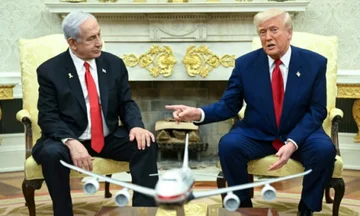
He, in addition, has requested the active involvement of Germany and the US in the Kosovo-Serbia dialogue, while criticising the agreement issued by the Trump Administration, namely the Washington Agreement.
Kosovo managed to sign the historic agreement at the Washington Oval Office on 14 September last year, provided the normalisation of economic relations with Serbia, reached in the Trump administration and supported by the Biden administration. But this agreement has been accepted with a skeptical approach from the current power in Kosovo, but also by the country's president, Vjosa Osmani, calling it a “constitutional breach” one of its points, namely, the mortorium issue. What do you think, should the country implement such an agreement?
Ben-Meir: This so-called “prehistoric agreement”, in my opinion, is not worth precisely because of the end point of the deal saying as follows, “Kosova [Pristina] will accept one-year rhetoric, not lobbiing for membership in the International Organisation. Serbia [Belgrade] will comply with the one-year non-recognition provision, and will refrain from making official demands on any nation or international organisation not to recognise Kosovo [Pristina] as an independent state. The deal goes into effect immediately”. Moreover, it should be clear so far that this agreement was self - satisfying, since Trump wanted to design himself as a peacemaker, which is groundless. President Osmani was right when she declared that this agreement is contrary to Kosovo's constitution and former Kosovo Prime Minister Hoti was primarily wrong with signing this agreement.
In terms of dialogue, where do you think Kosovo and Serbia are left behind? Are nationalist statements what are mired in the process of dialogue between the two sides?
Ben-Meir: I believe that any forms of dialogue should set the ultimate goal and that the ultimate goal is not promoting Kosovo's independence, then all these dialogues or public statements would have no meaning. I claim that if the Biden administration wants to further advance Kosovo's sovereignty, it should insist that any normalisation of relations should lead to this goal, regardless of any public declaration to its contrary.
US employee at the US Embassy in Kosovo, Nicholas Giacobbe, has said that a comprehensive agreement between Kosovo and Serbia should be reached at the end of the current Kosovo government's mandate. Do you think such a statement can be an ultimatum from the US for the two countries in order to find common ground?
Ben-Meir: US employee at the Embassy in Kosovo, Nicholas Giacobbe, is mistaken when he recommends that comprehensive agreements between Kosovo and Serbia should be reached at the end of the current Kosovo government's mandate. Such a statement would have been valid if it suggested that the US would do everything it can to facilitate dialogue between the two countries, while such a dialogue should lead to the recognition of Kosovo by Serbia, which actually did not happen.
Do you think that, apart from the EU, the media should be the main powers such as Germany and the US in dialogue between Kosovo and Serbia?
Ben-Meir: I fully agree that from all EU members, Germany should play an important role together with the US in mediating between Kosovo and Serbia. Germany wants to see the Western Balkans part of the EU and as such could play a much larger role in advancing the Western Balkans' EU integration process.
The new German establishment has given hope for visa liberalisation for Kosovars, for whom the European Parliament has given the green light since 2015, though it has been rejected by five non-recognising EU Council states. How do you think the new German Chancellorship should contribute to this?
Ben-Meir: Allowing visa liberalisation for Kosovars could advance Kosovo's EU integration. Concerns that Kosovars will stay in EU countries and will not return to Kosovo can be eliminated by limiting their stay for no more than 3 months, while any Kosovar who wants to stay longer must apply for visa extension. In this way Kosovo will achieve one of its major goals without creating any concern for EU member states for Kosovars to enter and not return to Kosovo.
Do you think the Open Balkans project is comprehensive for all the countries in the Western Balkans, since 3 out of the six countries are not contributing to being part of it, including Kosovo? Even Kosovo leaders say the open Balkans is a project that benefits only Serbia and leaves countries with less economic development behind.
Ben-Meir: This agreement would be good if all six Western Balkan states participated in it and Kosovo would be recognised as an independent state from Serbia. In short, the current agreement, as is envisioned, allows Serbia to be the dominant player, which in my opinion will have a negative effect on the EU integration process.
What will be the fate of the Western Balkans?
Ben-Meir: I don't have any crystal opinions to construct or show what the fate of the Western Balkan states will be. I know one thing, Western Balkan countries should focus on economic development, social equality, improving the judicial system and tackling corruption. Only then will the future of Balkan states be certainly better and brighter.