 an hour ago
What is behind the new arms race in the Balkans?
Periskopi(4 years ago)
(4 years ago)Moreover, war has become very expensive, and that is why Croatia replaced mandatory military service with a professional army in 2008. Serbia did the same in 2011. The Serbian Army is experiencing continued loss of the professional framework. The region as a whole has been lagging socioeconomically, [...]
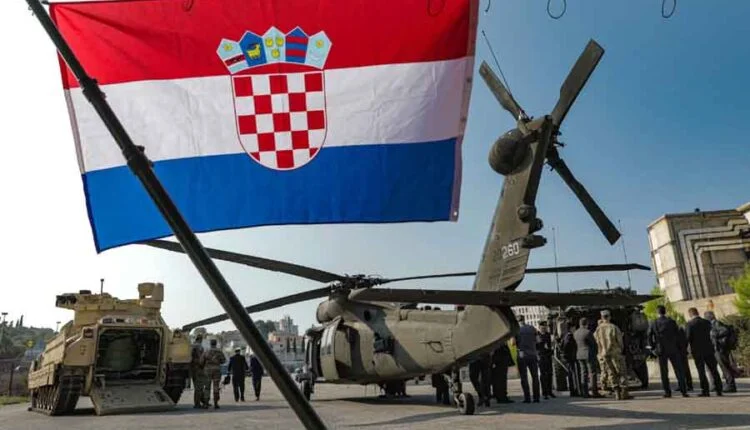
Nobody wants an arms race in the Balkans, even if it's a “mini-garger”. In May of this year, when Croatia bought a dozen French fighter aircraft used “Rafale” for many $1.2 billion, US news agency “Asociated Press” described it as part of a small “gare” with Serbia. In October, even the “The Economist” reported on the new arms race that Serbia introduced, with its annual military budget of $1.4 billion. Media concern is more than justified. While Serbia and Croatia are rapidly building their military arsenals, describing this process as “a simple arms race” misunderstands what is really at stake. In the process of modernising outdated military equipment left over from the Yugoslav era, Belgrade and Zagreb are not motivated by strategic competition or fear of conflict with each other. Instead, elites in both countries are using the process of buying new weapons to advance broader goals in foreign policy, and most importantly, to improve their domestic political position.
The prospect of a new war between them is unrealistic, but using weapons purchase as an opportunity to exert pressure could destabilise the region. Over the past 6 years, Serbian and Croatian leaders have gladly fed the narration of an arms race while engaged in a series of high-profile arms purchases.
The good news is that with recent purchases, neither side has so far violated the weapons control provisions that the Dayton Agreement stipulates. Discussions on a regional arms race began in 2015, when Croatia asked the United States to donate 16 missile systems “M270 Multiple Launch” produced by the company “Lockheed Martin” and equipped with ballistic missiles. Serbia's current president, Aleksandar Vucic, who was then prime minister, reacted sharply:“or they must change their mind, or we must find a solution”. And Serbia began to seek soon the answer to Russia. During a visit he paid to Belgrade in January 2016, Russia's deputy prime minister increased expectations, giving Vucic a model of the Russian missile defence system S-300. During 2017, tensions between the two countries rose significantly when the Croatian government cited the reconstruction of the Serbian Army as a possible reason for restoring mandatory military service. But in the end Croatia did not take away American rocket launchers, nor did Serbia take away the Russian S-300 system.
Despite hot rhetoric, both countries faced financial restrictions, and the enormous powers they hoped for did not result as close as the two countries expected. However, Belgrade and Zagreb insisted on their aim of buying new weapons, spending billions of euros on defence agreements signed in recent years.
In 2017, Serbia's largest defence company, Yugoimport - The DSPR developed a tactical missile “” with an action ray of over 280 kilometers. To boost its capabilities in air space patrol, Serbia bought fighter aircraft “this year MIGA-29” from Russia and Belarus. Through a mix of sales and donations Russia provided Belgrade with military transport helicopters “Mi-35x5> and “Mi-17x7> tanks “T-72 MS”, armor “BRDM-2MS”, and an anti-aircraft missile system “Pantsir S1”. Serbia does not have an official preference for equipment from Western or Western powers. It plans to buy about 30 military helicopters over the next 2 years, some from the multinational European company “Airbus”, and some of that Russian “Mil Moscow Helicopter Plant”. After agreeing to buy the French system “Mistral” of ground-air missiles, Belgrade is considering buying Chinese antiaircraft system “FK-3” and Israeli anti-line missiles “SPIK LR2” Serbia acquisition of 6 Chinese drones “CH-92A”, along with the transfer of technology, has made the country with the most military fears in the region. Of course, Croatia has also kept pace in this race. In 2015 and 2016, Zagreb purchased 12 “Panzerhaubize 2000” from Germany and 16 helicopters “Kyowa Warrior” from the United States. He also bought the “missiles. AGM-14 Hellfire” from the company “Lockheed Martin”, and by the end of 2020, signed an agreement to modernise 76 <x34 vehicles. >Bradley Fighting”, along with relevant machine guns and rockets.
However, as arms control experts have noted, these purchases have not yet exceeded internationally agreed restrictions. Article IV of the 1B Annex of the Dayton Peace Accords has been the basis for gun control in the Western Balkans since 1995.
In theory, Croatia and Serbia can use their new weapons in a future Balkan conflict. Some American analysts say Serbia can use rockets “” against its neighbours, should they participate in another NATO campaign against Belgrade. Drons bought by Serbia would be powerful instruments in a hypothetical battle in Kosovo or Bosnia. If the quo status in Bosnia were to be derailed, the fighting that would follow would inevitably attract both Serbia and Croatia, which might later have the chance to use their new arsenals. New Croatian Army tanks and helicopters would be effective at the Serbo-Croatian border that is generally field, while Serbia could balance the situation with Israeli missiles “SPIK” But despite that, both in Belgrade and Zagreb Bosnia has largely been missing in rhetoric about reforestation. Most importantly, the start of a new conflict in the Balkans has no political or military significance. In fact, there is no realistic goal, which Croatia or Serbia can hope to achieve by attacking each other. Even for the most powerful armies, the control of territories inhabited by a hostile population has become almost impossible.
Since 1995, neither the Croat minority in Serbia nor the Serb in Croatia are large enough to serve as the basis for separatist ambitions. Moreover, Croatia has been a member of NATO since 2009. A Serbian attack on Croatia would activate the collective defence clause under Article 5 of the North Atlantic Treaty, prompting NATO's response against Belgrade.
And so, NATO still has 3600 troops in Kosovo as part of the Kosovo Force to ensure that the Serb-Albanian dispute on Kosovo is not solved militarily. Moreover, war has become very expensive, and that is why Croatia replaced mandatory military service with a professional army in 2008. Serbia did the same in 2011. The Serbian Army is experiencing continued loss of the professional framework. The region as a whole has been lagging socioeconomically, and is experiencing a demographic decline. But if they're not preparing for war, why are Belgrade and Zagreb buying so many weapons? The two countries are conducting a delayed modernisation of their armies, while using the process to achieve other goals. In the foreign policy field, Serbia and Croatia are trying to position themselves, as there is growing anxiety about security in Eastern Europe, and a deepening tensions between Russia and the West. As long as the West perceives Russia as a threat, Serbia has the opportunity to put Russia and the West against each other. In this balanced act, the establishment of a modern army is a goal but also a means. Serbia wants to be able to buy weapons from all sides.
She hopes that having a formidable army will increase its influence on all sides. On the other hand, Croatia has used the same regional dynamics to strengthen its position in the West. For the above-mentioned reasons, a return to the vicious hostilities of the 1990s is very unlikely to happen, but the actual process is still alarming. It is dangerous, as it further poisons distrustful relations among the countries of the region.
By Vuk VUKSANOVIC & Marija IGNATIVIC.
Note: Vuk Vuk Vuksanovic and Marija Ignjatijevic are researchers at the Centre for Security Policy in Belgrade)











