21 minutes ago
Anti-corruption Agency launches procedures against Serbian List officials
Periskopi(4 years ago)
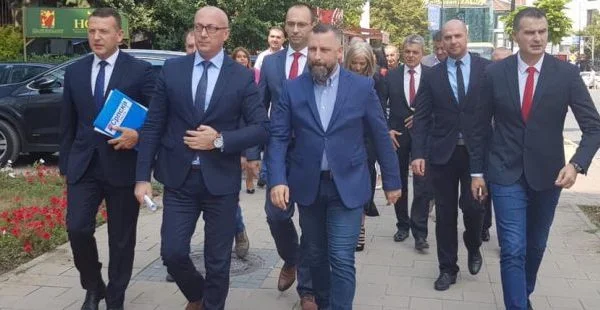
(4 years ago)The Anti-Corruption Agency in Kosovo has launched investigative procedures against Serbian List officials, the leading party of Kosovo Serbs, which has the backing of official Belgrade. The reason for the initial procedure is that Serbian List officials, who hold different positions at the central and local level in Kosovo institutions, do not [...]
The reason for the initial procedure is that Serbian List officials, who hold different positions at the central and local level in Kosovo institutions, have not regularly reported their assets or revenues, confirmed for Radio Free Europe on 24 January by the Anti-Corruption Agency.
The procedure has been initiated against Serbian List Chairman Goran Rakiq, Deputy Chairman of the Kosovo Assembly from the Serb List, Slavko Simun, Serbian Parliamentary Group in the Kosovo Parliamentary Group in the Parliamentary Assembly, Igor Simmun, MPs Zoran Mojsilovic and Verica Ceranic, former deputes Ivan Todosijevic, North Mitrovica Commission Chairman Milan Radojevic, Leposavisic Mayor Zoran and Advis in the North Mitrovica Parliamentary Council of Northern Mitrovica, Spirq.
In addition, Kosovo's Anti-Corruption Agency has initiated an investigation against Zlatko Miniqi, Miodrag Ralliq, Veroub Stankovic, Milorad Jovanovic, Milan Ivanovic and Srdjan Nikolic.
All investigative actions related to collecting and analyzing relevant documentation are being undertaken by the Agency.
In the case of Lubinko Karadzic, the former Kosovo Assembly deputies and deputy chairman of the Gracanica municipality, the Pristina Constitutional Prosecutor, has suspended investigations.
In the Serbian system, Karadzic was chairman of Pristina's Interim Municipal Authority, the institution which is considered illegal and parallel by Kosovo authorities.
In the case of the former head of the Shrpca municipality, Bratislav Nikollic, the Constitutional Prosecutor in Pristina has rejected the Agency's criminal outcry.
Nikollic is also co-ordinator of the Sterpca interim municipal body, according to the Serbian system. He was arrested at the end of December last year, due to the illegal delivery of construction permits in Brezovica, after which the detention measure has been assigned for a month.
Radio Free Europe, in August last year, reported on “double salaries”, because most Serbian List officials have at least one job in the Kosovo system and one in the Serbian system.
This party was founded in 2013 with the support of Belgrade and Serbian President Aleksandar Vuciq.
Although Serbian List officials are obliged by law to report all revenues to the Kosovo Anti-Corruption Agency, but also to the similar agency in Serbia, they do so selectively.
What dual functions do Serbian List officials perform?
Serbian List Chairman Goran Rakic has not reported to the Anti-Corruption Agency in Kosovo that within Serbia's system two other functions are conducted.
He is the director of the Public Company “Standard” in northern Mitrovica and teaching assistant at the High School of Professional Studies in Pec, which operates within the Serbian system and has moved to Leposaviq, this predominantly Serb municipality in northern Kosovo.
For these two positions, Rakic is paid for some 92,000 dinars, or about 750 euros.
Rakiq has not reported even the Serbian agency for revenues it receives in Kosovo institutions.
Igor Sifu is the deputy of the Kosovo Assembly, but has also received revenue for the functions he performed in the Serbian system, from pension and disability security, as well as from the Economic Faculty in North Mitrovica.
Zoran Tolic is chairman of the Leposaviqi municipality under the Kosovo system and chairman of the Leposavic municipality under Serbia's system.
Milan Radojevic is chairman of northern Mitrovica and receives wages from the Kosovo Government budget, but is also the director of Serbia's pension and disability security fund in northern Mitrovica.
The situation is similar to other Serbian List officials, as most of them perform functions in the Kosovo and Serbian systems and report neither to the Kosovo Anti-Corruption Agency nor to the Anti-Corruption Agency of Serbia. / REL/