 4 hours ago
Situation in the north falls value of goods coming from Serbia
Periskopi(5 years ago)
(5 years ago)In Kosovo, economic recognition says the situation created after Kosovo's decision to implement reciprocity for car license plates with Serbia is not expected to have any immediate and major impact on the trade exchange between the two countries, but on the long-term plan will negatively affect [...]
Kosovo customs said the value of goods coming from Serbia has marked a slight decline since the establishment of reciprocity.
Commercial traffic has been reorientised towards the Merdar border crossing. A week before September 20th, there were about 601 remittances worth about 4.9m euros, while the week after September 20th 501 remittances worth about 3.9m euros”, the Kosovo Customs response reported.
The chairman of the American Economic Oda in Pristina, Arian Zeka, says the deadlock of the two Jarinje and Brnjak border crossings, which took place after the reciprocity move, only directs the transport of goods to other crossings.
“Whether it's about the economic or better say the problems that could be caused by either trade exchange between the two states, whether by economic co-operation behind the blockade of two important roads, two border crossings 1 and 31 or Brnjak and Jarinje, what can be said is that these points are not usually used for the transport of goods, except maybe the transport of goods that have been defined by northern municipalities, traffic seems to be usually followed with an intensity added to other border points like that of Merda, and the White Cross or other country's <18x>
Economy expert Leke Musa said in a conversation with the Voice of America that in fact the main impact of the situation created in the north is the intimidation of foreign investors.
“I can currently say that there will be no major impact on the environment because the primary impact will be on the fear of foreign investors and what Kosovo suffers for a long time is the lack of interest by foreign investors to invest in Kosovo and always political instability conveys a message that this country is not sure of political reasons and that there can be aspects of security and therefore fears foreign investors<1>, he says.
Without resolving open issues like this, Kosovo cannot expect serious investors, says Mr. Musa.
The long-term “this political instability, these continuing political crises, however, have an impact and will have an impact on the arrival of foreign investors to Kosovo. Without resolving the political issue, without a stability, we cannot expect to have serious investors because no one wants to jeopardise the capital by sending it to a third country where there is an uncertainty”, he says.
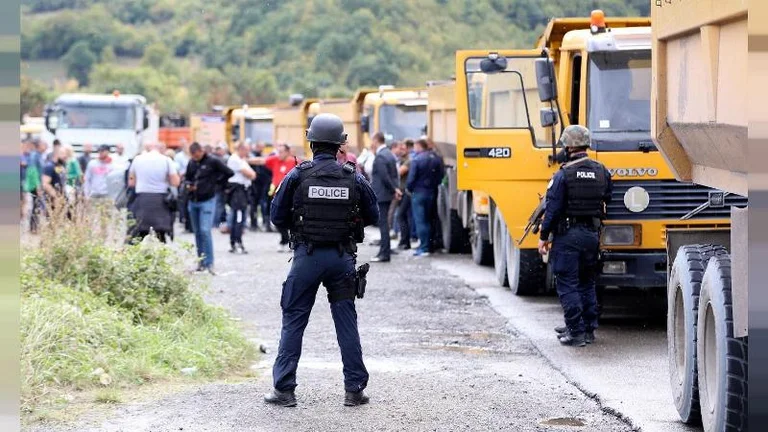
For the ninth day in a row, groups of Serbian citizens in northern Kosovo are keeping the roads leading to border crossings with Serbia, Jarinje and Brnjak in protest of the Targat decision.
From last Monday, cars entering Serbia into Kosovo must receive temporary license plates, just as they do in Serbia with cars from Kosovo for more than ten years.
Mr. Zeka, says such situations actually damage the image of the entire Western Balkans, at a time when this region needs investment.
This makes potential investors who may have considered expanding to Kosovo, Serbia, or the entire Western Balkan region, because even the reference to the Western Balkans there is inevitable, makes it less attractive to these foreign investors, so problems arise of this”, he says.
They say that in such a situation it is essential that Kosovo maintain co-ordination with international partners and NATO, while open issues with Serbia are resolved through dialogue.
“I think it's a good move which sends this message to Western investors that Kosovo therefore belongs to this Western bloc rather than to the east, and where the guarantor of peace and security in Kosovo is NATO and this itself has a positive message”, says Mr. Musa.
To reach a final comprehensive agreement and turn the entire Western Balkan region into a country of peace and prosperity which is open to foreign investors, which then creates even preconditions for the life-making idea of a common regional market, more jobs for citizens of all Western Balkan states, and less migration that is the tendency of most young people of these states”, says Mr. Zeka
An American State Department report on the investment climate, published in July this year, had listed political instability in Kosovo as one of the causes limiting its chances of attracting foreign direct investment. / VoA











