7 hours ago
“Do not return to the situation where KFOR manages our borders”
Periskopi(5 years ago)
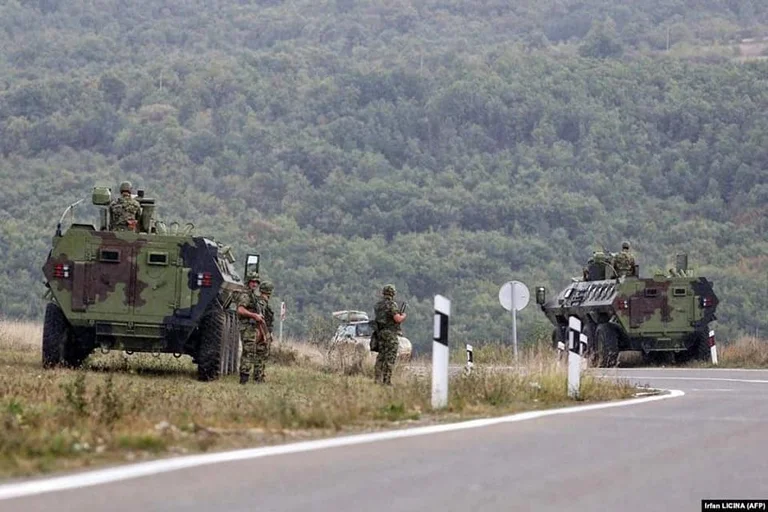
(5 years ago)A smaller number of members of the special unit must stay in the north to secure the border points and implement the government's decision on auto signs, while KFOR deploys patrols on the road but does not take responsibility for border points. So has the Balkan Group Director for [...]
A smaller number of members of the special unit must stay in the north to secure the border points and implement the government's decision on auto signs, while KFOR deploys patrols on the road but does not take responsibility for border points. So said Balkan Policy Group Director Naim Rashit.
He estimates that Kosovo should not stay in such a situation long without solutions to the problems that have emerged following the start of implementing reciprocity for the billboards.
In an interview for Kosova Prees, Rashi says the government of Kosovo must negotiate with American representatives, within KFOR to establish better greenline control.
“The continuation of such a situation harms the image of the Government, disseminates the inability to manage such a situation to implement its policies and that we are in a situation where Kosovo cannot be, or part of it, elements of unstable situations despite the fact that Kosovo is not guilty, in no circumstances as far as issues have been with Serbia have been, and not to step back, it is important not to go back to the situation where KFOR, as a structure takes responsibility to manage Kosovo with borders because then we will step back to the <1nd>, Rashi says.
He adds that a plan for implementing the agreement on reciprocity of auto signs should be made.
“A small special unit in the north at border points to ensure the safety of border checkpoints and implementation, while indoors a plan is set to implement table equipment... KFOR may be there, but KFOR should not take responsibility for the points, KFOR could deploy patrols, KFOR could deploy green-line patrols and Kosovo police should insist that it be part of these operations because on the green line with Serbia north KFOR has executive authority”, he says.
The government of Kosovo's decision on reciprocity of plates for Serbian vehicles that entered Kosovo territory has led some northern Serbs who, on the support of official Belgrade, have blocked roads leading to the Jarinje and Brnjak border.
Regarding this problem, Kosovo and Serbia's chief negotiator are holding meetings in Brussels.
But Rashit estimates that such meetings have had to be held at the level of ministries, agencies and experts, as he points out, political pressure would be lowered and practical solutions required.
“In my judgment it took the beginning of the first meeting to be the most technical level, to discuss the signs, and not the barricades, and the police, here I have the goal, but whatever happens today and tomorrow, dialogue and meetings at every level should continue to seek solutions, it doesn't make us stand in the situation what it is... but I judge that for such technical issues there should be even lower levels, professional, experts, ministries, sectors, agencies, which also reduce political pressure, but it also requires practical solutions to the political framework, the political position that each party has, he says.
Rashit says there must be intensive efforts to find solutions in this situation, which, according to him, requires maximum depoliticisation of these developments and their technical location.
“Set up a technical team in Brussels, ready to negotiate the implementation process and seek solutions, maximum depoliticisation of these developments, their deployment at the technical level of implementation and negotiation. This would help Kosovo look much more serious in the process of implementing the” agreement, he says.
Annie why not rightly, Serbia will continue to prove Kosovo and the international factor will be balanced, says the Balkan Policy Group director.
Serbia will continue to provoke, Serbia feels much more powerful than last year, more powerful than a year earlier and more powerful, Serbia will continue to act arrogantly, the international factor will continue to be balanced, KFOR's response has come thanks to the presence of the Russian ambassador at the border, or it would have been a very careful one, behind the stage there is going to be a very great effort, not only in the Government of Kosovo, but also in Serbia, to find clear solutions and seek to accept the treaty with its own accords, but we have not been careful as the early public years, the international community, not only will have to understand the reality of the Kosovo government, and therefore the political government's new government's goal is not going to understand the reality, and therefore, the political government's new government's objective are not going to achieve the reality, and therefore, and therefore, the institutions of the new party are not going to have to be successful, and the political leadership of the newcom.
Rashi says the solution and extension of the situation at border points with Serbia, Jarinje and Brnjak is in Kosovo's best interests, but adds that it should do so without withdrawing from the implementation of the agreements and requirements it has.
However, Rashit estimates that the executive would have to decide two months earlier at the border points for implementation of the reciprocity measure.
“Kisa made another phase of the process of establishing reciprocity, two months earlier I had decided that from this date it would not be allowed, I had distributed tracts, had campaigned to inform citizens in the north that they should switch signs, had appointed a local Ministry and government technical team to facilitate the process of customs registration of cars operating illegally in the north, had announced the responsible bodies for each step, and had sent people responsible for technical dialogue in Brussels to negotiate past agreements, IBM, because we could temporarily resolve the issue with the border, but we have trouble showing up on the border again, and then we'll have people responsible for the implementation of Kosovo's border, so far too many of the process, and so far more complex citizens will be able to tell us that it's going to be done again, so far too long as we can be able to get to do it in order that it't be done, and then, and then we'll be able to do so that we'll be able to be able to be able to be able to be able to be able to do so far back to get to do so that way again, and to do so that the more of the rest to do things
He estimates that in addition to the issue with automobile signs, dialogue should immediately develop on other issues of agreements implemented between Kosovo and Serbia, as it is for integrated border management.
Balkan Policy Group Director Naim Rashit says Kosovo should have a more active approach to dialogue with Serbia.
“Kosovo must act on three aspects, the first aspect of building a stronger relationship with EU and EU countries, a very portable approach in dialogue with Serbia that would include dialogue for the implementation of agreements and a strong intensive dialogue for a framework of final dialogue, and the fourth is for Kosovo to increase its maximum presence in regional initiatives, to be as loud and powerful in regional initiatives throughout Southeast Europe as it feels the growth of the presence of Kosovo and EU<1> says Rashi
According to him, it would have to be worked hard politically for the new final framework of dialogue with Serbia.
“in this situation we have the impression that we are in half a dialogue, a vague phase of dialogue, and I believe that besides the government having powerful political support, which I believe will also have the support of major opposition acts, for an intensive dialogue with Serbia, there is a consensus in Kosovo that should not be expected long enough, it should be massively worked to conclude the dialogue, there must be concrete steps. Kosovo, when dialogue has started, has been positioned up and Serbia down, now we have changed position, Kosovo is seen as problematic in dialogue, Kosovo is seen as an obstacle, it has been seen for years as an obstacle to dialogue, as someone not implementing agreements, Kosovo is seen unprepared in dialogue, it must change this, never denying the international community's failure on this topic, in particular, of the EU, but of all acts, but this is reality, it is very difficult to change geopolitical reality”, he says.
Rashit estimates that countries could be in even more unfavourable situation for a possible deal, citing here the Serb side that he says is increasingly aggressive in dialogue.
According to him, the strategic decision to conduct dialogue on what parameters of compromise agreements will be reached in this dialogue. /