 7 hours ago
Pray for Germany: In Bundestag, most parliamentarians are men
Periskopi(5 years ago)
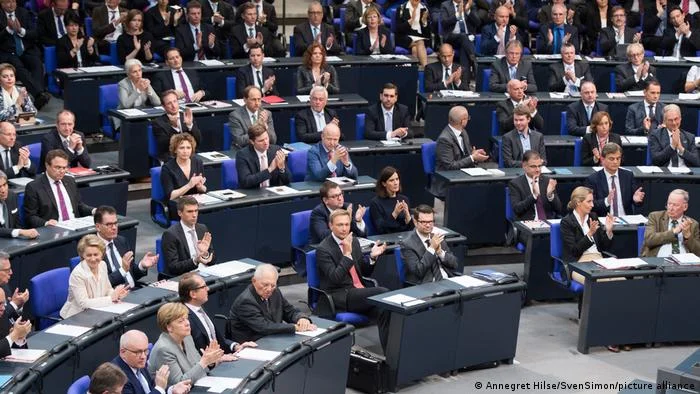
(5 years ago)In the current German parliament, the number of men is twice that of women. Women's participation has never been so low for 20 years. Even elections on September 26th are not expected to make any substantial changes. She's had to fight hard to get where she is today: The conservative MP of the German Parliament [...]
She's had to fight hard to get where she is today: The conservative MP from the German Parliament coming from Bremen. To Elizabeth Mottsmann, the German Parliament. Bundestag, it's still a matter of men. She explains, that “they do not want women who object. This thing is deeply embedded! Women who don't swim in the men's electricity, women who aren't servile, and from which unexpected women, women who aren't the same as friends they've climbed, these women don't have it hard”.
Other women in various political parliamentary groups have had similar experiences. Social Democrat politician Ula Schmidt is also one of them. The 72-year-old has been active in politics for 30 years. Initially in municipal policy, later as minister and vice president of the German Parliament. I was once very upset when one day someone told me: „You're not that disgusting. You could have married if you weren't involved in politics.” At that time, people still thought, that women seeking political office were unhappy women who had no luck with men and who wanted to be fulfilled elsewhere, she explains further.
Elisabeth Motschmann recalls that „at the beginning of my political career 30 or 40 years ago when it was work to appoint or find a woman for any of the positions, both for the paid and for the voluntary ones, asked questions like: Is it presentable? I've experienced this. ”
Such experiences are not rare cases, says political science researcher Elke Wiechmann. Not only in the past, but also in the present. Now it's pretty normal to talk about women like that, talking to women like that. To drown the woman's voice or to make specific comments, in vain. ”
Not only the manner of conduct that would be different, the expert says, but if there were more women in parliament, then the discussions would also be different, decisions would also be different. If they're for so few in Parliament, then the topics they're interested in don't necessarily get into the agenda, which means they're not discussed at all. ”
But even for the distribution of parliamentary or government posts, very little is discussed, says Social Democrat MP Ulla Schmidt. She has been in charge of gender equality issues and has found that ministers' posts and official posts are difficult to obtain from women. We've had women who've taken office, but only sporadically. After all, if a man expects to take a post, then he takes it. Today, too. ”
Currently, in parliament expected to close, the number of men is twice the number of women. Women's participation has never been so low for 20 years. It remains to be seen how it will result in elections for the new parliament on 26 September. Hopes for a substantial change are running. In the election race, however, there are many women running. / DW











