 7 hours ago
Moscow's propaganda: West towards sinking, Russia star climbing?
Periskopi(5 years ago)
(5 years ago)Russian state media in Serbia present a grim view of the West. The ongoing negative propaganda against the West and the rise of Russia and China has won the hearts of many Serbs, according to Thomas Brey. Russia, especially in Serbia, is considered a close friend and partner country. But reality is different. In everyday life the State [...]
Russia, especially in Serbia, is considered a close friend and partner country. But reality is different. In everyday life the Balkan state is completely EU-oriented. More than two-thirds of Serbia's foreign trade is conducted with the EU. The main investments come from Western Europe. However, the majority of the population see Russia and China as the most important economic partners.
Although hundreds of thousands of Serbs work, study and live in EU countries, very few live in Russia and China, many Serbian citizens see Moscow and Beijing as their country's closest friends, while from the EU do not expect anything good. How
Is this gap between Russian and reality possible?
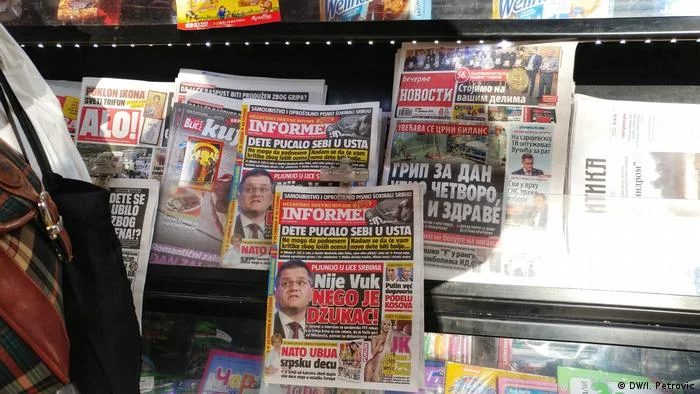
The answer to that question lies in the influence of Russian state media on Serbian media landscape and through that in public opinion in the country. Especially the Serbian publication of the Russian news agency Sputnik daily designs a picture of international developments having little to do with reality.
Sputnik: West is before sinking
According to these Western and U.S. reports, they are ahead of the shipwreck, at a time when countries like Russia and China are gaining ever greater influence in the world. According to Sputnik's belief, this is linked to what the social and economic systems of these countries far beyond the west. This outlook is regularly presented by Sputnik and received by the Serbian media one-on-one in interpretation of the verification. Because the media not only in Serbia suffer from lack of funding. And these free Sputnik reports are very welcome. But these reports are slowly creating an image, which is more virtual than real.
Local Policy Directors Hail Sputnik
Politicians in Serbia welcome the material provided by the Russian state media. Along with Sputnik, even RT, (formerly Russia Today). The system of social and political values presented is responding to their political ideals. The state, led by these powerful politicians, plays a dominant role in all areas. “System Putin” clearly serves many politicians in Southeast Europe as a model. Politicians such as Viktor Orban, Nikola Gruevski (former Northern Macedonia Prime Minister Bakir Izetbegovic of Milorad Dodik (Bosnia- Herzegovina) Janez Jansa (Slovenia), or Aleksandar Vuciq, have often expressed admiration for Putin directly or indirectly.
West in fall, Russia climbing
Russian state media in Balkan countries present a Western image of the darkest colors. Capitalism is before decay. The scholarships have taken over the collapse. Many parts of the population have been impoverished. Most of the population has lost confidence in the Western system as well as in politicians and media. In Russia and China, according to these media, it finds a thriving economy, a very happy and well-income society that is grateful to the country's leading politicians.
Such constant radiation with such reports has prompted Serbian media last year to report significantly more negatively to the EU and the US. Russia and China rise to the sky with positive reports. Critical or negative reporting hard to find.
Sputnik warns Serbia from west
Sputnik does not remove a topic from reporting: That Serbia can only expect evil from the EU and the US. As a result, the bulevardeske media top stories involving Western efforts to remove Vucicin from power. But why should President Vuciq turn off the West when both Brussels and Washington look to him as the most important partner for targeted reforms?
Sputnik's account is clear: there is no division between the news and the comment. Sources are used selectively. The information leading up to the theme is not predicted. More of this reporting has to document and prove, that Russia's world outlook is the right one. In addition, national disputes in the Balkans are encouraged, where Sputnik certainly passes unconditionally on the side of Serbs.
EU powerless to Russian propaganda
For years Russia has been working to prevent Balkan integration into Euro-Atlantic structures. As Moscow had to admit failures following the membership of Montenegro and Northern Macedonia in NATO, its efforts have focused on Serbia and Serbs in Bosnia and Herzegovina. Although the EU is engaged with many billions and an army of diplomats and experts in Serbia, it puts nothing in the face of powerful Russian propaganda. If Brussels, even in the future, has nothing to do with introducing its achievements into the awareness of the Serbian people and highlighting the advantages of a connection with the West, then it is lost in the war. Because Russia, with software instruments, has long appealed to the hearts of Serbs.
Thomas Brey has been a German news agency correspondent for many years, and today he legalizes Southeast Europe as a docent in several German universities. Last month, his review was published “Russian media and the Balkans” in German and Serbian.











