3 hours ago
The problem with the license plates: What does the Brussels Agreement say?
Periskopi(5 years ago)
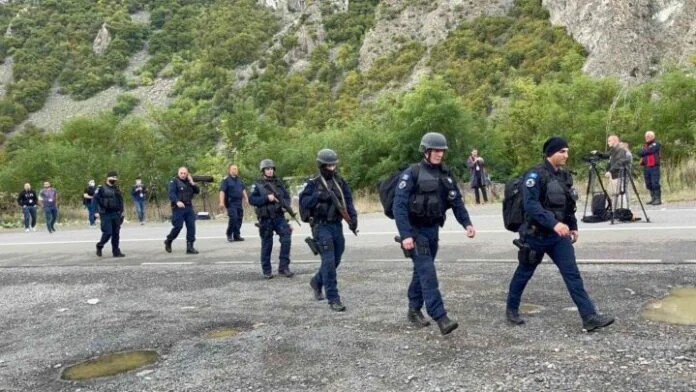
(5 years ago)The Kosovo authorities' decision to implement reciprocity measures against Serbia's license plates, which enter Kosovo, has sparked protests by Serb residents in northern Kosovo and the harsh reaction of official Belgrade. Representatives of Serbia say that Kosovo, with this act, has violated the provisions of the Brussels Agreement, which [...]
Representatives of Serbia say Kosovo, with this move, has violated provisions of the Brussels Agreement, which the two countries have reached with the European Union's mediation.
In Pristina, they say they are acting in line with the Brussels Agreement.
What does the Brussels Agreement for Kosovo license plates say?
The agreement on freedom of movement between Kosovo and Serbia was reached in 2011 in Brussels.
With this document, Serbian plates with signs of Kosovo cities, such as PR (Pristina), GL (Gylan) KM (Mitrovica), removed. I mean, vehicles with such plates had to re-register with RKS (Republiment of Kosovo) or with neutral status ʹ KS (Kosovo).
All owners of Kosovo-based vehicles will use RKS or KS license plates. They will be issued by the responsible authorities in Kosovo”, the agreement on freedom of movement said at point 7.
But, despite it, in four municipalities in northern Kosovo, where the majority of the population is Serb, citizens have been driving city license plates in Kosovo, issued by Serbia's Interior Ministry.
On the other hand, Kosovo citizens have been unable to enter Serbia's territory with license plates RKS, no expenses. They had to replace them with temporary license plates. Thus, by agreement, Kosovo has been forced to issue the KS license plates, which Serbia has accepted for another five years.
The technical agreement on freedom of movement, 2011, has been finalised in Brussels on September 14th, 2016, when Kosovo has agreed to extend the validity of KS license plates for another five years.
When has the deadline expired for controversial license plates?
The five - year period has ended on September 15, 2021.
“This has been the deadline for removing and using these plates, as well as the KM shortcuts for Mitrovica, PR for Pristina, UR for Ferizaj, PZ for Prizren and GL for Gjilan”, Kosovo Prime Minister Albin Kurti has said on September 20th. He said these plates would be confiscated.
What about plates with Serbia's cities?
With the Kosovo Ministry of Internal Affairs decision, citizens with Serbian license plates -- for example, BG (Belgrade), KG (Kragujevc) NI (Nish), now must receive temporary license plates when entering Kosovo territory.
Accusing Pristina of violating the provisions of the Brussels Agreement, Serbia's president, Aleksandar Vuciq, has said the problem is not only with KS license plates, but “with license plates from central Serbia”.
The problem is that they stopped a Vranje license car and later removed the license plates of a internationally recognised UN member state because they did not like”, Vuciq said on September 20th, adding that such a thing is not said in any document.
The Brussels agreement does not specifically mention the conditions for entry into Kosovo by city license plates in Serbia.
The 2011 Agreement text, which was published on the Kosovo Government website, says that Kosovo “pal maintains the right to, after consultations with the European Union, apply the interim license regime”.
reciprocity Measures
So far, Kosovo citizens with RKS (Republishment of Kosovo) license plates, when they entered Serbia, have paid about five euros for temporary plates, which are valid for 60 days.
Kosovo Prime Minister Albin Kurti has said on September 20th that official Pristina has declined to impose reciprocity measures, but has had no choice, due to the official Belgrade stances.
Kurti has said on several occasions earlier that he will impose reciprocity measures on Serbia in all areas.
What does Belgrade accuse Pristina of?
Following a meeting of Serbia's Council for National Security, Vucic has said that Pristina refuses to implement the provisions of the Brussels Agreement, primarily those referring to the Association of Serb majority municipalities.
Within the dialogue on normalising relations, Kosovo and Serbia have reached an agreement in 2013 on establishing the Association of Serb majority municipalities in Kosovo. The specific details were harmonised with a 2015 agreement.
But, the Constitutional Court of Kosovo has concluded in December 2015 that the principles of Association have not fully harmonised with the Constitution of Kosovo, but, she added, they could be harmonised with a legal act of the Government of Kosovo.
What is controversial, according to the Constitutional Court's decision, is that association is not based on multiethnicity, but collects municipalities where an ethnic community is majority.
Kosovo and Serbia have been in talks on normalising relations since 2011.
So far over 30 agreements have been reached, most of which have not been implemented on the ground.
Both countries transfer responsibility for failing to implement mutual agreements.
What do they say in Brussels?
The EU's special representative in the Kosovo-Serbia dialogue, Miroslav Lajcak, has voiced concern for the situation in northern Kosovo and has called for urgent suspension.
He has said he has notified the ambassadors of EU member states of the situation in northern Kosovo and has reiterated the readiness of European institutions to facilitate talks “on all open issues” within dialogue.
The date for continuing political dialogue between Kosovo and Serbia has not yet been set. / REL