4 hours ago
Who will lead Germany after Angela Merkel?
Periskopi(5 years ago)
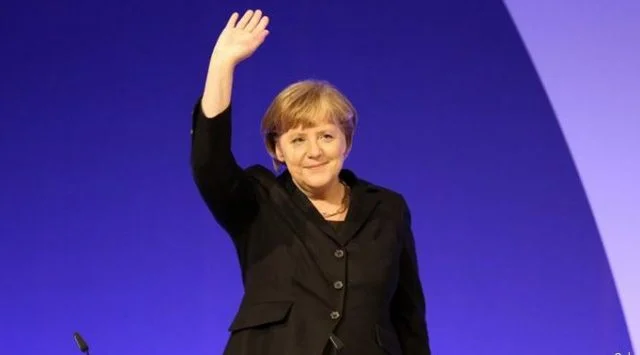
(5 years ago)The Germans are preparing to elect a new leader Sunday 26 September, who will succeed Chancellor Angela Merkel, who is leaving. As announced by American Voice correspondent Henry Ridgwell of Berlin, Mrs. Merkel has been viewed as a pillar of stability in Europe for nearly two decades and future changes [...]
Berlin is enjoying its final warm summer days. After 16 years, the West is approaching for the power of Chancellor Angela Merkel.
Angela Merkel remains popular, but her party is in poor standing. For the first time since World War II, some surveys release the Democristians with less than 20 percent support. And if other parties co-operate to form a coalition, Mrs. Merkel's party will no longer be in power.
The Democrat candidate is Armin Laschet, who is trying to attract voters with the promise of continuity.
“A united Europe in these difficult times, a climate neutral industry and a strong economy, and a clear course for national security”, it was expressed at a campaign rally.
Voters can accept the message, but not it itself. During a visit to Germany's flooded regions in July, Mr. Laschet was caught on camera laughing during a German president's speech. Her support has not been restored.
Social Democrats candidate Olaf Scholz is leading in the polls he is the current finance minister in the coalition government and the preferred one to succeed Miss Merkel.
He has a stable position in polls a good performance as minister. And although he may lack carisma and attraction, he compensates with stability. Poor competition helps him too, says Gero Neugebauer, professor of Political Sciences.
Mr. Scholz appeared confident of victory in the recent television debate.
Many citizens can see me as the next head of government, the next Chancellor. And I don't hide that I'd like to create a coalition government with the Gelbra”, he said.
The Green Party, led by Annalena Baerbock, is third in the polls. They are ready to form a coalition government, but have clear red lines.
Because of the short time remaining to successfully combat climate change, there is not much room for compromise when it comes to climate policies”, says Paula Piechotta, Green Party candidate in Leipzig.
Smaller parties including the Free Democrats or the Left Party may be critical of the possibility of creating a coalition. The three main parties have ruled out the opportunity to work with the far-right Alternative party for Germany, which has about 10% support.
As for issues dividing voters, polls show a clear split according to generations.
I think the first important theme for me is for sure climate change”, says Jun Kinosita, 28.
For me, the most important issue is climate change. Climate, education, child care”, says Corinna Anand, 35.
“Pensions, to be sustainable. Jobs. Many things are more expensive. Gas, electricity”, says Dirk Zeller, 54.
The richest German just got rich, even during the coronary. Meanwhile, many people saw that their lives deteriorated, and today, they have problems bigger than before”, Brigitte, 54, says.
Few Germans expect immediate change. Talks to form a coalition government are likely to last for months, and Mrs. Merkel will remain in the lead until rival parties agree on her successor./ VOA