7 minutes ago
Kosovo epidemiologist shows why those infected with COVID-19 in Kosovo are dying
Periskopi(5 years ago)
(5 years ago)Time - show delays at the doctor's office, non-excussion against COVID-19 and the lack of health staff in hospitals, according to epidemiologist Isuf Dedusaj, are some of the reasons why there is continuing to be a high number of deaths in Kosovo by corruption. In a conversation for Radio Free Europe, Dedusaj says that coronary infected people should [...]
In a discussion about Radio Free Europe, Dedoshey says that the coronavirus infected should eventually be presented to the doctor, for the consequences may be very serious.
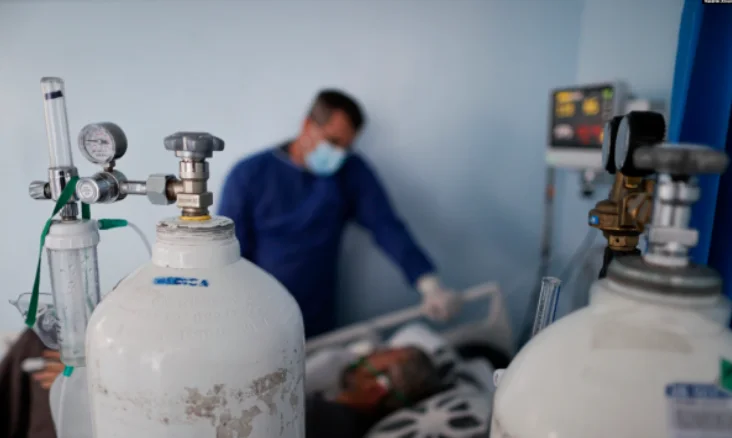
Only when they (the patients) need oxygen or are greatly burdened by the situation do they require medical assistance in most cases. Then, their blood oxygen is very low, and their condition suffers greatly. But (other reason) is the small number of medical teams”, says epidemiologist Dedushaj.
In treating sufferers, a medical sister had to be at least 24 hours close to each patient, in cases where patients have oxygen - therapy. Another reason is that they are not vaccinated. People who are vaccinated do not die”, he adds.
Over 250 deaths in ten days.
In the last ten days, 254 cases of death have been recorded in Kosovo.
According to the data, from March 13th 2020 through September 10th, Kosovo has recorded about 155,995 thousand cases of coronary and 2,788 victims.
For Kosovo University Clinical Clinic Director Arben Visaj, the main reason why patients with COVID-19 are dying is the high number of infected and non-examination.
About 99 percent are unexplored, so the destructive part is unexcused. We have multiple cases. A third of the patients who have come in a year and a half have come in two weeks. There are large numbers of infections and the level of treatment is now too high”, says Visaj for Radio Free Europe.
By September 10th, one million vaccines have been administered in Kosovo. With both doses of the vaccine, 351,475 citizens were vaccinated.
Conspiracy Theories Fear People to Inoculate
Meanwhile, epidemiologist Teuta Feyza, director of the Institute of Public Health in Mitrovica, says propaganda against vaccines has caused many citizens to hesitate to be vaccinated against corruption.
These social media conspiracies have made them their own, and I think it's affecting (incompatible). Otherwise, citizens have no reason to hesitate to be vaccinated. We've given the recommendations that are needed for all age groups that need to be vaccinated. The vaccine prevents death”, she says.
Fyza says institutions have done enough campaigning for inoculation, but according to her “there is no dilemma that calls have been overlooked”.
I'm still saying that no one is guilty of failure, either the Ministry (of Health) or the Institute. Guiltys are different conspiracies. The issue of vaculation has not been neglected by institutions and I don't think little campaign has been done for vaccination”, Fyza says.
Because of the sustainability deadline, Kosovo is expected to eliminate over 43,000 doses of pharmaceutical company AstraZeneca's vaccine. These vaccines were within the framework of a donation of the Kingdom of Norway.
Regarding the elimination of these doses, epidushaj epidemiologist says that institutions cannot be blamed, since he said there was a long term of sustainability and could not become more in that direction.
The “is noncompetent that a non-progressive campaign has been made, which we have paid dearly, while the vaccines themselves have had a short term”, he says.
Kosovo, in addition to buying 1.2 million doses of Pfizer Company vaccine, has also accepted a series of donations. Last donation, and the biggest, came on September 6th. The United States, through the COVAX mechanism, sent 556,920 Pfizer doses to Kosovo.
Also, the Health Ministry has announced that next year it plans to buy another million doses from Pfizer Company.
In Kosovo, all persons over 16 are allowed to be vaccinated. Meanwhile, the 12-15-year-old group is allowed only if there is a doctor's recommendation. Currently, two types of AstraZenecas and Pfizer vaccines are used in Kosovo.
Kosovo, since August, has faced increased cases of coronary and death. Currently, there are about 20,000 active cases.