 7 hours ago
Jusuf Thaci goes against Government's decision on free public higher education
Periskopi(5 years ago)
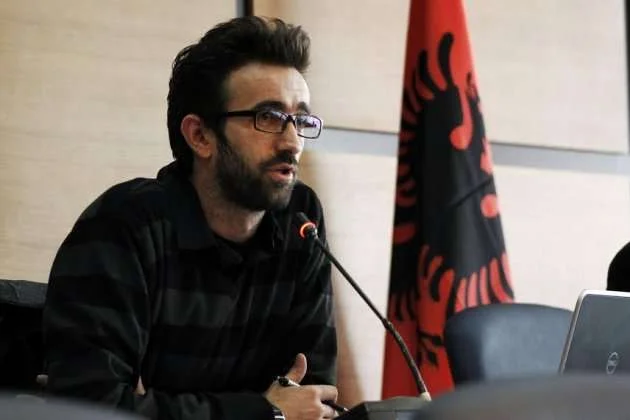
(5 years ago)Self-Determination Assistant Director Yusuf Thaci has come up against Kurti Government's decision to make free higher public education. In a long status, Mr. Thaci has recognised the benefits of this decision for certain categories of students but has stressed that he is not [...]
In a long status, Mr. Thaci has recognised the benefits of this decision on certain categories of students, but has stressed that he is not fair by verseing five reasons.
Among them is that there is no difference between poor and wealthy students, Periscope follows.
Also, Thaci has mentioned that Kosovo continues to pay for frameworks that do not need the state at all, since the education system is at large with the needs of the labour market.
Full status:
Two Words for Free High Public Education in Kosovo
The decision on free higher public education in Kosovo is very good news for public university administration, because it dismisss this administration from an extraordinary burden (that is, on the case of accepting and managing student fees, whether it is in case of managing the return of means for students released from these payments). Of course, it is also good news for those students and their families under difficult economic conditions. At the same time, this decision has no major financial implications for the state budget.
But beyond the above-mentioned elements, the question that needs to be posed is this: Is that decision correct?
To answer this question first, some premises must be established:
- In higher education public institutions, students study at different levels of economic conditions (from students with very difficult conditions to those with very good conditions).
- In the public institutions of higher education, students study successful students of different levels during studies (from students who fail or are barely able to complete their studies to exemplary students).
- High education public institutions in Kosovo, completely disproportionate with the needs of the labour market, over-produce frameworks in specific professions/directions, while failing to meet the country's Quadro needs in some specific deficit-direction professions.
- There are public and private institutions of higher education in Kosovo, and about 40% of students in Kosovo continue studies at private institutions of higher education (for which they pay). Of these students are students with different levels of economic conditions and students successfully of different levels during studies.
- High education in Kosovo is not mandatory, while in terms of involvement in higher education Kosovo exceeds the EU countries' average by severalfold.
Given these above-mentioned promises, the decision for free higher public education in Kosovo is not fair because:
- In public institutions they pay the same (mainly not paying) as poor as rich.
- In public institutions, they pay the same amount (exactly do not pay) as a capable, committed, hardworking, responsible, and successful student, unable to pay, unemployed, irresponsible, and a failure.
- The state of Kosovo continues to pay for frameworks that the state and society does not need, respectively, of work market, while lacking quadro in deficit/directions very important for the country's development.
- About 40% of Kosovo students studying in the private sector and paying large sums for studies (they are not “privat”, but they are equal citizens of Kosovo) do not benefit any support from the state (reparably from the taxpayers' budget, where they and their families contribute) as their colleagues in the public sector receive free studies.
- Offering free higher public education can increase the number of students in the public sector, and this is not expected to be followed by higher education budget increases, however, will not be followed by increased professional and infrastructure capacities (which even without student growth would have to increase much). So all this can (I am actually convinced that it will) affect the decline in the quality of studies in Kosovo.
Yusuf Thaci
Pristina, me
September 17, 2021











