a minute ago
It's not impossible: Here's how you can escape an air accident.
Periskopi(5 years ago)
(5 years ago)Getting out of an air accident may look “fantazi”, but experts actually say 95 per cent of them are surviving. Survival may also depend on passengers and their actions, such as seats that need to be evacuated or clothes that need to be worn. Air accidents increased last year, [...]
Getting out of an air accident may look “fantazi”, but experts actually say 95 per cent of them are surviving.
Survival may also depend on passengers and their actions, such as seats that need to be evacuated or clothes that need to be worn.
Air accidents increased last year, despite pandemics.
Dutch company To70 said the number of people killed in passenger planes in 2020 reached 299, out of 40 accidents, five of which were fatal.
Although the figures seem disturbing, it is only a fatal flight of 3.7 million flights, writes British TheSun.
What you wear may increase the chances of survival of an accident, especially if it occurs under difficult conditions or climates.
Dave Inch, captain of a Boeing 787 says: “Remove sharp things from your pockets, clear your belt and don't wear ties, scarfs or high heels”.
Author Christine Negron, who has written a book on airline mysteries, said: Today everyone is carrying tutas on a plane, but avoid artificial fibers because they are more likely to burn if there is fire on a plane”.
She adds that boots are better than slippers to protect you from objects in flight, as well as recommends tight clothing so that you do not get stuck somewhere if you have to escape.
Upton Rehnberg, who survived a United Airlines line accident in 1989, said he always wears a hooded shirt after an engineer told him he could protect his head during an emergency decrease from fuel or hot oil from an accident.
Selecting seat
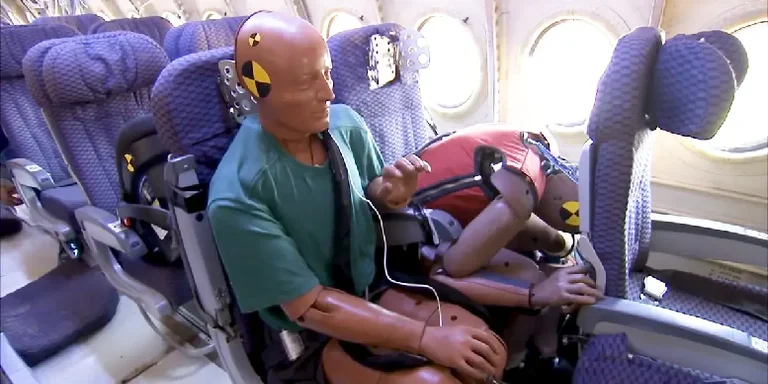
Although many say there are no more secure seats on the passenger plane than others, statistics show that those in the rear have lower mortality rates.
A 2015 study of air accidents in the last 35 years said that mid - aircraft mortality was 39 percent, in the pre 38 percent, and in the back 32 percent.
While within the seat row, the middle one had the greatest chances of survival.
The Aviation Safety Network analyzed 65 air accidents and found that the back seats were safer in more than half of the accidents, based on survival figures.
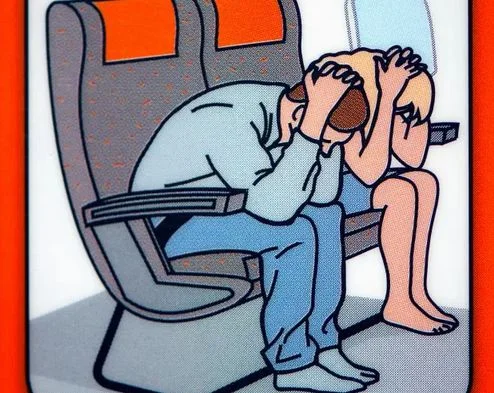
While in terms of the hand-folded position over the head, authorities in the United States say it is needed for two reasons to prevent one from shaking the body at a minimum, and one to prevent head injuries, from chairing or moving objects.
Flight assistants advised at a forum: “in the event of a situation where passengers should cover their heads with their hands, don't tie your fingers around your head, but put your hands on each other”
So if something falls on your hand or your hand, you have the free hand to use. ”
Another person at the online forum said: “I would go and further by saying that upstairs we should keep our hand less efficient so that the best hand can be more protected. ”
Listen to Safety Guides
Although it seems boring to listen to instructions every time you fly, ignoring them can have fatal consequences.
In the 2009 serious accident over the Hudson River in New York, only 10 out of 150 passengers received life jackets to evacuate, since they did not listen to instructions.
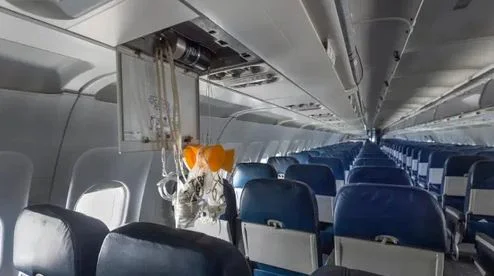
Passenger Josh Peltz then said that knowing the procedures had helped others to escape.
Keep your luggage nearby
Keeping your luggage near your feet can help you in an air accident, not just to protect your feet.
Erwin Tumiri was one of only six people who survived the flight accident Lamia Flight 2933 crashed into the Columbia Mountains in 2016. He says that he collected the body in the ball and held the trunk between his legs.
He then said: “I put the bag between my legs to form the baby's position in the womb, as recommended in accidents”.