 7 hours ago
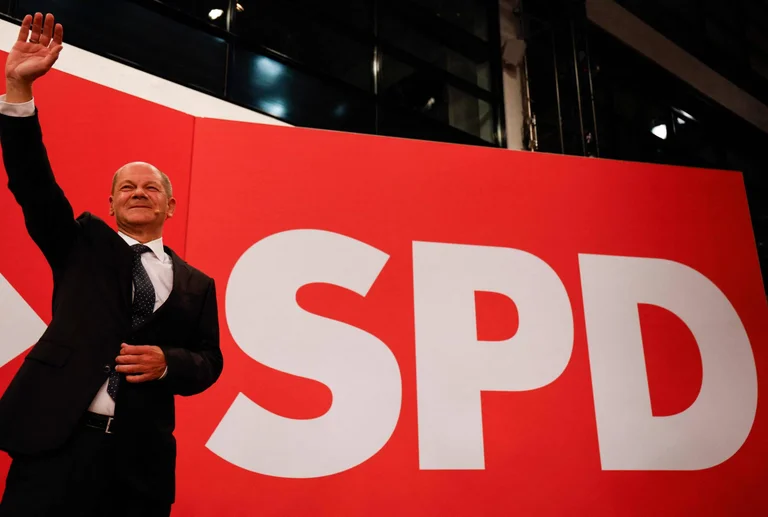
Germany's elections: SPD beats Merkel's party with close results
Periskopi(5 years ago)
(5 years ago)The centre-left Social Democratic Party (SPD) has won federal elections in Germany, defeating Chancellor's party in the past, Angela Merkel, according to preliminary results. The SPD has secured 25.7 per cent of the vote, while the conservative Merkel bloc, Demokrysian/Christian-Social (CDU/CSU), has secured 24.1 per cent. The Green Party has scored the best result in [...]
The SPD has secured 25.7 per cent of the vote, while the conservative Merkel bloc, Democrisian/Christian-Social (CDU/CSU), has secured 24.1 per cent.
The Green Party has scored the best result in party history, ranking third with 14.8 per cent of the vote.
A coalition is necessary to create the government.
SPD leader Olaf Scholz has earlier said his party has a clean mandate to lead, while his party is headed towards the first numbers on the list.
Polls have predicted a hot race, but these elections have been unpredictable.
One thing is clear, the Chancellor in the past will not go anywhere until the government is formed, and this may be delayed until Christmastime.
The task of Merkel's successor is to lead Europe's largest economy in the next four years, while climate changes are also at the top of the agenda.
Scholz has told a television audience that voters have given him the post of “forming a good and pragmatic government for Germany”.
His conservative rival, Armin Laschet, has reacted, as well, saying this process is for coalition formation and not for <x0 most arithmetic”.
Beyond the major parties, election day has not been of considerable success for the radical left and the extreme right.
The left-wing party, Die Linke, may also be out of parliament if its election outcome falls below 5 percent.
Although the far-right party, the Alternative for Germany, appears to have marked national declines, it has emerged in the largest party in German Lakson and Turingia.
Merkel, who has been in power since 2005, will no longer be part of the German leadership.











