 6 hours ago
Escobar: Kosovo, Serbia reach compromise to find out
Periskopi(5 years ago)
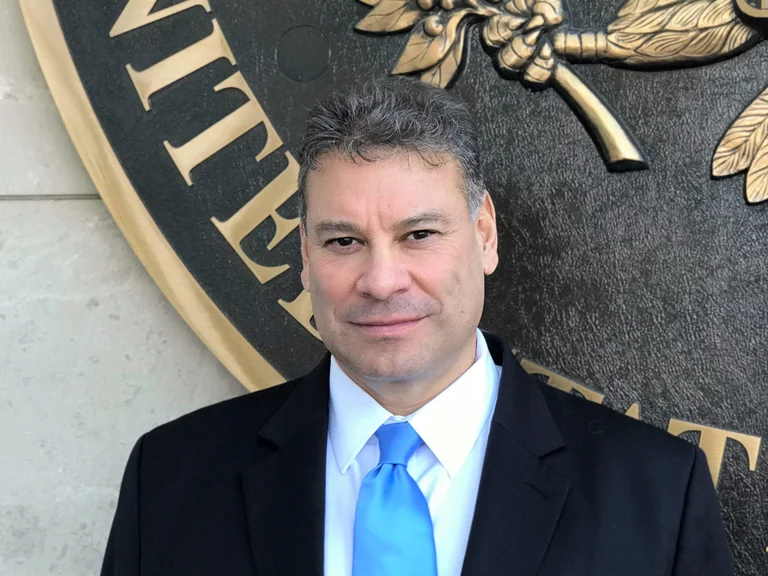
(5 years ago)Deputy Assistant Secretary for European and Eurasian Affairs Gabriel Escobar, in an interview for Radio Free Europe, said the United States is confident that the EU's envoy for dialogue, Miroslav Lajcak, will achieve the goal of dialogue between Kosovo and Serbia, which, according to him, is the “achievement of a settlement” between two [...]
Deputy Assistant Secretary for European and Eurasian Affairs Gabriel Escobar, in an interview for Radio Free Europe, said the United States is confident that the EU's envoy for dialogue, Miroslav Lajcak, will achieve the goal of dialogue between Kosovo and Serbia, which, according to him, is the “achievement of a Resolution” between the two states.
Escobar, who is at the same time the US State Department's envoy for the Western Balkans, said the issues, which require immediate solutions, are the ones that are not found.
The most urgent theme (which would move things forward in the dialogue) is the issue of people not found. This is a humanitarian topic that should not be blocked due to political disputes. There are families waiting for years to figure out what happened to their boyfriends. I just don't understand why there can't be a compromise on this issue”, Escobar said.
He said there are also a series of issues that they have worked on and have no “impact on the status”, such as the already existing economic subx2>s, their revulsion in order to be functional”.
It's a car license issue. There is also the issue of energy in northern Kosovo. So there are a number of small issues, which can immediately be resolved”, he said.
In the interview given Radio Free Europe, Escobar said US policy in the Balkans has been quite stable. Washington, according to him, wants the states of this region to become part of the community of democratic states of the West. And the mechanism for achieving that goal, according to him, is EU membership.
However, he expressed criticism of the European bloc's enlargement process.
“We would like to see a greater integration than a slower one. It is a little frustrating to see that I have served in the Balkans (and) left 2001 to return 20 years later and see that there has been little progress in that direction. So I hope that through American partnership and American messages and American engagement, we can turn both sides on the right path. This has been one of the slowest enlargement processes ever. When you think about how quickly other countries in the region have accomplished this. We would like to see that kind of dynamism”, Escobar said.
Speaking of Russia's influence in Serbia, Escobar said Russia is not making investments in Serbia.
This is a myth. Russia does not provide humanitarian aid. He's not really a business partner. If you look at Serbia's ten main trade partners, Russia is not among them”, Escobar said.
“On the issue of connection with Russia, one thing we constantly warn Belgrade is to avoid issues that could endanger their European aspirations or put them at risk to cross a border that could lead to sanctions. And we have a good dialogue with (Serbia's president, Aleksandar) Vucinqiqiqi. He and his government are widely pro-European, pro-Western. The question is how far can they go? Serbia has opened no chapter in its EU membership talks for two years now. They have promised to do so. At least one or two by the end of the year. I hope they can do it and have our support in this”, he added.
As far as Serbia's connection with China is concerned, Escobar said it is not just funding giving China advantage.
“There are issues of lack of transparency that hinder our (American) companies' ability to participate fairly in Serbia's economy. And I am convinced that if given a fair opportunity, our companies can compete more than those of China”, Escobar said.
Escobar also spoke of disputes between Bulgaria and Northern Macedonia, as Bulgaria estimates no good neighbourly agreement has been met, which was signed during 2017.
For this, Bulgaria has vetoed the appointment of the date for starting negotiations with the EU on Skopje's membership, insisting that disputes involving identity, Macedonian language, be resolved in advance.
“cannot not account for the concerns of a minority in Europe. But it's a bilateral issue, and they're turning it into a multilateral issue that affects us all. There are compromise solutions, and we encourage them to look strategically and constructively at how to solve this. There are other ways to address this besides blocking their integration into the European Union”, he said.
Gabriel Escobar has assumed the post of Deputy Assistant Secretary for European and Eurasian Affairs in early September. He follows Matthew in this post Palmer. /rel/











