 4 hours ago
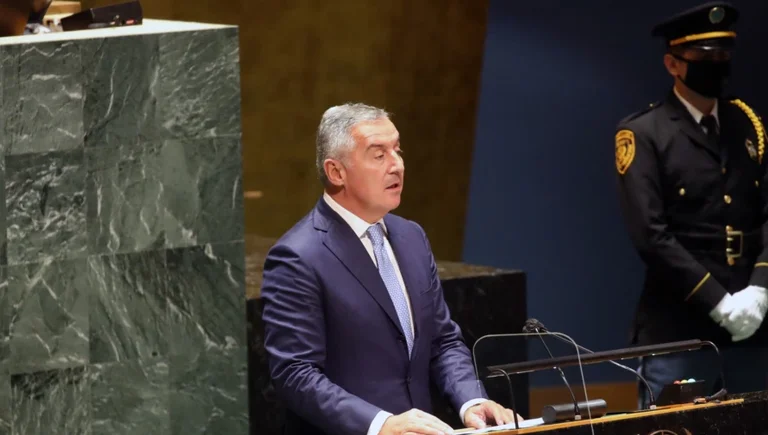
Djukanovic: Balkans, again the arena of geopolitical clashes
Periskopi(5 years ago)
(5 years ago)Montenegro's President Milo Djukanovic has said that the Balkans continue to be a region of confronting the interests and strategic goals of various international actors. He made these comments in the speech before the General Assembly of the United Nations Organization, which is taking place in New York [...]
He made these comments in front of the United Nations General Assembly, which is doing works in New York, U.S.A.
Even today there are challenges and threats to multiethnic democracy in the Balkans. The Western Balkans are again the arena of geopolitical interests, the consequences of which are slowing down the integration of Western Balkan societies into their European natural environment”, the Montenegrin president added.
Djukanovic said Montenegro warns of the renewed risk of destabilizing the Western Balkans and narrowing the scope of its European perspective.
Earlier, a new report by the Bulgarian-based Centre for the Study of Democracy says that in countries where Chinese capital inflows has been seen as negative impact on environment and the quality of governance.
Much of Beijing's influence is focused on Hungary, Czechia and the Western Balkans, mainly in Bosnia and Herzegovina and Serbia.
According to the report, the countries that have suffered most in the decline of government standards and the increase in debt levels are Bosnia and Herzegovina, Hungary, Montenegro and Serbia.
A $1 billion highway construction project in Montenegro was placed at the centre of the Chinese influence debate in Europe.
Montenegro has announced it would not be able to pay its debt to China's Export-Import Bank.
In addition to the debt issue, this project was criticized for its cost.
Eventually, Podgorica received debt assistance from a variety of American and European institutions to help stabilise its finances and meet loan payments.
Russian influence is also viewed by Western countries as very problematic in the Western Balkans.











