 44 minutes ago
U.S. crash for abortion law
Periskopi(5 years ago)
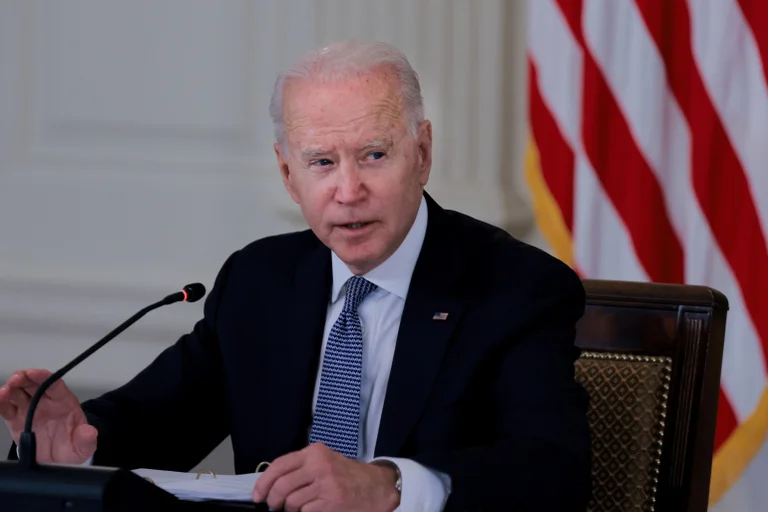
(5 years ago)The president of the United States, Joe Biden, vowed that he would strongly oppose the new law in the state of Texas, which prohibits most abortions. Beden named the US Supreme Court's decision not to block the law as an unprecedented “attack on women's rights. Every individual now [...]
Beden named the US Supreme Court's decision not to block the law as an unprecedented “attack on women's rights.
Each individual now has the right to sue anyone involved in providing or facilitating abortion after six weeks of pregnancy in Texas.
During this time, many women do not even know that they are pregnant.
Human rights groups urged the Supreme Court to block the law, but it refused, voting by five votes in favour of the law and four against it.
The judges said their decision is not based on any conclusion whether Texas law is constitutional or not and that the door to legal challenges remains open.
President Beden accused the Supreme Court of “kaos unconstitutional”.
The highest court of our land will allow millions of people in Texas who need reproductive care to suffer until the courts analyze the procedural complexity”, Biden said.
He said he has asked the Department of Human Health and Services and the Justice Department to see what steps the national government can take to protect women and abortion services providers, but did not provide more details.
Biden said the law violates the historic Roe v Wade case of 1973, with which the Supreme Court legalised abortion throughout the United States.
Texas Republican Governor Greg Abbott said his state “will always support the right to life”. He signed the law on abortion in May.
The law, called the Heartbeat Act, prohibits abortions after the discovery of fetus heart rate, critics of abortion say.
The American College of Obstetricians and Gynecologists says that the term <x0 leftover” is incorrect, since what develops during the six weeks of pregnancy is “part of the fetus tissue that will become hearty until the embryo develops”.
The law makes exceptions in the case of medical emergency, but it requires written evidence by the doctor. The law does not make exceptions to pregnancies resulting from rape or incest.
Women from Texas who want to abort in six weeks will have to travel to other US states.
What's Roe v Wade?
The abortions became legal throughout the United States with a historic Supreme Court ruling in 1973, known as the Roe v Wade case.
With seven votes to and two against, the court judges ruled that individual state governments lack the power to prevent abortions.
The sentence was based on the decision that a woman's right to abort pregnancy falls under the freedom of personal choice, which is protected by the 14th Amendment of the American Constitution.
The decision came after a 25-year-old woman, Norm McCorvey, under the nickname “Jane Roe”, challenged Texas's abortion criminal laws, which prohibit most abortions.
Henry Wade was Texas Attorney General who defended the law against abortion.
The case created a “recent” system that:
gives American women absolute right to abortion in the first three months of pregnancy;
allows some government adjustments in the second quarter of pregnancy;
It claims that countries can limit or ban abortions in the last quarter, as the fetus approaches the point where it can live outside the womb.











