44 minutes ago
They're in the cities. Kosovo still has eliminated AstraZenecas expired vaccines
Periskopi(5 years ago)
(5 years ago)The Ministry of Health in Kosovo has not provided information on how the doses of AstraZeneca vaccines, which the i dealt with, will be eliminated. Kosovo is among several states in the region, but also broadly, that due to the passage of the sustainability deadline, it is expected to eliminate upon [...]
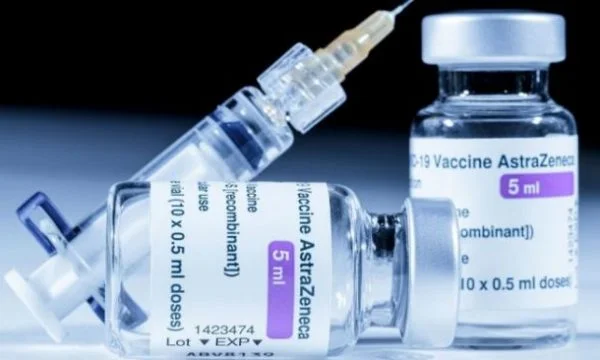
Kosovo is among several states in the region, but also broadly, which due to the passage of the sustainability deadline, is expected to eliminate more than 133 thousand doses of pharmaceutical company AstraZeneca vaccines.
Officials from the pharmaceuticals in the Ministry of Health, in a written reply, told Radio Europe Free Europe that “in terms of over-term products, the institution ) in this case the Kosovo National Public Health Institute (IKSHPK) ) applied to the pharmaceutical Inspectorate to verify the stock of expired”.
Then, adding from the inspectorate, on the basis of demand, is the <x0-version of stock and computer, commanded to be saved and quarantined to create the conditions for destruction”, the Inspectorate's response is said.
The chairman of the Kosovo Pharmacists' Oda, Arian Jakupi, has explained to Radio Free Europe what the procedures for the annihilation of these vaccines should be.
He says that in this direction, it is important to know the deal with producers regarding vaccines.
According to him, Kosovo has legislation in effect regarding the destruction of unusable, expired medical products, or those that could result in any particular defect.
The “Taking into account these, the institution in which they are, should be identified as unusable vaccines, procedures should be developed in harmony with the rules by taking even one permission from the Ministry of Environment and, in this way, in companies which are licensed for these procedures, there should be annihilation”, Jakupi said.
Jakupi says the destruction of vaccines -- in this case of AstraZenecas -- should also be done in consultations with vaccine producers.
“There may be procedures that can predict the exact way of destruction with any specific specificity the manufacturer predicts, or any other issue that can be presented in such discussions, whether for destruction, the site of destruction, or even for a return to another country. It means, there may be various procedures that can be discussed between institutions and producers”, Jakupi clarified.
In addition to the law, there is also an administrative guide.
With this instruction, organ competencies and the mode of managing medical waste, in view of classification, classification, transport, storage and waste disposal, with certain methods.
The EnvriCon S.P.K. company is one of the companies licensed by the Ministry of Environment and Spatial Planning for Destruction, among other things, of various medical wastes.
The leader of this company, Ruzhdi Thaci, has explained about Radio Free Europe, how the company acted in destroying medical waste.
We carry the medical plants with the refrigerator nation because they are dangerous. So, from various clinics or various labs [privates] and we send them to the refrigerator room, where we have the base and do their annihilation. Their destruction is done at designated locations with burns at 850 to 1,100 degrees” high temperatures, Thaci said.
Earlier, officials at the Ministry of Health have told Radio Free Europe that expired vaccines have not yet been collected in a certain location.
Most vaccines are still in different municipalities at the vaccine centres.
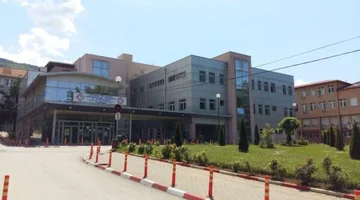
The director of the Main Centre of Family Medicine in Mitrovica, Fevzi Sylejmani, confirmed this. He said he doesn't know exactly what the number of AstraZeneca vaccines is, but they're still present at the center.
“Ende are in the centre, but they are still out of use. I don't know why they haven't come back yet. We are awaiting recommendations from the Kosovo Public Health Institute and the Health Ministry that they return to Pristina”, Sylejmani said.
The ICHPK has not been accessible to comment, despite efforts made by Radio Free Europe!
Otherwise, Kosovo in May signed contracts with the American pharmaceutical company Pfizer for the security of over 1 million vaccines against Coronavirus. Each week, an average of 55,000 Pfizer doses come to Kosovo. So far, half of the vaccines from this contract have been administered.
Kosovo also receives vaccines through the COVAX mechanism and other contributing partners. Among them is Oxford vaccine AstraZeneca, but which Kosovo citizens are reluctant to obtain.
The United States has also sent over half a million doses of Pfizer vaccines to Kosovo, against Coronervirus.
Since the pandemic erupted in March 2020, health authorities in Kosovo have recorded over 154,000 cases of coronary infection. Out of them 2,728 people are dead.
By September 9, 18.8 percent of the general population has been vaccinated.