 3 hours ago
Border threat as political pressure
Periskopi(5 years ago)
(5 years ago)The actions of Serbia's military nature near the northern border of Kosovo are the threat message to Kosovo security institutions and the measurement of the pulse for NATO's mission in Kosovo KFOR, assess the connoisseurs of security issues, Rrustem Berisha, former Kosovo Security Force (former Defence Ministry) and Nuredin [...]
According to them, since the end of the war in Kosovo in June 1999, this is the first time Serbia has deployed its military troops near the border with Kosovo, as well as carried out maneuvers with helicopters and military planes near the Jarina border point.
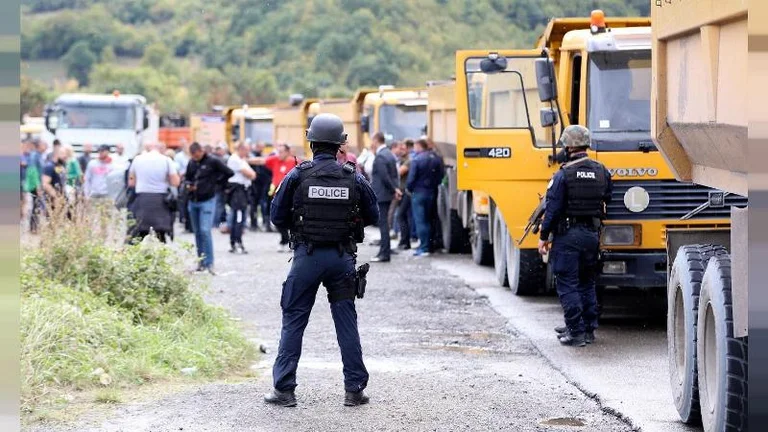
The situation has been strained after the start of implementing the Kosovo Government's decision on the measures of reciprocity with Serbia for the license plates on September 20th, when special Kosovo Police units are located near the border crossings in Jarina and Brnjak, while local Serbs have blocked heavy vehicles in the form of opposition to the Government decision.
On 25 September, near the border point in Jarina, Serbia's military helicopters have been maneuvering, while for several days at both points, military aircraft have been maneuvering. On September 27th, members of the Serbian Army are located near the Kosovo border in Rudnica, Serbia.
On Monday, KFOR said it has increased patrols in those areas.
Berisha: Close Serb Military Presence Pressure on KFOR
Rrustem Berisha, former minister of the Kosovo Security Force (former Defence Ministry), tells Radio Free Europe that since 1999 Serbia has not happened to deploy military forces very close to the border with Kosovo. The Serbian side, according to him, is challenging security institutions in Kosovo, including international ones, such as KFOR.
“Pressure is exerted through the demonstration of force at the border, to Kosovo security and to all security institutions operating in Kosovo, but also to the international presence. KFOR is responsible for Kosovo's overall security. But, of course, they have a pretty large force behind them, from Russia, because they themselves would not dare to undertake something like that”, Berisha says.
Ibishi: Empowering With Effects for the Future
Security Affairs Knower Nuredin Ibishi, former Kosovo Assembly President, says that Serbia's actions near the border with Kosovo, by deploying military forces and maneuvering with war planes, constitute threats sent to local and international security forces in Kosovo. According to him, this behaviour of the Serbian state could produce dangerous consequences for the region, if it is not prevented.
I think that if Serbia is tolerated to continue with this one of its own, profiting through the force enforcement system, then it will have bad results in the future, for a peaceful Balkans, as well as for a peaceful solution to the dialogue between Kosovo and Serbia”, Ibishi points out.
Developments Under Pressure
James Ker-Lindsey, professor at London's School of Economics and Political Sciences, in a conversation with Radio Free Europe on September 27th, has stressed that the recent situation in the north is disturbing and that the past has shown that these kinds of situations can get out of control very quickly.
So, in general this moment is not good and I think that many people and many countries are very concerned with what we're seeing”, it is expressed.
The European Union, the United States of America and NATO have consistently called on Kosovo and Serbia authorities to reduce tensions and resolve issues at the dialogue table.
Kosovo Prime Minister Albin Kurti was ready to go to Brussels to talk with Serbia's president, Aleksandar Vuciq, to overcome the situation, in case there is an invitation from the European Union. But President Vuciq has refused such a meeting.
From diplomatic sources in Brussels, Radio Free Europe learns that this week, in Brussels a meeting can be held between the chiefs of Kosovo and Serbia's negotiating teams.
As the Serbian Army has increased its level of combat readiness along the border with Kosovo, Serbia's Defence Minister Nebojsa Stefanqvik has stressed that the army “has not entered where it should not enter”.
This is a sovereign decision and we have the right to settle in our territory. No one will tell us what to do”, Stefanovic said.
On September 27th, commander KFOR, Major General Franco Federic, has said he has talked with representatives of Kosovo institutions and with the mayors of northern municipalities for the extension of the country's northern situation.
Meanwhile, on September 28th, Kosovo Minister of Internal Affairs Jedal Svecla has declared that the mayors of Serb majority municipalities in northern Kosovo have rejected KFOR's offer, that this mission will take care of the border points in Jarinje and Brnjak, and that special Kosovo Police units will withdraw.
KFOR Without Answers to Security Areas
On September 27th, the mission of the North Atlantic Alliance in Kosovo, KFOR announced it has increased patrols at border crossings in Jarinje and Brnjak.
Radio Free Europe has been directed to KFOR with questions about how many flights there have been from Serbian military planes near the border with Kosovo, and whether they have violated Kosovo's airspace, as well as whether there are any limits or safety areas prior to Serbian aircraft flights near the border with Kosovo. Until the publication of this text, KFOR has not returned answers.
Kumanovo's agreement signed on June 9th 1999 between KFOR and the authorities of the former Yugoslavia, which ended the NATO bombings on Serbian targets and secured the withdrawal of Serb forces from Kosovo, among other things, a 25-mile air security zone across Kosovo's border and a five-mile Earth Security Zone beyond Kosovo's border, where they were not supposed to deploy heavy weapons and armies, besides border soldiers.
After assessing the security aspects of KFOR, in 2001, the Air Security Zone has narrowed from 25 kilometers to 10 kilometers, and in 2003 it has narrowed further from 10 to 5 kilometers.
In 2015, the Air Security Area was relaxed.
Security areas, KFOR responsibility
The former minister, Rrustem Berisha, estimates since the air and land security areas have been relaxed, has not been the security level endangered as it is now.
The “That is the issue KFOR discusses, under the Kumanovo Agreement. Whether they can bring it back (the Air and Earth Security Zone) is their case”, Berisha points out.
Nuredin Ibishi, suggests that the calming of the earlier Air Security Zone can be revised by KFOR. But, according to him, NATO decides.
The “is the issue of NATO's assessment, in the event of jeopardising its forces on the ground (in Kosovo), based on its mission. Relaxation (of air and ground security zones) was done earlier and for a time KFOR patrolled along the Serbian gendarmerie border, but also with members of Kosovo border police. In the event of frustration and escape danger for its forces, KFOR, whether NATO, could take the next measure of limiting the Security Zone, whether Earth or Air”, Ibishi said.
At the vicinity of the Jarina and Brnjak border crossings, members of Kosovo Police Special Units are now standing, as local Serbs with heavy vehicles have blocked roads leading to these two border crossings.
This situation was created after the Kosovo Government's decision, under which, by September 20th, all Serbia's license plates should be removed by Kosovo and provisional license equipment issued by Kosovo authorities.
For these temporary license plates, drivers must pay five euros, and their validity is two months.
The Ministry of Internal Affairs has announced that since 20 September, it has issued over 11,000 temporary plates at all border crossings and at vehicle registration centres throughout Kosovo. /rel/











