5 minutes ago
Biserko: Solution would be for Serbia to recognise Kosovo
Periskopi(5 years ago)
(5 years ago)Serbia will not recognise Kosovo until it receives compensation on the other side. And this means divisions in the Euro-Atlantic structure of the Balkans, and most likely a renewed conflict that could have even broader character”. So it has been answered in an interview given to Albanian Post, Mayor [...]
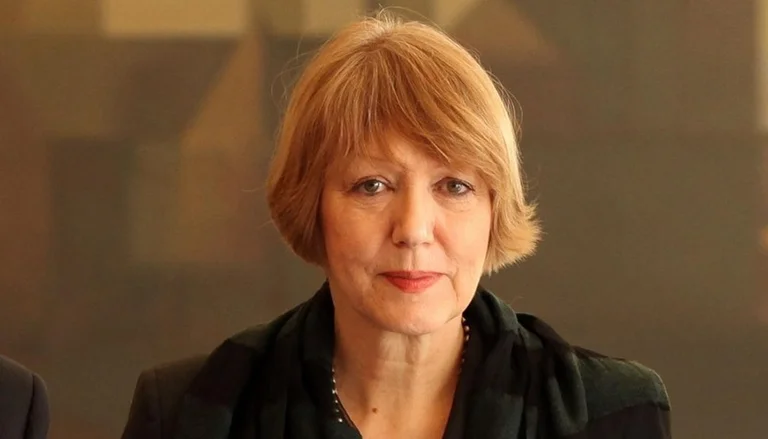
Thus has been answered in an interview given to Albanian Post, Helsinki Committee for Human Rights in Serbia Chairman Sonja Biserko.
Biserko, a major supporter of human Rights and democratic reforms in Serbia and the region, considers that such a rift in the Euro-Atlantic structure and aspirations of the Balkan countries and a renewed conflict, as she calls it, of broader character, “in this case would have nothing more to do with Kosovo and Serbia, but also Macedonia, Montenegro, and Bosnia<1>
Here, of course, a fundamental question arises about values whether Europe agrees that the ethnic criterion should be the main criterion in conflict resolution. And that would mean abandoning the values on which the European Union has relied until today. Dayton Accords were entirely wrong and must be changed”, Biserko explains for Albanian Post.
Asked by the AP how he considers the issue to be resolved between Kosovo and Serbia, Biserko says the “solution is for Serbia to recognise Kosovo and implement agreements that have already been signed” so that “normalise the lives of Serbs, Albanians and others”.
“If there is a substatic consolidation of the Balkan countries' citizenships, and if Euro-Atlantic structures are abandoned, the region will individually be divided in different areas of interest, which means continued non-stability”.
Furthermore, the world is facing new challenges, challenges to which even large countries have no answers, and leave them alone. The answers must be global, as the pandemic and COVID witnessed. Other hot challenges, such as climate, environmental issues, rampant capitalism that enhances worldwide inequality all these relativize borders and sovereignty”, considers Sonja Biserko.
She says all states coming out of the former Yugoslavia stand back in terms of these major issues.
Without giving up projects for major states, without regional co-operation (which they only talk about), the region will remain in the periphery without any support (which is also)”, she explains.
Serbia, approach to Montenegro
The problematic approach Serbia has not only towards Kosovo, Biserko explains, but also in the region.
For recent developments in Montenegro, on the occasion of the accession of Mitrovici Mitrovici in Cetina, it says “is the continuation of Serbian politics in the region”.
Serbia has not given up its aspirations. She's already doing it through other means. The desire for dominance is still very strong. Furthermore, Belgrade believes that the international context is favourable for them for actions of such offensives as this happened in Montenegro”.
Montenegro's president Milo Djukanovic (DPS) party's fall from power, in Serbia's eyes, is a good opportunity for “a Montenegro rather than”, she considers.
“Belgrade has deliberately organised the wreath at Cetine in order to promote Serbia's regional agenda, and thus question Montenegro's sovereignty and identity”, Biserko judges.
As through these actions, according to her, Serbia is hastily moving away from key values in the EU and NATO, destroying the concept of being a citizen, destroying secularism and aiming for Montenegro to make “Serbian World project”.
However it is”, says Helsinki Committee Chairman “Serbia, with such behavior, only strengthens Malaysian identity”.
Beyond what the current situation is very vague, Belgrade's behaviour only deepens its distrust of them in the region, and at the same time endangers and sacrifices all Serbs outside Serbia”.
Western Countries Passive to Developments in Montenegro
Biserko explains that the clearest principle of Western politics in religion and state is secularism, that in Western foreign politics, religious issues never relate to politics. But that they are failing to understand in time one thing.
“They are late in understanding that the Serbian Orthodox Church is presented exclusively as a political institution, very little spiritual, and that it is in the function of Serbian foreign policy towards its neighbours”, it indicates.
The statements of the QUINT countries were unequivocal, showed they lack understanding of the situation, and especially that Serbia treats Montenegro as a territory, and that the main actors of this crisis are the Orthodox Church with the support of Serbia's security forces, and of course, Russia. Russia acted in a very sophisticated form this time through church”.
Sonja Biserko says that the fact that Montenegro is a member of NATO is a very big step before but that “Serbia and Russia are testing how far they can go to challenge the EU, the US, and especially NATO's”.
Trans-Atlantic unity after US withdrawal to Afghanistan
The US “caotic pull from Afghanistan, says Biserko, has damaged its reputation, and has questioned “at least for a time”, the influence and legitimacy of a global power.
The particularly damaging “was the fact that they did not consult with their coalition partners and did not ensure a safe exit from the country for those who might be threatened with the fact that they co-operated with them”, she explains the Albanian Post.
Many world analysts view this as the end of American domination, but she says the situation is more complicated.
So, she considers, that the <x0cysitute is much more complicated because American evacuation has opened up a problem for China and Russia, and all neighboring countries. The geopolitical painting of the world has significantly changed”.
“From the U.S. perspective, leaving Afghanistan is the right strategic decision. Of course, this does not mean the end of the United States as global superpowers, but only a relative and slow decline. America's focus on China will certainly strengthen the Trans-Atlantic alliance”, Biserko explains.
Political scene in post-Merkel Europe
The departure from the political scene of German Chancellor Angela Merkel, Biserko, does not consider any German policy course shift to countries in the region.
Merkel's “removal from the political scene, I am sure it will not change anything of German politics towards the region. On the contrary, I believe it will only grow. Merkel's farewell trip, including the Balkans, seems to be a review of her heritage. It will, however, remain a political-inflicted figure not only in Germany, but also in the EU”, answers Sonja Biserko.
Russia and the Balkans
Russia, she says, certainly, always acts in the Balkans as a destabilising factor.
Russia has used the chaotic evacuation of America from Afghanistan to claim that ideal Western democracy is not universal. But, that both Russia and China should actually be concerned about post-American Afghanistan”, she says.
While it also says that the non-admission of the West in the Balkans has left Russia much space to maneuver, but also the weak political elites of the Balkans.
A serious Western policy alone can integrate the Western Balkans into European spaces, which even objectively belongs to”, concludes Sonja Biserko for Albanian Post.