36 minutes ago
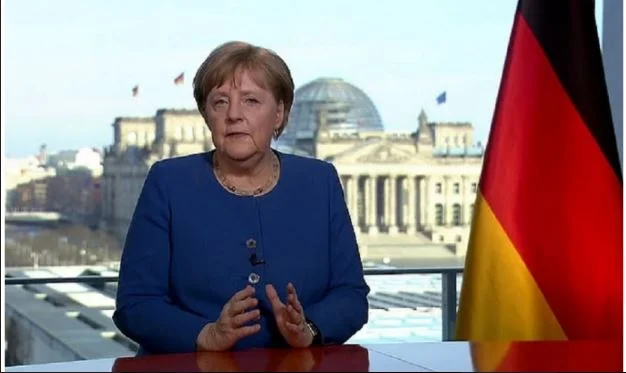
Angela Merkel in the Western Balkans, why did she choose Belgrade and Tirana to visit farewell?
Periskopi(5 years ago)
(5 years ago)German Chancellor Angela Merkel's farewell tour in the Balkans and the upcoming elections in Germany have aroused great interest throughout the Western Balkans region. Most Western Balkan countries have similar goals and problems: membership in the European Union (BE), and at the same time a host of challenges [...]
German Chancellor Angela Merkel's farewell tour in the Balkans and the upcoming elections in Germany have aroused great interest throughout the Western Balkans region. Most countries in the Western Balkans have similar goals and problems: membership in the European Union (BE), and at the same time, a host of domestic challenges -- from economics, corruption, lack of reforms and interethnic tensions. So Germany and the EU policies are strongly reflected in domestic issues in Serbia and other BP countries. It is now being analysed there what it means for the region to leave the political scene of Chancellor Angela Merkel and whether any significant changes in German and European politics can be expected.
When it comes to Serbia in particular, Germany is not only one of the most important economic partners, but also a country whose voice is seen as crucial to the European integration process. This should surely be added to a personal note that Serbia's president, Aleksandar Vuciq, has introduced to his reports with Chancellor Angela Merkel, which the opposition has criticised very often.
Part of the Serbian opposition believes Angela Merkel, with her kind attitude towards Aleksandar Vuciqi and his autocratic movements, made the opposition's political fight even more difficult for changes, and that favoured Serbia's ruling Progressive Party (SNS).
German Interests
So it is not surprising that the curiosity in Belgrade about parliamentary elections in Germany is understandable, says DW Marko Savkovic of the Fund for Political Excellence. “But we must wait a little until the formation of the new government and see if anything will change in politics towards Serbia and the Balkans as a whole.
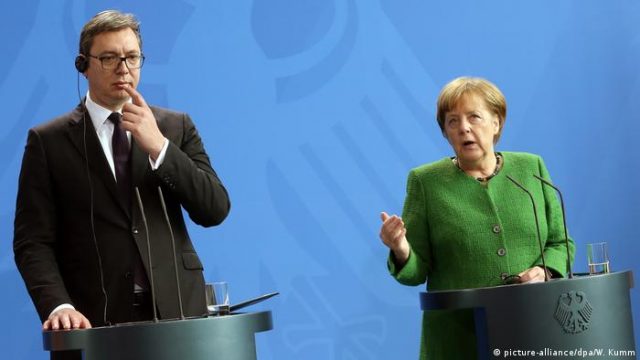
Savkovic adds that “should be analysed if German interests in the region have changed. “In my opinion, they have not changed because Germany is still interested in a stable Western Balkans, which does not produce problems. She is interested in a Balkans where the migration route is under control, while there is a high rise in the German economic presence in Serbia. I think this is going to be a priority in the future”, says our conversationor.
Good-bye support for Vucciki
Meetings with Austrian Chancellor Sebastian Kurz, as well as talks in Belgrade with High Representative to Bosnia and Herzegovina Christian Schmidt, can be seen as a kind of preparation for the visit and talks with Chancellor Angela Merkel in Belgrade. Naim Leo Beshiri, director of the Institute for European Affairs, says about DW: “Angela Merkel is coming to pay a farewell visit just before the elections in Serbia to back Aleksandar Vucinqi. Its presence will be used by the Serbian president to show there is support from the West. It will be used for election campaign in Serbia”, Beshiri says.
The director of the Institute for European Affairs believes that “will have no tectonic changes to German politics towards Serbia, except that now EU countries will become more aware, that the SNS party and its leader, President Aleksandar Vuciq, have not fulfilled the promises and agreements reached between them in the past nine years”.
“During this time Angela Merkel believed that the stabilisation was more important than the internal situation in Serbia, expecting the Kosovo issue to be resolved once and for all, but that did not happen”, Beshiri says.
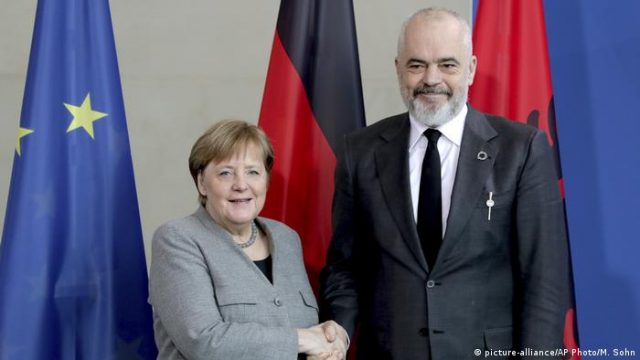
Marko Savkovic also views the meeting with Christian Schmidt as a preparation for Merkel's visit, and adds that “Wukiqi hosted Schmidt within a day and held an extraordinary press conference, in which he tried to distance himself from certain policies in other Western Balkan countries. I believe even in Berlin they understand the idea of the so-called Serbian world” as problematic, says Savkovic.
Is Vuciki's EU supporter leaving?
The main issue after Angela Merkel's departure is whether, and to what extent, the EU's attitude towards Serbia will change, especially towards Aleksandar Vucinqi's government. There is strong confidence in Serbia that Merkel was Vuciqi's main support in the EU, and that under these conditions it was difficult to wage an equal political struggle with Vuciqi in Serbia.
Marko Savkovic estimates that this relationship is often simplified, but that belief is essentially true. He faced a constructive attitude towards Kosovo in the early years of power, and especially with his attitude during the refugee crisis, he put Merkel in debt. Vuciki constantly stresses that she returned this service by supporting Serbia. The fact is that their meetings have been reduced in the past few years, so I think this visit can be considered a clear support of the European perspective of the Western Balkans”, Marko Savkovovic said.
But the European Union is not a homogenous creature, points out Naim Leo Beshiri. “Most EU countries were critical of what was happening in Serbia, but Germany often calmed these critical voices because it put the stability of the region in first place”. As for the Serbian opposition, it offered nothing new when it comes to Kosovo or Bosnia and Herzegovina, and in addition, they were highly critical of certain EU reform requirements. Therefore, it is not surprising that no serious support for the opposition in Serbia came from there”, Beshiri says.
The opposition should be more cautious in its assessments, adds Marko Savkovic, “because a democratic Germany will be needed every political actor in Serbia”.
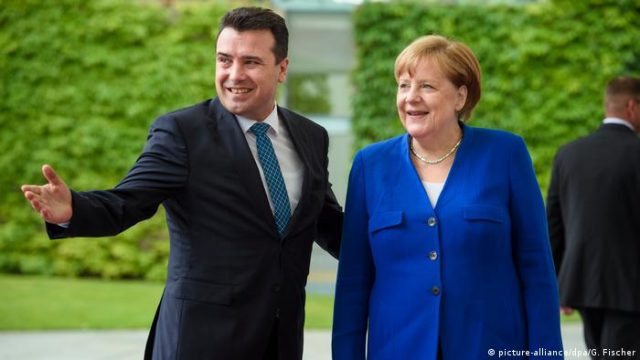
We should underline that Germany is one of the countries that wants to hear the opposition arguments, which are very strong when it comes to the state of democracy in Serbia. Therefore, it is necessary that they act actively towards the new German government, anyone who wins power”, points out our conversationist.
Why exactly Tirana and Belgrade?
The fact that Angela Merkel will visit only Belgrade and Tirana during the farewell tour of the Balkans has raised numerous questions, first of all, why were these cities selected?
I think Aleksandar Vuciq and Edi Rama look to Merkel as her beloved children in the Berlin Process, which she has failed to complete. I fear that its departure from the political scene will also be the end of the Berlin Process, which was never conceived as replacing EU membership, but as a regional engine of reforms, which would later lead to EU membership”, says DW, Naim Leo Beshiri.
Marko Savkovic claims that “is difficult to answer this question because Bosnia and Herzegovina, which is in a permanent crisis”, has been selected as well. The interest is that Merkel will not even go to Kosovo. I don't think this is a distance from Kurt, but interesting is that she's not going there. Finally, I don't know why she's not even going to Northern Macedonia, which has been pushed without her credit at the end of the European integration list of countries”, says Savkovovic./DW