7 minutes ago
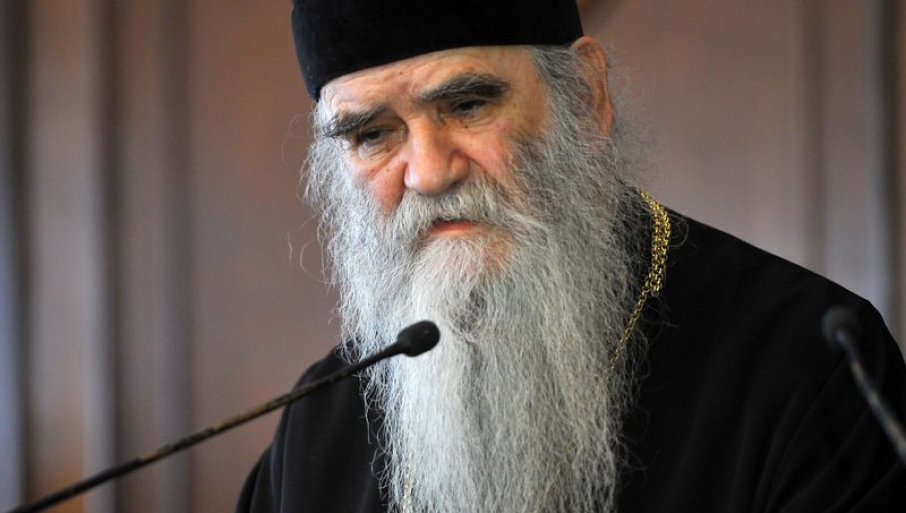
Who was Amfilohije, for whom Serbian priests sang “when the army returns to Kosovo”
Periskopi(5 years ago)
(5 years ago)Former Amfilohije Radovic, for whom Serb priests today in Cetinje in Montenegro sang about the return of the Serbian Army to Kosovo, was the idol of Serbian nationalists and criminals. Much of the Montenegrin people remember him as a promoter of war. Amfilohije is also remembered for his hospitality to the criminal [...]
Mitrovici Amfilohije was also known for his curses. In one of the most cited, on the eve of Montenegro's accession to NATO, he said: “Whoever is against Russia and Orthodoxia with one blood, one faith and one language, live flesh fall from the body! Damn him three times, three thousand times.
The influence of Amfilohije in Montenegro was so great that it is believed that he joined the pro-Serbian coalition “for the Future of Montenegro”, which includes Albanian Dritan Abazovic in the post of deputy prime minister. It is said that it was the same who, at the helm of this coalition, appointed Zdravko Krivokapicin, who is Montenegro's prime minister today.
In late September, on the eve of the Montenegrin Parliament's constitutional session, Amfilohije gathered leaders of the new government at the Ostrogu monastery, urging them to support Krivokupi as prime minister.
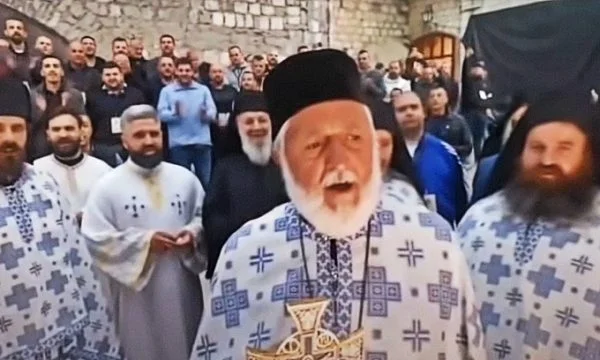
As noted in a video of Serbian “Vecernji novost”, priests at the Certinje monastery sang the song “Ječam <ela”, whose texts contain pieces that say “when the army returns to Kosovo”.
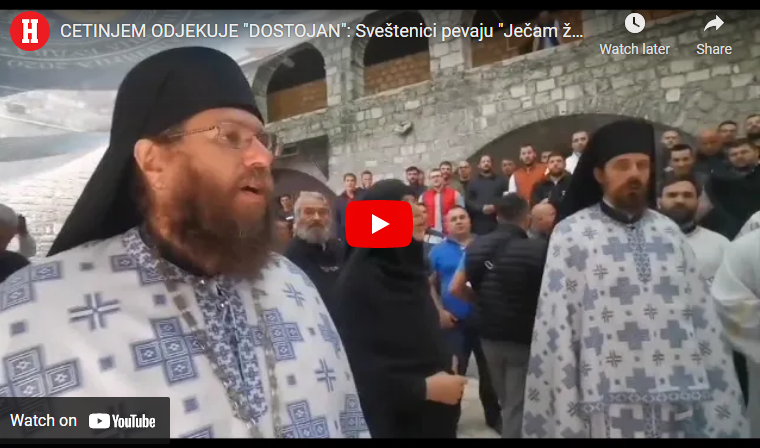
Albanian Dritan Abazovic, deputy prime minister of Montenegro, has supported his proserb chief in approaching Montenegrin citizens' protests against the disgurging of the head of the Serbian Orthodox Church in Cetinje. As Montenegrins opposing Serbian influence and defending their national identity protested, the ceremony was being held within the Cetinje Monastery where, among other things, “when the army returns to Kosovo”. Prior to this ceremony, images appeared where Abbasovic met with leaders of the Serbian Church.
Abazovic, through a tweeting post, has said that close people of Montenegrin President Milo Djukkovqi stand behind the protest, adding that “everything is clear to everyone”.
Two days ago, he said such an atmosphere was created - against the protest ceremony of the head of the Serbian Church -- “just to slow down the fight against organised crime”, Vijesti reported.
Mitrovici Ionikije was evacuated Sunday morning in Montenegro's historic religious capital, despite opposition from thousands of protesters who kept roads blocked for Cetinje for two days.
Serbian Mitrovici Ionnikije and Patriarch Porfirije arrived in Cetinje by helicopter and accompanied by a special police unit, as police forces broke barricades and protests escalated in the heart of the Montenegrin capital and on the street.
Recent protests clearly show tensions in Montenegro among residents who advocate close ties with Belgrade and the patriotic Montenegrins who oppose it, the transmission Express.
The ceremony was preceded by incidents in which, according to official data, seven policemen were injured and dozens of protesters sought medical assistance. Also, 14 people were arrested, among them also the security adviser to Montenegrin President Milo Djukanovic, Veselin Veljovovic.
Montenegrin Prime Minister Zdravko Krivokafic said the attack on police was an attack on the state.
In an extraordinary response to the chaotic situation in Cetinje and the disgurging of the new Serbian Orthodox Church, Ionanikije II, Montenegrin President Milo Djukanovic said that “alone would allow himself to enter the Cetinje monastery by helicopter”.
“Today in Cetinje, we witnessed the great shame of the Serbian Orthodox Church and the Government of Montenegro, an unprecedented disgrace in the long history of the Montenegrin state, and the same in the history of general Orthodoxy”, the Montenegrin president said.
Recent protests clearly show tensions in Montenegro among residents who advocate close ties with Belgrade and Montenegrin patriots who oppose it.
Montenegro seceded from Serbia in 2006, but its church has not become autocephales and is under the auspices of the Serbian Orthodox Church, which opponents see as a symbol of Serbia's influence in independent Montenegro.