 3 hours ago
The New York Times” writes for Albanian men
Periskopi(5 years ago)
(5 years ago)A century - old tradition in which women declared themselves men in order to enjoy male privileges is dying because young women have more opportunities to live their lives. That's how The New York Times, dedicated to Albanian lady women. A personal confession of a woman [...]
A personal story of a woman who decided to say no to marriage and join the Albanian brotherhood called “burnes” by breaking taboos so that today very few women are afraid to do it, swear to an eternal bachelor and abandon the so-called tradition of the “-virgins”.
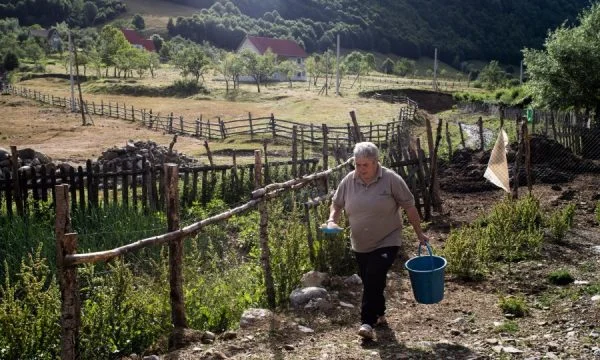
Found in a closed and patriarchal society closely linked to old traditions in Albania's far north, Judge Grichaj made a drastic decision as a teenager: She'd live the rest of her life as a man.
She did not want to marry at a young age, she did not like cooking, ironing clothes, or “do any of the things women do”, so she joined an Albanian brotherhood known as “burners and called herself Duni.
I took a personal decision and then told others: I'm a man and I don't want to get married”, recalls Duni's first moments when he told his family about his decision.
Today very few women want to become what anthropologists call “Albania's sworn virgins”, a tradition that started centuries ago. They swear to eternal singleness and enjoy male privileges, such as the right to make family decisions, smoke, drink, and go out alone.
Dunn said her choice was accepted by most people, even though her mother insisted that she change her mind until the day she died in 2019. Like other men, Duni, who in official documents is still Judge Grichaj, people are addressing her in a traditional manner, without at any given moment the names in the female gender but do not at any time consider themselves as transgiar.
The brotherhood, which Duni joined nearly 40 years ago is slowly dying, as Albania is constantly changing, and even in rural patriarchal areas, young women enjoy more opportunities. Its Christian village, such as most of the northern part of the country, has begun to slowly eliminate the claustrophobic isolation, thanks to the construction of a snake road through the mountains that attracts numerous visitors and at the same time provides a way out for local women with a strong desire to live their lives.
Many, like Dunn, vowed to escape forced marriages, some so that they could take on the traditional male roles, like running a farm into a family where all men had died of blood feuds and others because they just felt more like men.
“Society is changing and men are dying”, said Gjok Luli, an expert on Albania's traditions. There are no accurate figures of what they are still alive, but of the dozens currently, most are elderly. Dunn, 56, is probably the youngest.
“There was a way to escape from the role of woman”, said Mr. Luli, “but there is now no need to leave on”.
Among those who are now able to choose different paths in life is Dunn's niece Valerjana Grishey. She is 20 years old and has decided to leave the mountains in her teens and move to Tirana, Albania's relatively modern capital. The village, said no, is not my place as we drank coffee at a cafe in Tirana.
All my friends there have been married since they were 16x1>, she said.
But Miss Grichaj said she understood why her aunt made the decision to turn into a man.
There were no strong, independent women”, she said. To be that, you had to be a man”
She did not spare recognitions for her parents who had allowed her to make her own choices.
“I was very lucky, but parents like mine are rare”, said Miss Grichaj, noting that most pressure their daughters to marry as teenagers.
Albania, which was isolated in the period of communist dictatorship until 1991, has had a major economic and social development in recent years, and the country has increasingly been linked to the rest of Europe.
But Tirana, where Miss Grichaj moved to the age of 17, may still be a difficult place for a young woman to try to find her way.
“Patricalism still exists, even here in Tirana”, Duni's niece said. Young women living alone complained, often subjected to gossip, and viewed as dishonest.
However, today's <x0).
By declaring himself a man, Dunn was not striking conventional gender standards, but he was actually subjecting himself to them. It shares the same transphobic and homophobic views that are widespread in Albania.
In fact, all in her village of Lepuda believed that men would always have more power and respect, so the best way for a woman to share their privilege was to join them instead of trying to defeat them.
As she examined four decades of her life in which she dresses, behaves, and is treated as a husband, she says “As a man, she receives a special status in society and in the family. I've never worn a dress and never regretted my” decision, Dunn said.
The support of this tradition was, in fact, promoted by the Kanun, who classified women as talkers whose purpose was to serve men.
Women's low status gave them an advantage, yet it exempted them from battles that for centuries destroyed Albanian families after men from clans of hostility were killed in an endless cycle of killings. The parents, whose sons were all killed, often called on a girl to become a maness, so she would have a husband representing the family at the village meetings and managing her property.
A woman who became a sworn virgin was viewed as not fully male, not counted in blood feuds, and thus escaped murder by a rival clan.
Luli, an expert on local traditions, said that one of his cousins, who had the nickname Cuba instead of the original name, Theresa, was a single child and became a sworn virgin in order to avoid marriage and avoid her parents being alone. She died in 1982.
He compared Cuba to a <x0wife who decided to become nun”. “It's the same kind of commitment”, said Mr. Luli, “but to the family instead of God”
For Albanians trying to achieve gender equality, such commitment fosters mixed feelings.
To say I won't take orders from a man is a feminist policy”, said Rea Nepravishta, an activist for women's rights in Tirana. You're going to say that I own myself and I'm not going to own a man. But, she added, “to be forced to act like a man instead of a woman is completely anti-feminist -- it's terrible”.
The inequities designated by the Canun, Mr. Neprastica said, gave women a choice “or live as half an animal or have some sort of freedom by bringing men”. While patriarchism is still strong in society, it has lost some power and no longer put women in the face of such elections.
Some husbands said they claimed themselves men simply because they never felt like women.
Diana Rakipi, 66, a man in the coastal city of Durres, said: “I always felt like a man, even as a boy”.
Mrs. Rakip enjoys following the boss. On a walk near her small one - room apartment, she stopped passersby who thought they were behaving indecently, like a boy who saw his brother hit and rebuked him.
Rakipi, who grew up in the north before moving to Durres, said she was sworn in as a husband when she was a teenager in front of dozens of relatives and vowed to serve her family as a man. She had made her decision after her parents ' only son died of illness and always stressed that God had sent her to replace her dead brother.
I was always considered a man of the family. They were all upset by the death of my brother”, she said, sitting in a cafe where all the other customers were men. It carried a black military bead, a red tie, man's trousers and a sarfari vest, with pockets filled with amulets of its electronic beliefs, including a Christian cross and a medallion with the face of Albania's former dictator, Enver Hoxha.
Mrs. Rakipi reacted with contempt when asked about people undergoing surgery to change gender. The “is not normal,” she said. If God made you a wife, you're a woman”.
Duni, from the village of Lepue, also has strong views on this issue, saying that the gender change goes “against God's will” and that people “should go to jail” if they do.
I didn't live as a man because I want to be a physical man. I have done this because I want to take the role played by men and the respect of a man”, she said. I'm a man in my soul, but having male genitals isn't what makes you man”
Locals in Lepure, including Manushache Shkoza, waitress at a local café, said Duni's decision to become a man came first as a surprise, but was accepted long ago.
Everyone sees such a thing as normal”, said Mrs. Shkoza.
Duni said it was sad that the tradition of the sworn virgins would die, but noted that her niece in Tirana I had shown that there were now less drastic ways for a woman to live a full and respected life.
“Society is changing, but I think I've made the right decision for my time”, Dunn said. I can't go back now and give up the role I've chosen. I swore to my family. This is a way you can't go back to”. / KultPhoto. com











