3 hours ago
The Taliban are super rich. Here's where they get the money for the war in Afghanistan.

Periskopi(5 years ago)
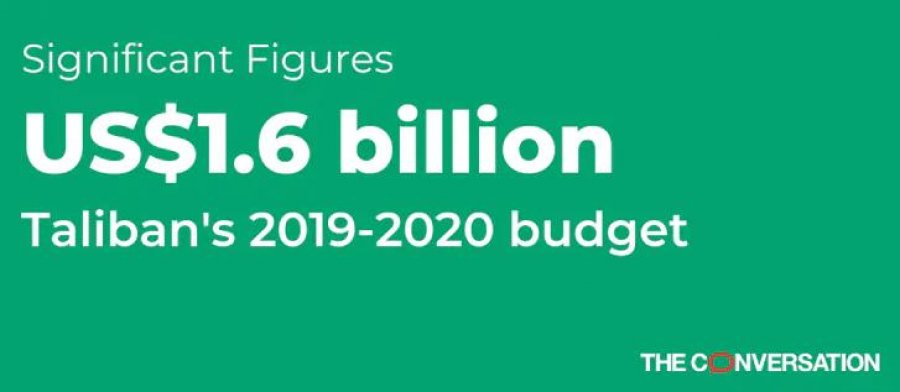
(5 years ago)The Taliban militants of Afghanistan have become richer and stronger since their fundamentalist Islamic regime was overthrown by American forces in 2001, writes The Conversion. In the fiscal year completed in March 2020, Taliban reportedly earned $1.6 billion, according to Mullah Yaqoob, son of the spiritual leader of the Taliban [...]
In the fiscal year completed in March 2020, the Taliban reportedly won $1.6 billion, according to Mullah Yaqoob, son of the spiritual leader of the late Taliban Mulah Mohammad Omar, who discovered the sources of Taliban income in a confidential report ordered by NATO and later received by Radio Free Europe.
By comparison, the Afghan government earned $5.55 billion during the same period. I study Taliban finances as economic policy analyst at the Center for Studies in Afghanistan. Here comes their money, reports scholar Hanif Sufizada.
1. Drugs 416 million dollars
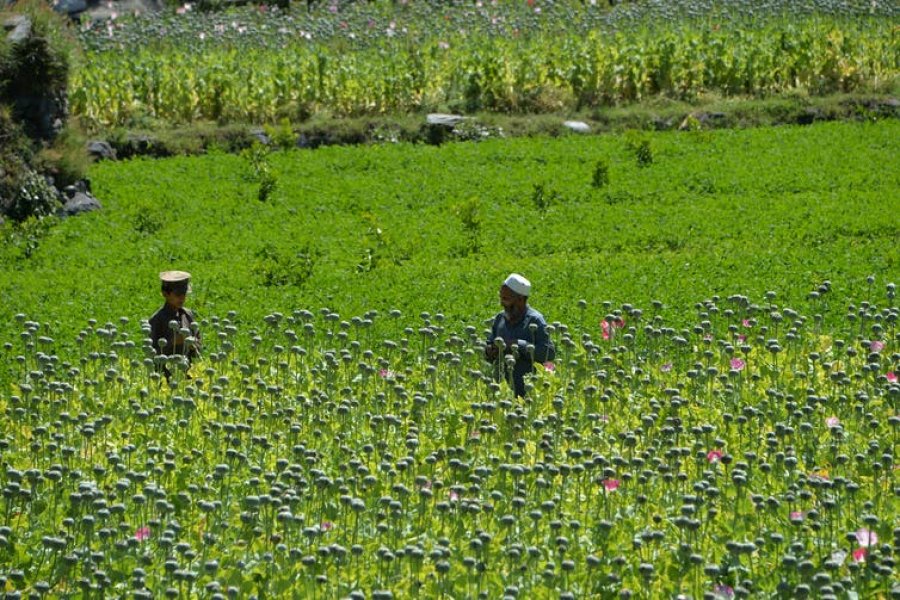
Afghanistan accounts for approximately 84% of global opium production over five years, according to the United Nations World Drug Report 2020.
Most of these illegal drug profits go to Taliban, who manage opium in areas under their control. The group imposes a 10% tax on every link in the drug production chain, according to a 2008 report by the Research and Rating Unit in Afghanistan, an independent research organisation in Kabul.
This includes Afghan farmers who cultivate poppy, the main ingredient in opium, the labs that convert it into drugs, and merchants who move the final product abroad.
2. Mines $400 million to $464 million
Iron, marble, copper, gold, Zink, and other rare minerals in mountainous Afghanistan are increasingly profitable businesses for the Taliban. Both small mining operations and large Afghan mining companies pay Taliban militants to allow them to keep their businesses at work. Those who don't pay face death threats.
According to the Taliban Stones and Mines Commission, or Dabaro Comisyoon, the group earns $400m annually from the mines. NATO estimates the figure is higher, to $464m from only $35m in 2016.
3. Fines and taxes $160 million
Like a government, Taliban tax people and industries in the area of Afghanistan under their control. They even issue official tax bills.
The “industries taxed” include mining operations, media, telecommunications and development projects financed by international aid. Drivers are also accused of using highways in Taliban-controlled regions, and shopkeepers pay Taliban for the right to do business.
The group also imposes a traditional Muslim form of taxation called “usr” ) which is a 10% tax on the harvest of a farmer and “zeta”, a property tax of 2.5%.
According to Mullah Yaqoob, tax revenues which can also be considered extortion, fines bring about $160m a year.
Since some of those who are taxed are breeders of redflowers, there may be a tax overlapping between tax revenues and drug revenues.
4. Donations of charity $240 million
The Taliban receive secret financial contributions from private donors and international institutions across the globe.
Many of the Taliban's donations are from charities and private funds located in the Gulf countries, historically supportive of the group's religious uprising. These donations are added to some $150m in $200m annually, according to the Afghanistan Centre for Research and Political Studies. These charities are on the US Treasury Department list financing terrorism.
Private citizens from Saudi Arabia, Pakistan, Iran and several Gulf countries also help finance the Taliban, contributing another $60 million a year to the Haqhani Network linked to Taliban, according to US antiterrorism agencies.
5. Exports $240 million
In part for money laundering, Taliban import and export various daily consumer goods, according to the UN Security Council.
Renowned business filters include the multinational company Noorzai Brothers Limited, which imports auto parts and sells mounted vehicles and auto parts.
Net income of Taliban from exports is thought to be around $240m annually.
This figure includes export of poppies and minerals, so there may be financial overlapping with drug and mining income.
6. Real estate $80 million
The Taliban have real estate in Afghanistan, Pakistan and other countries potentially, according to Mulah Yaqoob and Pakistani SAMA TV. Yaqoob said that the annual income of NATO's real estate is about $80m.
7. Special States
According to BBC report, a classified CIA report estimated in 2008 that the Taliban had received $106 million from foreign sources, especially Gulf states.
Today, according to numerous American and international sources, the governments of Russia, Iran, Pakistan and Saudi Arabia are believed to finance the Taliban. Experts say these funds could reach up to $500m annually, but it is difficult to set a precise figure.