2 hours ago
After the Taliban took power, Afghan refugees are going to what countries?
Periskopi(5 years ago)
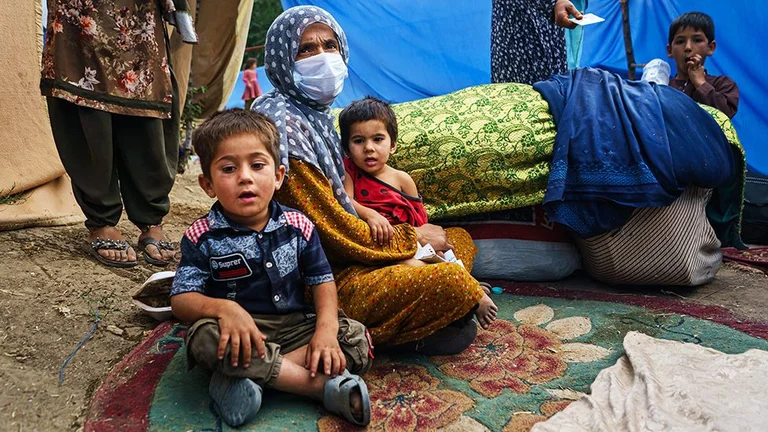
(5 years ago)Thousands of people have tried to flee Afghanistan after the Taliban took power of the country, two decades after the US-led military coalition had brought them down from power. This increase in numbers of people on the run comes as 2.2 million refugees are already in neighboring countries and with 3.5 million remaining [...]
This increase in numbers of people leaving comes as 2.2 million refugees are already in neighbouring countries and with 3.5 million left homeless within Afghanistan's borders as a result of continued conflict and political instability.
How many Afghans are leaving their country?
For now, this thing is unclear, writes BBC, translates Periscope.
Taliban have said they do not want Afghans to leave the country. Reports show that only traders and those with travel documents are allowed to travel.
Thousands of Afghans are believed to have fled to Pakistan shortly after the Taliban took power in Kabul. Another 1500 are believed to have been introduced to Uzbekistan and living in tents near the border.
In Kanbul, thousands of people raided the international airport in desperate efforts to escape.
On Friday, a Nato official said that more than 18 thousand people fled the airport since the Taliban took power.
Even before the Taliban took power, more than 550 thousand people were forced to flee their homes because of fighting, according to UNHCR.
This means that somewhere 3.5 million Afghans are currently internally displaced.
This year, Afghans were also challenged by severe drought and cuts in food for most of the country. A report by a UN programme estimated that 14 million people, or more than a third of the population, were suffering hunger.
Below are the chart of countries that received the highest number of Afghans in 2020.
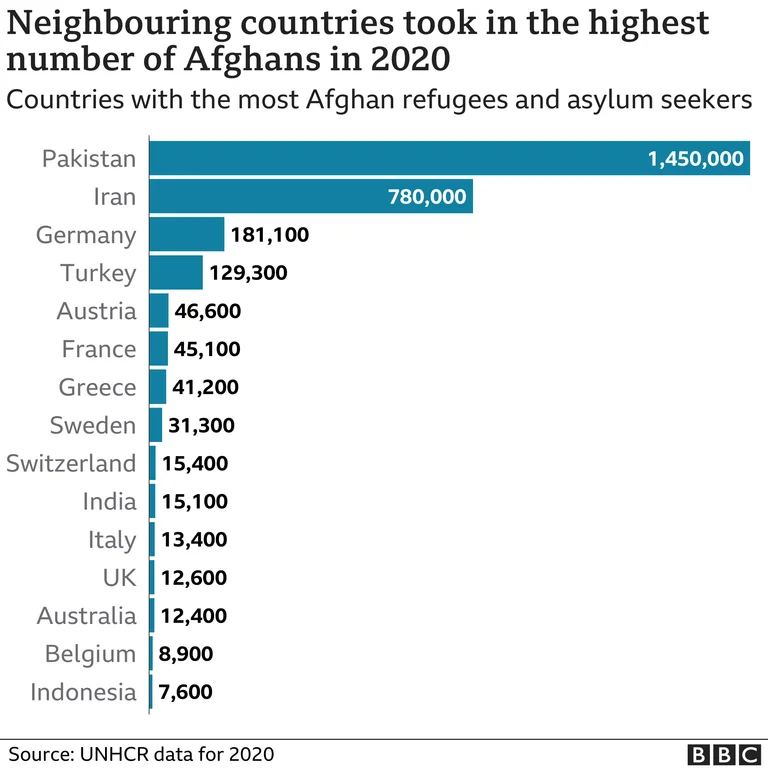
Pakistan actively leads by nearly 1.5 million, followed by Iran at 780, Germany at 181 thousand and Turkey with 129 thousand and 300.
Among the countries planning to take Afghan refugees are Kosovo, Macedonia and Albania. /Periscope