4 hours ago
Serbia Blocks Destroy Local Companies
Periskopi(5 years ago)
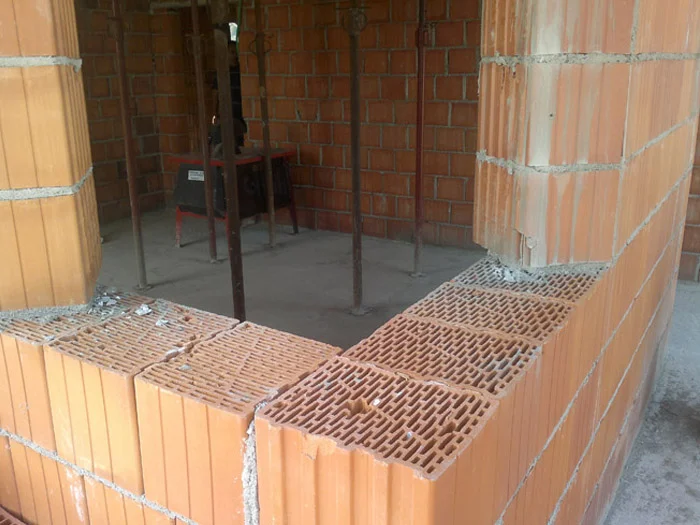
(5 years ago)The removal of the Kosovo Government's tax on the construction clay blocks produced in Serbia will affect the reduction in the production of this product from local companies, the owners of several construction materials companies say. According to them, with the abolition of this measure, blocks of origin from Serbia will enter [...]
Kosovo's government has abolished a 2016 decision on a 0.02-center protection measures for standard 19x19x25s imported by Serbia's state.
Dampingu means importing goods to Kosovo, at a lower export price, than the price comparable to the similar product destined for consumption in normal market conditions in the exporter country.
Repowering this move for local materials producers, in addition to reducing the amount of production, will cut off new investments, says Ilir Dula, deputy director of the company “Rizam Holding” in Prizren.
“Rizam Holding” currently produces 12 million blocks over a year and numbers 75 workers.
“has negative impact because we are being damaged, as Serbia has subsidies from its own state and is likely to produce for the Kosovo market as well. With these measures we have been protected. Now by the removal, it destroys our own investments, and we don't talk about new investments. Of course, the number of blocks will be reduced because the merchant who has material deposits is supplied at lower prices and people buy them at cheaper prices, does not care about the manufacturer”, Dula said.
The price of a construction block in large quantities costs about 22 cents, depending on the production company, while fewer, up to 25 cents.
In addition to reducing the amount of construction blocks production, there is also danger of reducing the number of workers, says Ejup Maloku, owner of the company “Apolonia”.
They force us for these because Serbian companies stop us for sale. As soon as no sale, the storehouses are filled, and we must reduce production. When the product is not sold, it affects workers and salaries”, Maloku told Free Europe Radio.
Even the chairman of the Association of Building Material Producers from Argjila, Mustafe Borovci, at the same time owner of the company “Brickos” in Gjilan, says that with the abolition of this measure, local producers; he puts them in fierce competition with Serbia's producers, who, according to him, are subject to various forms by their state. Borovci says that over five years; how much this move has been in effect, the financial situation in this industry has significantly improved.
According to Borovci, eight companies operate in Kosovo to produce construction blocks with about 1,200 workers.
Serbia's “Block will be cheaper for 0.02 cents on the Kosovo market. This will reflect a lot, because to understand the value of 0.02 cents is about 10 percent of the value of a block. With the fact that a part of Kosovo's market is given to a neighbouring country and risks some of the local bloc producers, I think this is enough indication of the importance of the move remaining in force. I don't know why a neighbouring country's industry should be maintained and jeopardised by the Kosovo industry”, he said.
Meanwhile, Boban Markovic, director of the bloc's company ʹMladost '%skovci, says that when taxes of 2 cents have been imposed years ago, it significantly reduced the volume of sales of their products in Kosovo. The 100 per cent tax then cut off their export to Kosovo, so this company was forced to seek several new markets to replace the Kosovo market.
With the 100 percent tax removal, the 2-cent tax remained and continued to have a demult effect on the sale of our products in the past year. At the moment, tax removal means a lot, but we can't know the exact effect. We will know the effect next year, when we make contracts and plan larger goods for this market, as there are no more administrative barriers to exports“, Markovic tells Radio Free Europe.