 3 hours ago
Report: China worked with O BSH to hide the origin of the coronary
Periskopi(5 years ago)
(5 years ago)The Chinese government used a campaign of influence in response to the World Health Organisation's initial explosion of Ovidius, which caused it to lose its chance to stop the pandemic, has been confirmed in a report. An investigation by The Sunday Times has revealed Beijing's efforts to control the agency's decision making, [...]
An investigation by The Sunday Times has revealed Beijing's efforts to control agency decision making, sabotage investigations, and even install officials.
The report claims that the health body's independence was eroded before the global spread of the deadly virus in early 2020.
The publication claims WHO failed to publicly challenge Chinese dezinforms, delayed proclaiming an international emergency, and encouraged governments to impose travel bans on China to protect its economy.
It has also been suggested that officials agreed to a key <x0 dispute” with the Chinese to ease the investigation into the origin of Covid-19.
This meant removing scientists from the theory that the Coronavirus actually escaped from a Wuhan laboratory instead of coming from wild animals to a wet market in the city in December 2019.
The theory was initially rejected as an extremely impossible “from O BSH, but now experts say there may have been “human error” in the laboratory. Pressure is coming from the United States to see the possible cause.
Since then, David-19 has spread across the globe and has so far killed over 4.3 million people, 130,894 of them in the United Kingdom.
Central to the newspaper's claims is that close ties between the leadership of WHO and China had influenced its ability to challenge the country's showing of the virus.
It has been suggested that China has long been using financial influence over the poorest nations to install its favourite figures in key roles in O BSH, as well as other UN-run organs.
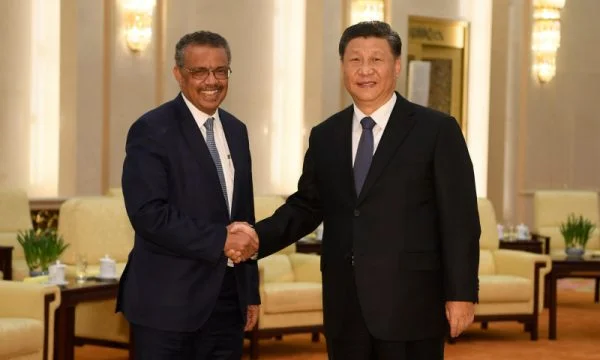
Head of the decision-makers in WHO is the director general of Tedros Adhanom Ghebrreesus, who is an old friend of China. He visited Chinese President Xi Jinping in January 2020, two months before the start of the pandemic.











