3 hours ago
Why are Kosovo citizens reluctant to be vaccinated?
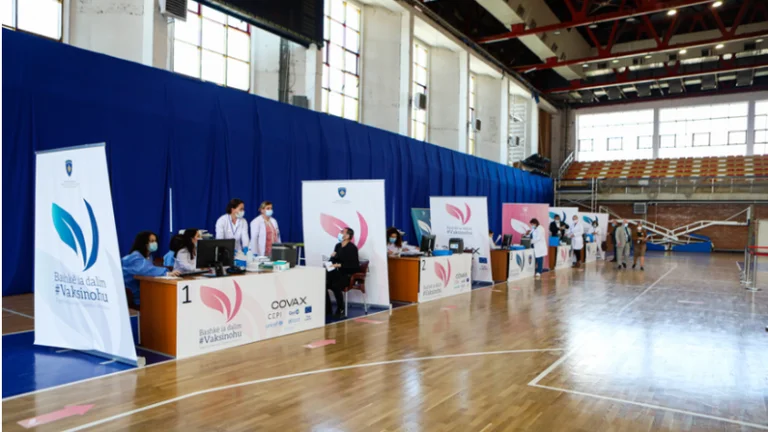
Periskopi(5 years ago)
(5 years ago)More than half of respondents (58.0%) consider the vaccine should be mandatory for all Kosovo citizens. This data was taken from recent research concerning the vaccination of citizens carried out by the Pyper research company in collaboration with the Institute of Psychology at Pristina University “From [...]
Of all respondents, 35.6% of them have claimed to have been infected with COVID-19, while 64.4% have said they have never been infected. Asked whether they have been vaccinated against the virus, more than half (54.8%) have reported that neither have they vaccinated, nor have they set any term for inoculation. This group basically turns out to be part of people who were not infected with COVID-19.
As for persons who have not been vaccinated and have not set the term for inoculation, 39.4% have claimed they plan to vaccinate. In contrast, much of the respondents do not plan to vaccinate (22.7%) or are still undecided as to how to act (37.9%). The main reasons why this group of people does not want or hesitate to vaccinate is fear that vaccines may have long-term side effects (40.2%), the preference not to receive any vaccine generally (18.5%), distrust in the effectiveness of anti vaccines. - CO VID (18.0%) and the perception that they do not need vaccines because they have strong immunity (14.7%).
As for those who will receive the vaccine, preferences to take the Pfizer (63.8%) vaccine turn out to be too high than for the AstraZeneca vaccine (9.1%). Asked how they would act if they could not take the vaccine they prefer, about half of it (47.2%) claimed to receive another vaccine. - CO VID. It also stands to suggest that those who prefer Pfizer vaccine were more willing not to take another vaccine. - CO VID than people who prefer AstraZeneca vaccine.
The data also shows that if your family instructs you not to take the vaccine - CO VID, 64.0% have indicated that they would still take the vaccine. And by contrast, some have claimed that they would not take the vaccine (10.2%) or that they do not know how they would act (25.8%).
The survey in question is conducted through an unprecedented sample in which 1193 people across Kosovo have participated, according to the following sample:
Sex samples
Female (34.28%)
Male (65.72%)
Group - Made Most
18 ʹ25 (30.18%)
26 ʹ 35 (32.44%)
36 ) 45 years old (19.87%)
46 ) 65 years old (16.85%)
66+ years old (0.67%)
Town sample
Decan (1.42%)
Dragash (0.67%)
Ferizaj (6.45%)
Kosovo field (3.10%)
Gjakova (4.95%)
Gjilan (8.21%)
Glade (3.35%)
Hani i Elez (0.34%)
Istog (2.35%)
Yunik (0.17%)
Kacanic (0.92%)
Kamenice (1.51%)
Cline (2.35%)
Kllokot (0.08%)
Lipjan (3.94%)
Malisheve (2.18%)
Mitrovica (5.78%)
Obilic (1.26%)
Pay (6.37%)
Podujevo (4.95%)
Pristina (18.27%)
Prizren (7.46%)
Rahovec (3.10%)
Shtrpce (0.17%)
Increase (1.26%)
Skenderaj (2.60%)
Suhareka (1.59%)
Year (0.84%)
Vushtrri (4.19%)
Zubin Potok (0.08%)
Zvecan (0.08%)