 7 hours ago
Kabashi ø Ramaj of PDK): With improvised decisions in pandemic, government is causing citizens long-term damage
Periskopi(5 years ago)
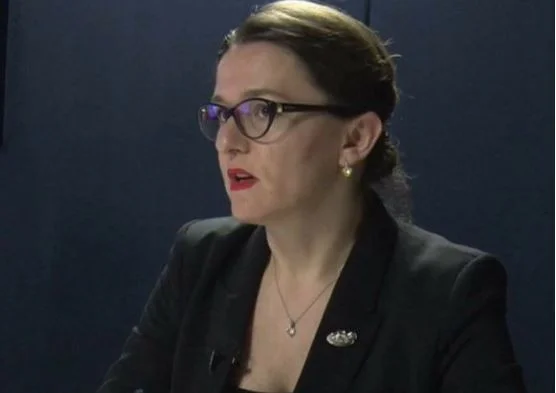
(5 years ago)PDK Headship member Besa Kabashi Ramaj has reacted today to the moves Kosovo Government is making during management with the pandemic. She has written on her Facebook page that the government's improvised decisions are without any literal plans based on adequate preparation and concrete information. Besa [...]
PDK Headship member Besa Kabashi Ramaj has reacted today to the moves Kosovo Government is making during management with the pandemic.
She has written on her Facebook page that the government's improvised decisions are without any literal plans based on adequate preparation and concrete information.
Besa Kabashi Ramaj has said that with these decisions ad-hoc Kosovo citizens are being caused long-term damage to health and schooling.
Besa Kabashi Ramaj's full statement:
In the situation we're in, it's not surprising that they make the decisions of the moment on the counter measures. COVID, or how to start the new school year. These decisions are difficult, because they're essentially missing a real plan that's based on adequate preparation and concrete information, but they're also decisions of “leve”, because there's “the location of the moment”/”pahad” to damage “ “ ”/” And this is the biggest disaster in this middle, the serious and long-term damage that is causing our citizens, risking your health and knowledge, the two key components and the most basic human.
It's unrealistic to expect that the answer to such a serious threat to the health of citizens, to the extent, effective, in the context where we live.
As a principle, to respond effectively to any civilian emergency, and to succeed effective recovery, you must premanage phases that precede emergency response (prohibition, domestication/<x0m2migation”, preparation).
Kosovo still has no efficient system of civil emergency management, not to say there is nothing, for the sake of self-reproaching acts of many of the institutions that react in emergencies, without being spared.
Emergency management system is a complex and very wide system, so it requires work to build properly. But there is also only one link in the still more complex chain security system, the system still unconsolidated in the Republic of Kosovo. And that brings us to a key problem, the fact that security isn't high enough on government priorities, just to look at the seriousness that it deserves.
Security today doesn't look like the security of the past decade. Security today is much more complex and vast, and therefore, addressing human security, in fact, is addressing national security in the long run.
Lack of distance, unfortunately, will always bring us into a recurring and tragic situation, where our institutions remain reacting to the unfortunates, we unable to anticipate or prevent or at least minimize the damage.











