 3 hours ago
Justice sought for children killed during the war, crime investigation strategy has been lacking so far
Periskopi(5 years ago)
(5 years ago)Kosovo is failing to establish justice for children killed during the war. Since the investigation of crimes has gone into the competencies of local institutions, this issue has not been a priority for policymakers. So far 70 people have been sentenced to full-powerful decisions, while monitoring these processes cite two court processes in [...]
According to the Fund for Humanitarian Law in Kosovo, 109 children result missing, while more than 1024 have been killed. Bekim Blakaj says that for all of these, even after two decades, justice has been denied, above all, even local institutions have not worked enough.
“We are not satisfied with the justice offered to the victims so far. It has already been 22 years after the end of the war, and there are all about 70 people who have been sentenced to absolute war crimes acts. However, most of the cases that are in procedure before a special war crimes chamber in Serbia, those crimes have also been against children”, potential Blackaj.
He stresses that within the Kosovo-Serbia dialogue, it is important to establish judicial co-operation between the two countries, since Serbian criminals are being released after two decades.
Blakaj tells of the judicial processes that were conducted in Serbia and the number of persons involved in the massacres where many children were killed.
“Talk about two court processes dealing with the massacre that took place in Podujevo on March 28th 99, where children, women and family elders Bogujevci and Bulqi were killed. There's a number of five people who are convicted of this massacre. There has also been a trial for the mass crime that was carried out on March 26th of the Berisha family in Suhareka, where there have also been a very large number of children killed. Also in that trial, there are convicts and links with a mass murder and the disappearance of troops in the village of Tarnje in Suhareka municipality, it is a crime that has occurred on March 25th of 99. Even in that case, there is only one convicted with an all-powerful act of justice”, Blakaj declares.
When it comes to dawning the fate of children and others who were part of the massacres, the finger is addressing all political parties that have so far been in power.
Kosovo Institute for Justice Director Ehat Miftaraj says of KosovoPress, that for two decades there has been no clear strategy for investigating war crimes.
It's become a little bit, if not it's done nothing so far. In 2014, when international competencies were carried to the Special Prosecutor of Kosovo, we should have at least one database, had to have the number of persons being investigated, information they have received about these persons then be requested by the Kosovo Prosecutorial Council to handle these subjects. With the fact that within the year we have an insignificant number of acts that raised for war crimes, including children, women, the elderly, all the crimes that have occurred in Kosovo, we can say for 21 years when the war ended, either. UNMIK, both EULEX and the institutions of the Republic of Kosovo, have offered full impunity to all those perpetrators of Kosovo”, he said.
According to an IKD report, there are more Albanians convicted of war crimes than Serbs.
“More are convicted of war crimes by Albanians than by Serbs or responsible persons who committed war crimes in Kosovo who were mainly from the state-run instrument of Serb violence, whether by military, police, or civilians who, with the support of Yugoslavia's state-run violence device, have misused and committed crimes in Kosovo”, he adds.
From the Justice Minister Albulen Haxhiu's cabinet, Albulenziu says they have priority in addressing war crimes, preparing concept and collecting facts and evidence for that period.
“In terms of the insufficient number of prosecutors, the Justice Ministry has already allocated the budget for increasing their number, which will be met with 4 other prosecutors, 6 collaborators and 2 translators. We also make it clear that the Ministry of Justice has completed legal changes in the absence of war criminals”, a written answer is said.
On the other hand, the chairman of the Commission for the Protection of Human Rights and Freedoms, Behxhet Shala, says of KosovoPress, that with the current capacity it is impossible to investigate these crimes.
Kosovo has had no post-war capacity to prosecute war crimes, but not to try war crimes either. But even now with this capacity that has even prosecutors, investigators, judges, if there isn't an increase in the number will be spent hundreds of years judging those who committed crimes, but I am convinced that despite the stated political will, I think it's a problem because we have a lack of field professionals”, he says.
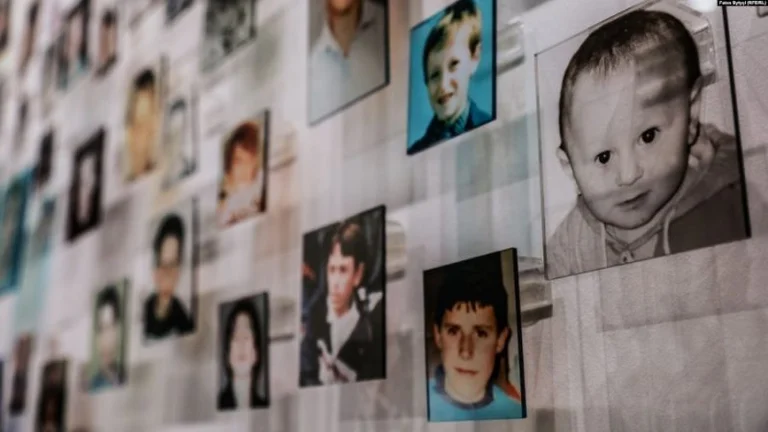
A few months now in the library “Hivzi Sylejmani” are showing clothes, shoes, school bags, toys and short stories that raise memories of over a thousand children killed in Kosovo.











