2 hours ago
The American soldier who tapped the Taliban: They said everything, how they'd kill you.
Periskopi(5 years ago)
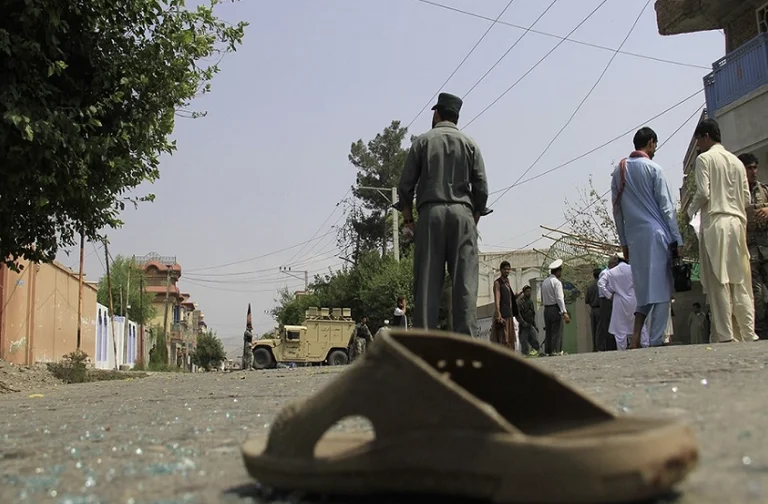
(5 years ago)When people ask me what I was doing in Afghanistan, I tell them I was flying airplanes and listening to the Taliban. My job was to warn the Allied forces of the threat, so most of the time I was trying to identify the Taliban's plans. Before I left, I was warned that I would hear things [...]
We're broadcasting his story overall.
“Brother ... is too cold for jihad”
On rare occasions, they even made me laugh. A winter in northern Afghanistan, where the average height is over 2,000m and the average temperature is below zero, the following discussion took place:
“Log down and place the explosive device somewhere in the curve, where you cannot see. ”
It can wait until morning. ”
No, he can't. Americans can come early, and we have to kill them as much as we can. ”
“I think I'll wait”
No! Go and place a bomb! ”
“Should you?”
“Yes! Go and do it! ”
I don't want to. ”
Brother, why not? We must do jihad! ”
This brother... is too cold for jihad. ”
Yeah, I heard this joke in the middle of planning to kill people I had to protect, but it wasn't less absurd. And he wasn't wrong. Even in our planes, despite jackets and wing heaters, it was really cold for the war.
Only two other people in the world have been trained
About 20 people in the world were trained in 2011. Technically, only two people went through the same training as me. We learned dary and so on, the two main languages spoken in Afghanistan, and then we were given tasks to move on to specialized training for languagemen in Air Force Special Operations Command aircraft (AFSOC). The AFSOC had a dozen species of planes, but I flew exclusively with fighter planes. These planes differ in their specifications, but all of them are cargo planes equipped with different weapons levels. Some may damage the car and nothing more, and others may destroy the building.
In Afghanistan, we used these weapons against people and my job was to help establish people. That's a non-seftimistic definition of warning a threat.
I had 99 combat missions with a total of 600 hours. Perhaps 20 of those missions and 50 of those hours involved real fire fighting. Maybe another 100 hours went to spy on the bad guys by discussing their evil plans or what we called “intelligent and useful”. But the rest of the time they just talked, and I was just spying.
They talked about many common things: lunch plans, rumors in the neighborhood...
Besides joking about jihad, they also talked about many things that you and your neighbors talk about: lunch plans, rumors in the neighborhood, the shameful conditions of the street, the way the weather is not according to their wishes. There were fights, insults, general complaints. They dreamed of the future, made plans for the time when Americans left and enjoyed the idea of taking their place again.
But there was mostly a lot of dirty stuff.
Darius and so are full of jokes and word games, these languages are characterized by many poems, and many words have a double meaning. The Afghans I met would repeat a name or declaration, or anything else, dozens of times to emphasize it. But this repetition intensified during radio conversation. That taught me a man named Kalima. None of us know who Calima was, although it is generally acknowledged that he was not someone important. But someone we don't know who really wanted to talk to. So he called him by his name.
“Kalima! Kalijiimima. Kalima! Calima, Calima, Kalima, Calima. ”
He pronounced his name at least 50 times in every possible combination of accents. I listened all the time, but Calima never answered. Maybe his radio was off.
Maybe he just didn't want to talk to that guy. Maybe he was dead. I probably killed you. I never heard Kalima answer the radio after this.
All that shit was naturally spilled into another great northern talent. No sales meeting, film shoots or locked closet has ever seen such a level of enthusiastic hyper preparation that the Taliban demonstrated money, long and after every battle. Perhaps it was because they were well trained because they had been at war most of their lives. Maybe it was because they sincerely believed in the sanctity of their mission. But the more I listened, the more I realized that this constant boasting was something they had to do to continue the war.
We were attacking, and they were shouting: Brothers, we're winning! This is a glorious day! ”
They would continue to fight an enemy who has little thought about using bombs against individuals? This is not an exaggeration. A couple of days before my 22nd birthday, I saw the warplanes drop 500-pound bombs in the middle of a battle, turning 20 people into dust. As I entered a new landscape, full of craters instead of people, there was peace and I thought we should have killed a lot of them right now. But it wasn't.
When two other attack helicopters arrived, I heard the Taliban chant: “keep firing. They're gonna retire! ” As we continued the attack, they repeated, “Brothers, we are winning! This is a glorious day! ”
And as I watched the six Americans die, it felt like 20 Taliban were enjoying in my ears: <x0... ”
It did not matter whether they were unarmed people or with 30-year-old weapons fighting fighter planes, helicopters and land forces better equipped. It also did not matter that 100 of them died that day. Through all that noise, the sound of bombs, and the bullets that exploded behind them, their friends died, and the Taliban raised their souls, encouraged one another, insisted that not only they would win but that they would defeat us the next time.
It was my first mission in Afghanistan.
I learned different code words
Time passed, and as I realized what the various coded words would say and how to separate voices from the sounds of weapons, I became better at listening. And the Taliban started talking to me more and more. In the spring of 2011, I was on a mission supporting special forces that had recently been ambushed in a village in northern Afghanistan. They sent us to a discovery that sounds impressive, but logistically it means flying in a circle for hours, watching and listening to locals. We encountered some farmers who worked on recently cultivated land. Or so we thought. The field unit was convinced that it was the boys who had been attacked, and that instead of working, they were actually hiding guns.
That's how we shot them. Of the three men on the field, one was left standing. Another died on the spot. The latter blew up a few yards away, supposed to have died from a shock wave that destroyed his internal organs. Until he got up and left. He and his friends returned to ride the man without feet in a wheelchair and took him to a nearby car. They seemed to be trying to escape, but revenge was just as likely, and the field unit was worried it would return with more people or weapons and get revenge. But I could hear them and they didn't seem interested in revenge.
“Nisu, drive! We're coming. Abdul got hit. He's in the car with us.
“Continue! Don't let them shoot us! ”
Yeah, we're coming. We'll save him. ”
They were trying to take their friend to the doctor or someone who could save his life. And then the car slowed down.
No, brother. He's dead. ”
The others were no longer a threat, so we let them go.
Again and again, our murders exceeded them, they lost ground and we won. ”
During my stay in Afghanistan, repeatedly, our murders exceeded them, they lost ground and we won. This was happening so regularly that I began to develop a feeling of deja vu. This feeling is not unusual when you are on a military mission; you see the same people, follow the same schedule, and do the same activities day after day. But I didn't imagine that. We really flew on the same missions, in the same places, releasing the same villages we fought in three years ago. I've heard the same things, the same angry stories and the same planning, often the same people I've heard already.
On another first mission already, we supported a field unit that went to a small village to talk to an elder. Together they planned to build a nearby well. We stood above their heads for several hours and nothing interesting happened. Nobody did anything suspicious on the ground, nobody spoke on the radio about anything that was militant. The meeting was successful, so the unit turned into its helicopters. And then the Taliban attacked.
“Move, they went to the eastern gap. Run, climb! ”
Give me a big machine gun, get ready. He'll be back soon. ”
The field unit had to sit down and wait for the helicopters to be safe to get up.
Hey, combat aircraft crew, where are they, and what are they doing? N... I'm hit! ”
The Taliban knew they had hit the unit leader. Listening to his cry, I heard them celebrating.
You hit him. Go ahead, keep shooting. We can get rid of them even more! ”
“Yes, we will, machine gun works...”
They stopped celebrating because my plane hit them. It was the worst day of my life. The day wasn't so terrible because of shots, screams, or death, until then I had already seen too much. But that day I finally realized what the Taliban were trying to tell me.
Our “Bombas and bullets meant that young boys in their village would now be more likely to join the Taliban. ”
On every mission, they knew I was above their heads and that I followed every word of them. They knew they could be heard boasting about how many Americans could kill, how many RPGs they bought, or when and where they would put an explosive device along the road. But in the middle of what I heard, it turned out that this was not just for fun, so they left the same frustration I felt when they went through another battle, the same place, against another invading force. But unlike me, if they went home, they would be in the other village, not 10,000 miles [10,000 km] away. Those people on the ground may only have been farmers, or they may have been hiding evidence of their attack. In any case, our bombs and bullets meant that young boys in their village would now be more likely to join the Taliban. And those stupid conversations? They were not just empty rhetoric.
These were prophecies that were fulfilled themselves.
Because even though it was too cold for jihad, that explosive device was still set. Even though they had 30-year tinnikov and we had $100 million fighter planes, they still kept fighting. When we left the village, they returned. No matter what we did, where we went or died, they continued to return.
Ten years after my last combat programme in Afghanistan, and after 20 years of fighting with the richest and most advanced army in the world, the Taliban have recovered Afghanistan. Any misunderstanding if this were to happen or how long it could last, the Taliban destroyed Afghan security forces over a week.
What little has been achieved in women's rights, education and poverty will be systematically eradicated. Any illusion of democracy will be lost. While “The peace” can reign, it will occur only after all remaining resistance is overcome or died. That's what the Taliban told us. At least that's what they told me.
They told me about their plans, their hopes and their dreams. They told me exactly how they would achieve those goals and that nothing could stop them. They told me how certain their brothers in the gun were that they would reach those goals even if they were killed. And I'm sure they would do it forever.
They told me they planned to continue killing Americans. They showed me the details of those plans, what weapons they would use, where they would do it, how many Americans hoped to kill.
They often told me those things while they were killing. They told me that, by God's will, the world would be created according to their image. They told me that many others refused to listen, but what I finally realized Afghanistan is theirs, Fritz concluded for Atlantic.