 2 hours ago
Why did Afghans eventually give no resistance to the Taliban?
Periskopi(5 years ago)
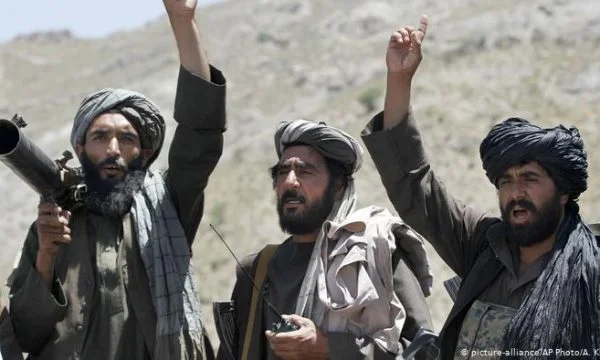
(5 years ago)Just ten days ago, the Taliban did not control any provincial headquarters in Afghanistan. On August 6th, these fierce Islamic militants, far less armed and less numerous than the regular army of the internationally recognised Afghan government, captured the province's first capital, Orange, in the province of Nimrre during the next nine days, [...]
Just ten days ago, the Taliban did not control any provincial headquarters in Afghanistan. On August 6th, these fierce Islamic militants, much less armed and fewer in number than the regular army of the internationally recognised Afghan government, seized the province's first capital, Orange, in the province of Nimrre over the next nine days, the Taliban invaded 26 district centres and later took over the entire country. Kabul simply handed over to the Taliban on Sunday.
We're going to die slowly...”, the Afghan minor publishes the video you see crying
The assessment by the American intelligence community, published by the American media that the Taliban can isolate Kabul within 30 days and invade it within 90, now sounds like a sick joke.
A violent Taliban offensive has forced the entire Afghan Army brigades to surrender en masse, and their military bases, tanks, helicopters and weapons, and other equipment worth hundreds of millions of dollars have ended up in the hands of the Taliban.
In some cities heavy fighting took place in their suburbs for weeks, but the Taliban eventually penetrated the protective lines and then entered with little or no resistance.

The fact that the military, in which the United States has invested 83 billion dollars in weapons, equipment and training in 20 years, fell down in such a way that it seems completely inexplicable.
In any case, yesterday's final defeat has permanently sealed the failed Afghan Army construction project as a modern and independent armed force that can fight in this guerrilla war, as well as an Afghan and functional democratic state.
Since the Barack Obama administration, in which current President Joe Biden was vice president, Washington has had the strategic goal of building a stable military and state institution so that it can withdraw from the country without state collapse and control of the Taliban.
Finally, after the U.S. spent more than $2 trillion in war (according to Brown University), after 2,448 American soldiers and 3,846 civil subcontracials or mercenaries were killed in war, another 1,000 Allied troops and about 66,000 Afghan soldiers were killed, that is exactly what happened.

Why did the Afghan army surrender?
The inexplicable speed in which Afghanistan fell before the Taliban leaves many unanswered questions. Did the Afghan army simply refuse to fight? Was it brought down because of demoralization and inability to fight or because of some secret agreement?
Could this humiliating loss have been avoided, or would it have happened whenever Americans and other Westerners decided to withdraw? Can the US and other Allied armies find a stable compromise position from which, despite the withdrawal of most troops from the country, can they continue such support for the Afghan army that would make it sustainable?
As the New York Times writes in her analysis, the Afghan Army began to break down even before Biden announced in April that he would withdraw all American forces until the 20th anniversary of al-Qaeda's attack on America on September 11, 2001.
Earlier this year, the Afghan army was crippled by a chronic lack of ammunition, a lack of salaries for soldiers, even a lack of food for them, desertion, continuing guerrilla attacks that erode their positions in rural areas, and then a devastating moral decline when America announced its decision to withdraw.
Of course, there are some 50,000 civilians who have lost their lives since the beginning of the war. US state inspectors have long warned that the situation on the battlefield is unstable.

However, the idea that Afghan soldiers did not fight at all is one of the greatest illusions in the interpretation of this historic defeat. For example, according to the Wall Street Journal, a guard in the Emam Sahib County of Kunduz resisted the Taliban attacks for a full two - month period until the soldiers ran out of ammunition and supplies.
There was no food, water or weapons in the last few days,” said soldier Taj Mohammad, 38, for the Wall Street Journal.
The remaining troops eventually fled to the district capital, which also fell several weeks later. And in that city, a police unit picked up a carton of rotten potatoes as a daily meal. Some of the officers on the front lines said they were not paid for six to nine months.
In Kandahar, a Special Forces officer told the Washington Post that the commander had ordered them to surrender.
We want to fight! If we give up, the Taliban will kill us,” this officer responded.
“The border police immediately surrendered, leaving only the Special Forces unit. Not wanting to surrender or fight when they had no chance to win, the members of the unit threw down their weapons, wore civilian clothes, and fled their positions.
I am ashamed of what I did, the officer said, but added that if he had not escaped, his “government would have sold him to the Taliban”.

“We are holding ground in this war,” Police Captain Muhammad Favah Saleh told Mazar's police captain -Share a New York Times journalist in January after sending reinforcements to help protect a police station on the outskirts of town. With some men, everything he could send those ammunition was a box of 200 machine guns. And this is just one example of the catastrophic situation in which Afghan armed and security forces were found.
Some of the soldiers could not return home on vacation for years because their villages were occupied. Part of the weapons the Pentagon supplied the Afghans disappeared from because of corruption and smuggling, and part because they were bought by Taliban. And the loss of Afghan forces from 2001 to the present (about 66,000 killed along with 3,500 foreign allies) has been evidently greater than the losses suffered by the Taliban (about 51,000, according to Browning University estimates).
Subsequent to US, he was not afraid of being caught for corruption. This exposed a traitor in our ranks,”, another Afghan police officer told the Washington Post.

Several police officers from Kandahar declared that corruption was more responsible for the decline of the armed forces than the inability.
And although there were more than 300,000 troops on paper, the Afghan army eventually had only about 50,000 men on the ground, according to American officials. It was this figure, undoubtedly false, that Biden mentioned when he optimisticly refused the possibility of the destruction of the Afghan army.
The Taliban have contributed to the collapse of Afghan forces not only with victory in the field of battle but also through a series of negotiated agreements across villages throughout the country during the last year and a half. Afghan officials described the agreements as a ceasefire, but it was in fact a bribe from the Taliban by government forces who, in turn, not only threw away weapons but also handed them over to the Taliban, an American official and unidentified Afghan officer for the Washington Post said.
These corrupt deals were moved from village to surrounding, and finally negotiated an incredible surrender of a number of provincial capitals, alleged Afghan officers, special forces, police and soldiers who witnessed anonymously to the American newspaper. After the army surrendered to Kunduz last week, the case ended unstopably.
Taliban perpetrators skillfully mixed threats and bribes, along with propaganda and psychological warfare, against both the regular army and the commanders of numerous Afghan tribals. So they took city after city some with a bullet barely fired until they surrounded Kabul and brought President Ashraf Ghan and the remains of the Afghan army destroyed before the finished act.

No region fell as a result of the war, but as a result of a psychological struggle,” said Brigadier General Abbas Tavakoli, commander of Corps 217 Afghan. The public executions of Afghan soldiers and parades with their troops were also part of that psychological struggle.
Thus, corruption is clearly not the only reason for loss. Afghan officers have become more sensitive to the immoral offers of the Taliban just because they realize they have a very poor chance because they can no longer rely on American air support but also on other major forms of support, such as intelligence and logistics.
The decision to withdraw was like a carpet drawn under the feet of our partners. There is no air support, no maintenance crew able to serve equipment has been made by U.S. contractors, now they've disappeared. That means technology that brings victory in battles that we've taught Afghans now useless. Billions of dollars lost property. Instead of a lasting peace, which is gradually being built up, we see an escape. Of course it is. Training a man to fight with his eyes open and then closing his eyes before a war will have such a result, “explained Afghan war veteran Tom Tugedet.

Some Americans now ridicule the alleged lack of will, patriotism or the determination of Afghan troops but take into account, if you know your army is simply not equipped to win the next battle, why fight? It's an individual rational decision to save your life without fighting, a decision that, when multiplied, leads to defeat in war, “kk Professor of International Relations Paul D. Miller in an article on the Dispatch portal.
It's easy to imagine an alternative scenario: if the United States had kept a small military presence -- perhaps slightly larger than what Donald Trump left behind -- they could have kept the Afghan army on the ground indefinitely, giving it time and space to solve the political situation in Kabul, for a new round of negotiations with a better position in relation to the Taliban and for the continuation of reconstruction and development,” added Miller.
“Some only wanted para”, a special Afghan officer said. But others saw the US announcement of full withdrawal as a “gart” that the Taliban would return to power in Afghanistan and therefore wanted to secure their country on the winning side, he added. Both soldiers and officers concluded that it was simply not worth fighting.
“They viewed the document as a dead end of”, the officer said, referring to a withdrawal agreement until May of this year that the Trump administration arrived with the Taliban in Doha last February: “on the day the contract was signed, we saw a change ... just by looking at itself. It's like we were allowed to fail”.











