 3 hours ago
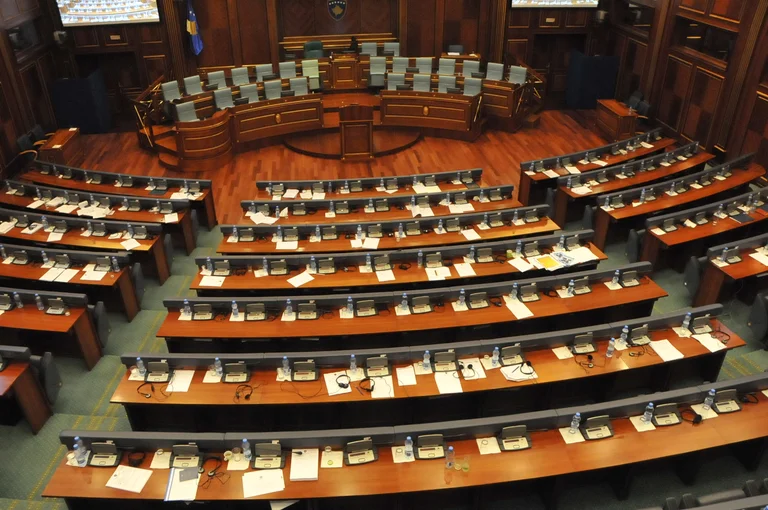
440 times MPs were missing in the Assembly during the spring session
Periskopi(5 years ago)
(5 years ago)The Kosovo Democratic Institute (KDI) has made the expansion of the findings from the Kosovo Parliament's Doing Monitor Report 2021 Anes Haxhiu from the institute, said the Parliament during the spring session has been characterised at a slow pace of work, but with better performance. Haxhiu, there is also [...]
Anessa Haxhiu from this institute has said that the Parliament during the spring session has been characterised at a slow pace of work, but with better performance.
Haxhiu has also indicated that this time the smallest number of sessions held with a total of 23 have been regular, four extraordinary and two solemn.
Haxhiu has further said that problems of hearings during this period have been seen as the absence of MPs.
“A problem is the numerous lack of MPs in sessions. By the end of July, MPs have been missing 440 times. Parliamentary communities have shown the best performance compared to the same period last year”, it has indicated.
“The Assembly has marked the lowest number of laws adopted by them only 7. The government has only prosecuted 27 bills. In the absence of sufficient votes, two international agreements have managed to be voted only after third attempt”.
Haxhiu has also said that this time of the Parliament's work has characterised the dismissal of Bordees.
“Spring Session has characterised the dismissal of boards that have caused differences between the opposition position, with a total of 4 boards” caused by it.
KDI has recommended greater government co-operation with the opposition, as well as the issue of the lack of MPs being revised with penalties.
Full communication:
The Kosovo Democratic Institute (KDI) has held the media conference today in the case of publishing the monitoring and evaluation of Kosovo's Parliament performance during the 2021 spring session, which was marked at a slow pace of work in the legislative process but with better performance in the monitoring role.
Agnes Haxhiu estimated that the Kosovo Assembly at this working session has marked slight growth in the total number of sessions compared to the same period last year of the VII legislature. Since the beginning of this legislature are held 23 sessions (including the constitutional session) of which 16 were regular, four extraordinary and two solemn. In 13 cases, sessions have continued for another day, while three of them have failed to close because of a lack of quorum to give epilogue to four remaining points of these hearings.
“A problem that has conveyed this period of the work of the Parliament similar to the past is the numerous absences of MPs at the session, actions that have undoubtedly affected the prosperity of plenary works. According to data provided by the Parliament, by the end of July MPs have been missing a total of 414 times”, she added.
Even the Parliament's Headship has met twice as often as the same period last year, holding a total of 18 meetings, while parliamentary commissions have increased performance by holding 176 meetings and six public hearings (a rise of 31 meetings and five public hearings more than the 2020 spring session).
Agnes Haxhiu said this session has been characterised with a low number of passed laws (only 7 Sosh) compared to the 10 laws adopted in the same period last year. “Based on the legislative agenda of the Parliament, 29 bills have been processed, out of which seven have been adopted, while another 22 are in the screening procedure. On the other hand, the government has failed to meet its legislative plan by handing over only 27 bills out of 65 that have been ahead of prosecution for the April period August. These delays have directly affected the dynamics of the Parliament's work in their review”, Haxhiu said.
Although reaching quorum was a challenge in the past legislature, even for basic laws requiring simple majority of votes, despite the fact that this legislature has a consolidated majority of quorum continued to be present. The opposition's participation in the vote has turned it into the main challenge of the Parliament, reaching quorum in decision-making at points requiring 2/3 of all MPs, as was the case with the ratification of international agreements. In the absence of enough votes, two international agreements were ratified only after the third attempt, while two other agreements have remained in session voting procedure because the needed consensus among parliamentary groups has not been reached for them.
Haxhiu estimated that another aspect that characterised the spring session was the process of full dismissal of independent institutions' boards and individual dismissals, promoting disagreements between the parliamentary majority and the opposition. Despite these differences, the majority vote Assembly has dismissed the boards of four independent institutions such as: the board of the Kosovo Privatisation Agency (AKP), the board of Kosovo Radio Television (RTK), the board of Independent Council for Kosovo Civil Service (KPMSHCK), the board of the Railways Regulatory Authority (ARH), and a member of the COST board.
The data from the monitoring is about rising performance in the exercise of the monitoring role compared to the same period in the VII legislature. “The mechanism of parliamentary questions as the form of exercise of the supervisory role has used 39 out of 120 deputies through the preview of 108 parliamentary questions to the government cabinet, or 37 questions more than in the same period last year. From the total number of questions posed, 89 of them have received answers from the government cabinet or expressed 82% of them at percentage points. Under the role of supervisory, the Assembly has held two intervals and five parliamentary debates, seven draft resolutions have been proposed, out of which only one has received the support of the Assembly, while another six proposed by the opposition have been rejected. There have also been 31 reports of ministers on the relevant commissions, which compared to the same period last year is the increase of eight more reports. As regards the law enforcement supervisory activities, based on the annual plans of relevant commissions, a total of 11 laws are scheduled for this session. During this period of time, the Assembly has adopted only one report on law enforcement, the one for Trade Society compiled by the Commission for Economics”
Based on findings and assessment regarding the Parliament performance during this parliamentary session, KDI has given these recommendations:
-The parliamentary majority must either build a co-operative approach with the opposition in the function of achieving compatibility for the adoption of international agreements when it is known that by the end of this year, 14 will be considered.
• The issue of MPs' absences would have to be addressed through the new Parliament's Rules, where financial sanctions would be put forward for MPs lacking in work without objective reasons and those who take the wages without staying present all the time while the work lasts.
• The Assembly is placing a priority task at the autumn session completing downloaded boards after the full dismissal of those institutions' boards has made them dysfunctional. This process should be carried out in open, transparent and competitive procedures, as the Constitution and relevant laws in force provide.
• The low number of public hearings must be addressed and improved so that the adopted laws can be applied in practice it is necessary for parliamentary commissions to target inclusion and consultation of a large number of shareholders in the legislative process.
• To complete the process of drafting the new labour regulation by exploiting the current consensus reached among all parliamentary groups. Advancing domestic rules would help improve performance and fulfil the constitutional mandate.











