 3 hours ago
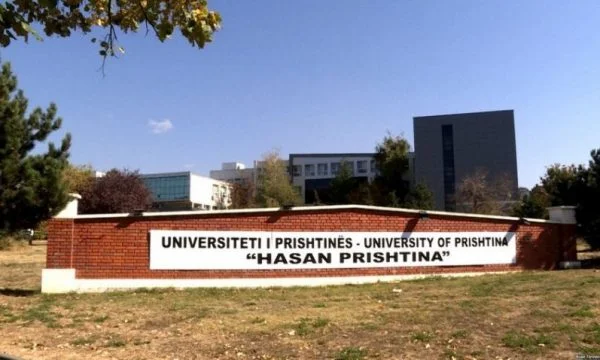
How much will the student get paid for studies at public universities?
Periskopi(5 years ago)
(5 years ago)Removing fees for students at public universities does not directly affect improving the quality of studies, nor does the removal of a student spending burden, say education-related connoisseurs, executive director of the non-governmental organisation “Admore”, Aulone Memeti, says that the most important are education reforms, because according to the removal [...]
The executive director of the nongovernmental organisation “Admovere”, Aulone Memeti, says the most important are reforms in education, as with the removal of the fee only increases the number of functional illiterate students because there are no quality in studies.
The main argument required for university schooling is equality. However, I think the problem has to be clarified differently, maybe I have to profile students from high and elementary school. Maybe not all of us are for university, and we produce functional illiterates with unfortunately degrees and I think the time has come for a government to deal with this differently, not to deal with statements that are too popular, such as this highly free education, because in the end it's not a high fee, but it's more important to make deep reforms in higher education, that's not populist at all, because this of the government's knocking votes. So it's very important that the problem be affected by quality”.
On the other hand, Memeti says there must be a sharing of scholarships with more dignified sums.
When we talk about free higher education there's nothing free as we know somebody has to pay. Who paid me? Citizens, so it's me who focused on the quality of education and also on having scholarships. Two kinds of stock exchanges, scholarships given to distinguished students and scholarships based on the need for students who do not have the conditions to go to university. It's much better with dignified scholarships, and also with prestige doing studies, for days the student who has ended up having some pride. If we keep going on like this, we have to increase the number of students who enroll in universities and continue to become functional illiterates... I think it's very necessary to focus on establishing professional schools, and to develop profile and primary school division and then high school... Many students who conduct studies still do not know the difference between the distinctive and inestimable form of their own name, that is terrible. That's why I think the debate has to turn completely different to”.
Institute Director “EdGard”, Youth Qehaja, says university schooling is welcome, but will not affect improving the student's economic situation.
Qehaja also says that commitment to executive power should be in granting scholarships.
I appreciate that free university schooling is welcomed by anyone involved as a student, it represents a successful policy of the ruling party, I hope that I can contribute to the socio-economic welfare of students”.
On the other hand, he views the support of students at public universities as unfair, not even those in private.
“We don't appreciate that the payment of the semester is an ongoing aidor of studies or student performance because it's relatively small compared with the other costs that make up a student's academic life, including literature, rent payment, and much else. The synergy of this payment is too small compared to anything else. We appreciate that institutional commitment should be in favor of stock exchanges, should encourage the best students for a better performance of studies and for completing them. We're forgetting that a large number of students interrupt studies because they're not motivated to finish studies. We estimate that free payments as social policy should be the same for all without exception of studies in public and private universities, as such we perceive as an injustice to students studying in private and a support to those of the public”.
While, activist in organisation “Research, criticism, action”, Dea Lala, said they are grateful to the Ministry of Education, Science, Technology and innovation for implementing their demand for free studies.
According to the student at the Faculty of Agriculture, they expect additional financial reliefs from MASTI.
“Sic we know free public education is one of Pristina university students' constant demands. Requesting this is a top priority. That request has not been answered by past governments, and we are grateful that the education ministry has responded positively to that request. This is not the last request, we will address the Government for increased quality in education”.
Any assistance like lifting tariffs for literature is a big help, except it's a constitutional right, I think it's because of the financial situation that most students have would have been a huge help”, Lala said of EO.
According to the Ministry's account, seven public universities in Kosovo benefit about 1.6m euros annually from student fees.
The Ministry of Education, Science, Technology and innovation has begun discussions on the removal of student fees at public universities.
The “Ide is for Bachelor and Master-level students to be released from these payments on the case of the semester registration for the first time. In this way all are held equal, and at the same time, they are encouraged to carry out their obligations in time so that they do not waste on unnecessary repetition of semesters. We are analyzing the possibility that even the students of the doctorate will be relieved of some payments that are not in harmony with international and regional practices. When it comes to administrative payments (aplicating the university registration case, issuing double documents, changing studies programme, etc.) they remain because they are part of the category of services that do not have a definite dynamic and may be required several times. We believe that during August the draft revised Administrative Guide will come to public consultation with what occasion we welcome your contribution through the government's platform of public consultations”, MASTI addressed organisation “Study, criticism, action”.











