 an hour ago
Massive cemetery discovered in Permet is thought to be victims of the era of endurism
Periskopi(5 years ago)
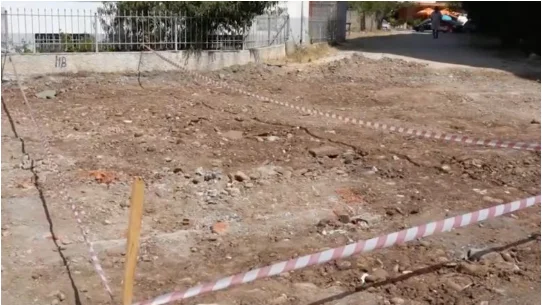
(5 years ago)The discovery of several graves in Permet during road infrastructure works is sparking reactions. The Anti-communist Association of Political Persecutors says it doubts that graves are the missing from the communist dictatorship, as the area is in a former interior ministry department. While Permet's prosecution says it is pending expert assessment [...]
The Anti-communist Association of Political Persecutors says it doubts that graves are the missing from the communist dictatorship, as the area is in a former interior ministry department. While Permeti's prosecution says it is pending the assessment of monuments and legal medicine experts as the graves are allegedly of earlier periods.
Works on road infrastructure in Permet have brought some still unidentified graves from state authorities to light in the city's bottom. The Anti-communist Association of Political Persecutors says he doubts that graves are the missing from the communist dictatorship. The chairman of this association, Nebil Chika, said that in the communist dictatorship the area where the graves were found has been a military department of the Interior Ministry, where archive data and evidence allegedly conducted executions of political opponents.
There are four graves that we've found, actually suspected of witnesses and indicators of being a very large cemetery. So, even the buildings that were built here, some of them were allegedly built on graves. In the Communist dictatorship here there was a military department, from those notorious pursuing departments that followed the enemies of communism, the designers, those who fled, and until 1991 was the largest training center of border soldiers. According to the data we have from the Interior Ministry archive, but also from witnesses, these sort of isolated departments, depending on the Ministry of Internal Affairs and State Security, were used and as execution sites for the regime's opponents, those who were sentenced to death, those who were killed or captured at the border, were buried in these places”, he says of the Voice of America.
While the former political persecuted Bektas Osmani in Permet says time records testify that a Catholic clergyman, Dom Gjergj Gjecaj and family members have been searching for his body in this area.
There was a military department here, and here was shot in 1947 by a Catholic priest, Dom Gjergj Gjecha. Relatives have arrived several times, and when they heard of the discovery of the graves they came in and said that when it opens to look, we don't believe it's here “, he says about the Voice of America.
There must be other graves, Bektas says, from conversations he had with the company's engineers, since the area where the graves were found seems to be the beginning and may be wider.
“Here are not few victims. According to data, there should be even more in the buildings further. So said the company engineer, at the foot there is one grave but there may be others.
Bektas shot his father during the Communist regime, and even after the collapse of communism he failed to find his bones with all his research. He says there are over 100 shot during the communist regime only in the remains that were not found by family members.
“Permeti has more shot off in Albania. There are over 100 shot, 3 of which are Orthodox clergymen and three Bektasian clerics”.
Permet prosecutor Aslan Bajrami told the Voice of America that police and prosecutors were informed by the construction firms on July 7th concerning the discovery of several graves. A preliminary consultation has been held with cultural monuments specialists after allegedly the graves are earlier, Permet's prosecutor said. The assessment of archaeologists and forensic specialists is expected to further the investigation, Mr. Bajrami said.
Meanwhile, Arben Dosti, who has been searching for the remains of his shooting uncle for years, was today with representatives of the persecuted association. He said state structures should co-operate with families looking for the remains of the missing in the communist dictatorship.
“State help needs to be together with the Interior Ministry representatives in searching and finding the remains of our family and relatives. ”
In Albania several thousand families who lost relatives in communist prisons have failed to find their remains, although they have spent about 30 years in the collapse of communism. /Zeri America











