41 minutes ago
Who and what loses because of the failure of Kosovo dialogue- Serbia
Periskopi(5 years ago)
(5 years ago)Before the start of the meeting between Kosovo leaders and Serbia on 19 July in Brussels, European diplomacy chief Josep Borrell said the duration of this meeting would depend on the atmosphere to prevail during the talks. The atmosphere that conveyed the meeting was disclosed during statements by Kosovo and Serbia leaders. It was [...]
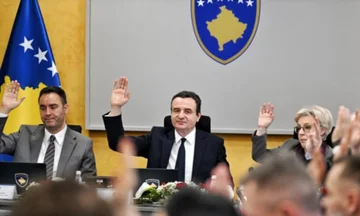
Kosovo Prime Minister Albin Kurti and Serbia's president, Aleksandar Vuciq, have accused each other of lacking the will for the process of dialogue to move forward.
However, despite differing views regarding the future of dialogue, both sides agree on one thing: that dialogue must continue.
What's endangering Serbia?
Serbia, along with Montenegro, is the Western Balkan countries that have advanced mostly in negotiations for membership in the European Union.
However, unlike other states that are in the process of membership negotiations, Serbia has “around its neck” a heavy burden, Chapter 35, which in the overall EU negotiation framework is called “other questions”.
This is a space where member states can, but not necessarily, present one of the issues they consider important and which can be discussed in membership talks in the European bloc. It is also possible for a chapter to remain empty and formally open and close.
In Serbia's case, Chapter 35 is essential because the entire EU has included normalising relations with Kosovo.
This issue is considered a key issue in resolving the Western Balkans issue and normalising the situation after the war ended during the 1990s.
Serbia now and a year without new chapters
In the early years, a positive report by the EU Office for Foreign Policy and Security on Serbia's constructive approach to dialogue was sufficient to present the parties' physical appearance to the EU building so that member states could open chapters.
Since the launch of EU membership negotiations in 2012, Belgrade has opened 18 out of a total of 35 chapters. Two chapters have been closed successfully. However, Serbia for more than a year has not opened a new chapter due to lack of progress in the area of rule of law. However, the rule of law situation was almost identical as before, and the EU allowed the process for membership to continue because of the positive “atosphere” that was said to reign in dialogue.
The latest report on rule of law in Serbia showed a dark view of the situation in this area, and negotiations were blocked. Therefore, attracting from dialogue with Kosovo is not an option for the Serbian side because in the absence of progress in chapters 23 and 24, the only way out for Belgrade is to have a constructive approach in the process of normalising relations with Kosovo.
Serbian President Vuciq, on Monday, 19 July, reiterated the position that Serbia does not intend to give up this process, but warned that the Kosovo side's strategy is that “makes it meaningless (dialog) and ends” talks.
What does Kosovo risk?
In both the dialogue and the process of European integration, Kosovo has an uneven status with other Western Balkan countries. Not only is Serbia challenging Kosovo's independence, but five EU member states (Greece, Romania, Slovakia, Cyprus and Spain) do so. The two European mediators -- Josep Borrell and Miroslav Lajcak -- who participate in the dialogue -- come from states that have not recognised Kosovo (Spanja and Slovakia).
Despite the non-unital approach to Kosovo status, all EU member states consistently reiterate the position that Kosovo also has a European perspective (but, not prospects for full EU membership).
For this reason, Kosovo ranks last, on the list of countries that want to join the EU.
In 2014, EU “negocio” The Stabilisation and Association Agreement (MSA) with Kosovo, given the legal opinion of European experts, under which the EU can enter into trade relations with non-state entities, including the Chinese entity of Hong Kong or Makaon.
Unlike the other SAAs, which have all the countries of the region in the pre-multiple agreement with Kosovo, there are no formulas predicting possible, full EU membership. In addition, SAA signatories are all EU member states along with the state with which the agreement is signed, but in Kosovo's case, the text was signed only by representatives of European institutions (the European Commission and the European Council).
With the SAA's conclusion in 2014, Brussels, practically, there is nothing Kosovo can offer, in the sense of integration, given the current circumstances on status.
visa liberalisation issue
Kosovo is the only state in the region that has no visa liberalisation, and this privilege -- citizens of all other Western Balkan states -- enjoy it from 2009, 2010.
Since 2018, the European Commission has consistently said that Kosovo has met all conditions for visa liberalisation, however, the decision on the political level has so far been impossible due to domestic issues in some member states.
The countries that are hesitant over the issue of liberalisation are also the states that among the first had recognised Kosovo's independence, such as France and the Netherlands.
During the first meeting between European diplomacy chief Josep Borrell and Kosovo Prime Minister Albin Kurti, the meeting held at the end of April, the top European official warned that dialogue has no alternative and that reaching a comprehensive agreement legally binding on normalising relations with Serbia is essential for progress towards the European perspective.
“Without an agreement, this road is blocked”, Borrell warned.
However, under current circumstances, where Kosovo does not have a prospect for membership, but only a “European perspective”, Brussels lacks the power to force authorities in Pristina to be constructive in dialogue, for the sake of European integration.
Visa liberalisation, as the only cart, could become a new kind of blackmail, to force the Government of Kosovo to approach the normalisation process of relations with Serbia differently.
What has changed with Vuchy and Kurt?
During the ten years of negotiations, there has been a tendency to blame, but no charge has been more serious than what took place on 19 July.
Kurti said Vuciqi had “lying”, meanwhile, the Serbian president said Kurti was <x2).
However, no one in public presentations is talking about leaving the process. If that were to happen, it would be giving up the European integration process.
Dialogue between Kosovo and Serbia in EU foreign policy is one of the most important projects. The entire region is surrounded by EU member states and a possible destabilisation in the region would also be reflected in the territories of the European bloc's member states.
Although the region is said to become part of the European bloc in the future, however, there are criteria for accepting new members into the EU.
Therefore, in 2018, during the drafting of the enlargement strategy, it was clearly said that all countries that want to join the EU must first resolve all open issues they have with their neighbours.
The EU enlargement policy must continue to bring stability. Therefore, the EU cannot and will not import bilateral disputes”, the EU enlargement strategy says.