 7 hours ago
Lack of qualified workers endangers businesses in tourist resorts
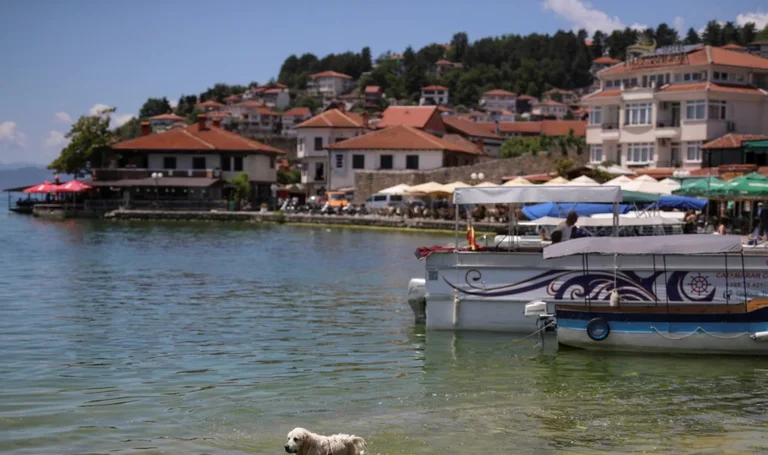
Periskopi(5 years ago)
(5 years ago)Krste Blazeski, owner of a hotel in Struga, is one of many hotelmen facing lack of qualified framework needed for their activities in the gastronomy and hotel sector. The crisis caused by the pandemic COVID-19, the youth's lack of professional education, but also the departure of [...]
The crisis caused by the pandemic COVID-19, young people's interest in professional education, but also the departure of others outside Northern Macedonia have caused many businesses to face a lack of professional workers.
Blazeski manages the hotel “Drim” in Struga, which due to pandemic has halved capacity, due to the decline of foreign tourists.
Now, with the ease of anti measures - CO VID, he expects improvement of the situation, but now faces lack of framework.
We're fighting with fear of this problem. We're missing waiters and cooks. Now we're doing training to provide the necessary number of these workers. We, even before we did training, used all the funds the Government had allocated to help the economy sectors, but some of them again decided to leave the country, find jobs in any of the other states, where they get higher salaries”.
Our “options are limited, prices are low for the services we provide for tourists, so even salaries cannot be like in other countries”, Blajski says.
In spite of this, he says hotelkeepers have paid off all obligations to these workers.
We only work during the summer season, five or six months, but despite being seasonal workers, we pay them for months that are not committed. We can't do anything more, the legal regulation is such, we can't make employment arrangements in the longer term”, Blahevski says.
A serious problem, he also sees it in the absence of young people's interest in enrolling in the professional high school in Ohrid, especially in the direction of tourism.
According to him, there are more registered cities in this school than in Ohrid and Struga, which are tourist cities.
That companies face lack of qualified employees, even North Macedonia's Economic Ode data speak.
“850 percent of companies that have participated in the Economic Ode survey have complained that they can find a proper professional framework for their needs. Although businesses hardly find adequate employees, there is not enough interest in professional education in the country. Companies invest in new frameworks through additional staff training, but it needs young people to be instructed in professional directions, dual and informal education”, says Natasa Janevska, representative of the Economic Ode.
It stresses that the problem with the lack of framework lies also in the fact that the educational system, which is not compatible with the needs of companies.
“One of the analyses conducted by the European Commission for Northern Macedonia shows that 80 per cent of those who finish professional education are unemployed, namely, because there is disharmony between what is required of businesses and what is offered by the Serbian education system”, Janevska says.
Sheriff Miftari, director of the Centre for Professional Education and Training, says the education system offers many opportunities, attractive and hopeful directions, but the problem lies that most students register in traditional directions, such as high school, law, medicine, and very little in professional direction.
The centre's “Mission is to ensure the education and training of qualified framework, which will be operational of the labour market, to contribute to increased youth employment rate, and to improve efficiency and competitiveness in the country”.
“This can be accomplished only if certain prejudices among us are removed. It doesn't mean that if you continue your high-school professional education, tomorrow you won't be able to continue your faculty”, Miftar says.
To promote professional registration, the Northern Macedonia Ministry of Education has shared scholarships for students worth 50 euros a month, while stock exchanges have also started sharing companies to stimulate registration, but also to provide the necessary framework after completing their schooling. / REL











