2 hours ago
IREX: Kosovo, Albania with stable information system, Serbia, Bosnia with poor system

Periskopi(5 years ago)
(5 years ago)IREX, a nonprofit organisation specialising on education and global development issues, has published a new report called Clear Information Barometer (VIBE) for 2021, which focuses on factors that have affected the media and information sector in 13 countries, Europe and Eurasia during the pandemic period. Barometry [...]
The barometer divides countries into 4 categories on the basis of points taken by a panel of experts and field professionals. Countries with lower scores enter the category of those countries with a failed information system, then come in with a weak information system, countries with a stable information system are introduced in the third category, and countries that have taken the most points are introduced into the category of those with a clear information system.
In the Clear Information Barometer, Kosovo has a total of 24 points and is included among countries with relatively clean information, or a stable information system.
According to the report, even though COVID-19 pandemic was the main topic of news in Kosovo, political problems in the country have attracted greater media attention. The media sector reportedly saw an increase in harmful content, including dezinformation and false news regarding coronavirus in particular.
The report also says that Kosovo media provide quality information on a variety of topics and that mainstream media produce fact-based information. However, wrongdoing and hate speech are very present in the media organization. This trend is particularly present in online media that generates news with a single source.
In the Clear Information Barometer Albania results in a total of 22 points and is included among countries with relatively clean information or a stable information system. The report says that while the media environment in the country enjoys an infrastructure that meets needs, fact control and verification of information along with its quality, they are not at the same level, leading to the spread of dezinformation, especially in the media on the internet.
The economic effects of pandemic diminished the advertising market even more, making the media even weaker against economic pressure, which the report says can affect without their independence.
According to Barometer, while Albanian legislation in general guarantees the right to freedom of expression and freedom of the press, journalists are in practice vulnerable and often subject to autosensury. Despite numerous sources of available information, problems with its quality and independence continue, while focusing on some media market hands have intensified further, according to the report.
Despite many information channels, in terms of access and technology, the information offered is rarely quality or independent. Professional and independent news is mainly related to media founded by civil society organisations that are not under political or economic influence.
The results of 13 countries were almost equally divided into two categories: in countries with slightly alive information being introduced (Kosovo, Armenia, Moldova, Albania, Ukraine, Northern Macedonia and Montenegro) and in countries with a weak information system, such as Russia, Georgia, Bosnia and Herzegovina, Belarus, Serbia and Azerbaijan.
Kosovo had the highest overall score of 24 points, followed by Armenia and Moldova, with 23 points each. Azerbaijan had the lowest score of 11 points, placing it at the end of the classification, while Belarus and Serbia received 15 points each.
Active Information Barometer is an annual study that examines how information is produced, spread, consumed, and used. After nearly 20 years of measuring the Media Sustainability Index, non-profit organisation IREX, with the financing of the US Agency for International Development (USAID), developed the Active Information Barometer, with the aim of better identifying and measuring the way information is produced and used today. V The IBE offers a new approach to measuring and diagnose the challenges and possibilities of today's complex information systems.
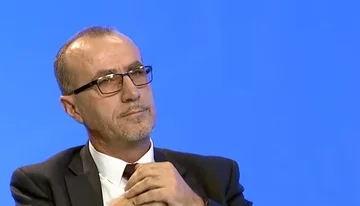
Vice President of the International Organization I REX Alexander Dardeli provided more details about the findings of this report and what are the main problems facing the media in the region.
According to the Clear Information Barometer (VIBE) for 2021, some factors such as the global financial downturn, lack of government sharing and disinformations concerning COVID-19 have significantly affected the media and information sector in 13 countries in Europe and Eurasia.
VIBB is based on four principles on which you evaluate information: The quality of information, the multiple channels it spreads and flows, whether official or not, the consumption of information, as well as what is seen as its transformational action.
The country's classification takes place in four categories under a score system ranging from 0 to 40, based on the progress or noted regregation. Countries with lower scores -- from 0 to 10, enter the category of countries where the information system is not clean or failed -- then ranks countries with a weak information system, with 11 to 20 points. The third category enters countries with relatively clean or sustainable information, which are estimated at 21 to 30 points, while countries that receive the largest number of scores from 31-40 enter the category of countries with clean information systems. / VoA/