 3 hours ago
Hoti: Eternal Whether it be memory of Srebrenica genocide victims
Periskopi(5 years ago)
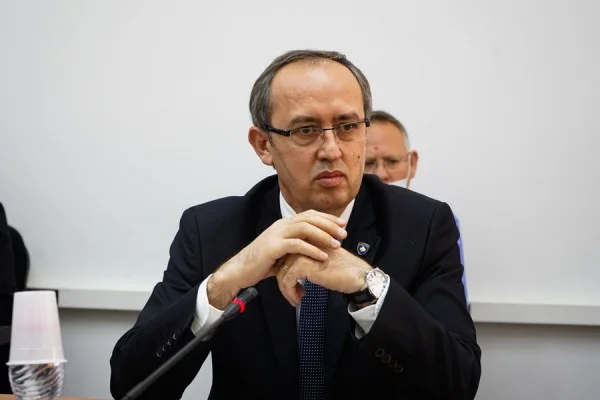
(5 years ago)Former Kosovo Prime Minister, once deputy Democratic League of Kosovo (LDK) Avdullah Hoti has remembered the 26th anniversary of the Srebrenica massacre. He has written the eternal “whether the memory of the victims of the genocide at Srebrenica”. On this 26th anniversary, Kosovo Prime Minister Albin Kurti also wrote. Kurti says they want peace and equality among nations in the Balkans [...]
He has written the eternal “whether the memory of the victims of the genocide at Srebrenica”.
On this 26th anniversary, Kosovo Prime Minister Albin Kurti also wrote.
Kurti says they want peace and equality among nations in the Balkans, but that the foundation of that peace is punishment for criminals.
“We want peace, co-operation, and equality among nations in the Balkans. But the foundation of that peace is the punishment of sinners. It is unthinkable how, even in the 20th century, there are politicians in our region who say those who seek punishment of the guilty for genocide are against dialogue and good neighbourlyity. On the contrary, the only good neighborhood develops by condemning established justice crimes, and the only good dialogue occurs when the parties are not afraid of turning away from crimes. Eternal be the memory of the victims of genocide in Srebrenica, never again the Balkans, nor the world, power and states with genocide ambitions”, Kurti wrote.
Kurti through this text at “facebook” also wrote about the resolution vote for which the genocide in Srebrenica is condemned.
“Today it is the 26th anniversary of the genocide in Srebrenica, exercised by Serbian and Serbian forces over Bosnian victims. Various international institutions, including the European Parliament, have announced July 11th the date of commemoration of Europe's most cruel massacre after the war. II World. Several days ago, the Kosovo Assembly adopted a resolution with which genocide in Srebrenica is condemned and the Government of Kosovo is invited to honour victims and memory of this date. In that resolution point no. 5 writes that the Kosovo Assembly: It aims for all countries in the region to make additional efforts to bring to justice all those responsible for planning and carrying out genocide in Srebrenica. ) No. 6 highlights this resolution: Show the willingness of the Republic of Kosovo and appeal to the states of the region to improve bilateral relations and co-existence among the peoples, with the aim of improving economic and Euro-Atlantic integration of Western Balkan states.”, writes Prime Minister Kurti.
In July 1995, Bosnian Serb forces killed over 8 thousand Muslim men and boys in the Srebrenica enclave, which had been designated a secure “ ” country by the United Nations.
On 9 July 1995, then Serb leader Radovan Karadzic issued a new order to invade Srebrenica. Troops surrounded the enclave and attacked Dutch peacekeepers, taking 30 of them hostage.
A day later, on July 10th, Bosnian Serb soldiers began shelling Srebrenica. Dutch forces threatened the Serbs that there would be NATO air strikes if they did not withdraw by morning.
And the next day, NATO planes bombed Serbian tanks outside Srebrenica. Serbian forces threatened to resume the bombing and kill captured Dutch soldiers. The air strikes were halted, and on the evening of July 11th, Bosnian Serb commander General Ratko Mladic entered Srebrenica.
About 30,000 Muslim refugees gathered around the Dutch peacekeepers' base in Potocari, north of the town of Srebrenica, after Bosnian Serb forces took control of the safe zone.
Mladic tried to calm them down, saying they did not have to be afraid. Bosnian Serb forces put frightened refugees in buses, as if they were leaving. Many of the refugees were evacuated to Kladanj, 50 miles [50 km] away, and from there they began walking to find a safe haven.
The United Nations noted that the majority of refugees who arrived from Srebrenica were women, children and older ones and began to worry about the fate of men.
About 15 thousand Bosnian Muslim soldiers and civilians left Srebrenica at night, trying to reach Muslim-controlled territory. Many died from bombing and sniper strikes.
During the week following the fall of Srebrenica, about 8 thousand men and boys were thought to be killed by Bosnian Serbs and buried in mass graves.
Even after more than two decades of murder, mass graves continue to be found. The identification of the victims is difficult, since the bodies had been torn apart by explosives that were thrown into the grave.
Every year on 11 July, the remains of those identified during the last year are buried at the Potocari Memorial Centre.











