 3 hours ago
Why are so many extreme weather disasters taking place at the same time?
Periskopi(5 years ago)
(5 years ago)Last month, he has seen extreme and often unprecedented weather throughout the Northern Hemisphere. Climate scientists say changes directed by mankind in the atmosphere have made events more likely, but it remains to be discussed how much specific events can be attributed to human activity. However, many [...]
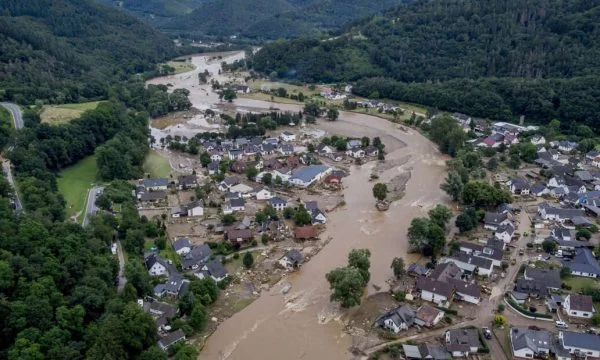
“Moti, climate and water-related risks are increasing in frequency and intensity as a result of climate change,” said Professor Petter Talas, World Meteorology General Secretary (WMO) in a statement issued last week. “Human and economic wages were highlighted with a tragic effect by heavy rainfall and devastating floods and loss of life in Central Europe and China last week. ”
The world has always faced extreme weather events, and before satellites provided warnings, these often caused more loss of life than they do today. Just a few years ago, most meteorologists were reluctant to blame every single event for changes in average global temperatures, but that has changed.
The last heat screens that break the record in North America are clearly linked to global warming,” continued Talas. Twenty-seven climate researchers calculated a wave of heat so extreme that what hit North America in June / July would have been 150 times less likely under the pre-industrial levels of greenhouse gas.
Warmer air can hold more water, and climate change reports have warned greater floods as a result of global anthropogenic warming for decades, so recent disasters in Germany and Henan were not surprising. Dr. Richard Matear from CSIRO of Australia specialises in the atrium of weather events and told the IFLScience that there may be a reason that all are happening together. “The aircraft stream range is very important for controlling large-scale weather systems”, Matear said. A warmer climate can make the aircraft flow more unstable. We have seen that this can be associated with extreme cold events in winter, but it can also create hot summer areas. “
Hot air not only increases the amount of rain that may fall in a small space of time, Matear noted for IFLScience, it could also create preconditions for greater flooding. Hot magic can kill the surface of the soil that usually absorbs water and releases it gradually. The heavy rains of rain follow faster.
However, Matear added, science remains uncertain in this area. Climate science has focused more on averages than extremes, leaving gaps in our knowledge, Matear told IFLScience. The conclusion is that because we have a lack of information, it's not surprising that what we're experiencing is more extreme than we expected. ”
When Dr Erich Fischer of ETH Cyril presented his work in January, he had no idea that his publication would coincide with so many terrible disasters. However, Fischer and colleagues warn events like these will become commonplace. “Society is often surprised by the size with which recent climate extremes exceeded previously monitored records,” starts work. The authors argue that extreme events, floods and heat waves involved will break records with ever larger margins until heat slows down.
Where previous studies have seen how often records are broken, Fischer's work focuses on the border that happens. It reports extreme “record-destructors” ʹ once very rare have become more common and predict future acceleration. These events are guided, not by global temperatures, but by the speed at which warming occurs.
Such unprecedented situations must be taken into account during drafting critical infrastructure, such as thermal power plants, or heat wave readiness strategies,”, the paper warns.
Climate scientists agree that rapid cuts in greenhouse gas emissions are essential to slow the pace of disasters in the future. Beyond this Matear told the IFLScience; “people who are already stressed out for whatever reason are far more likely to be affected by these disasters. So we have to build stability knowing there's even more to come”.











