 7 hours ago
US Embassy in Belgrade: Radosavlevic facing justice for killing the Bytyqi brothers, not taking honor
Periskopi(5 years ago)
(5 years ago)The US Embassy in Belgrade has reacted today with the occasion of giving the Serbian Gendarmerie plaque to the first commander of this police unit in Serbia, Goran Radosavlevq-Guri, on June 30th, as a sign of thanks for co-operation. “Goran Radosavlevq Stone was at the helm of the camp where the remains of three American citizens, Star, Agron [...]
“Goran Radosavlevq Guri was at the helm of the camp, where the remains of three American citizens -- Star, Agron and Mehmet Bytyqi” -- wrote the US Embassy in Serbia in its official Twitter profile.
The American Embassy also suggested that the United States imposed sanctions on Radosavlevovic because of his involvement in the murder of the Bytyqi brothers.
<x)
Radosavlevlik, former Serbian Gendarmerie Commander from 2001 to 2004, reports the REL, received a plaque from Gendarmerie Commander Dejan Lukovic at the central event marking the Day of Gendarmerie in Novi Sad on 30 June 2021.
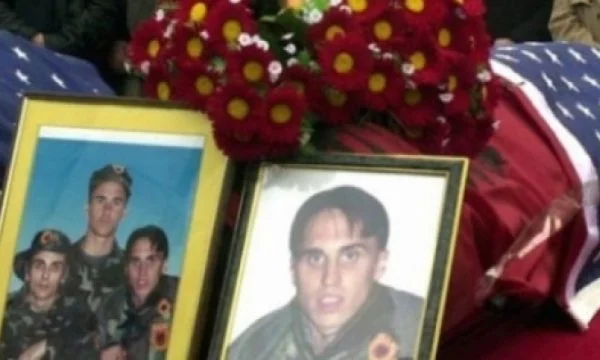
The three Bytyqi brothers in April 1999 traveled from America to Kosovo to join the Kosovo Liberation Army's <x0-Atlantic battalion”, with which they fought until the war in Kosovo ended.
The Bytyqi brothers were arrested on June 23rd 1999 by Serbian police after allegedly accidentally crossing the border with Serbia while helping some of their neighbours from a Roma family, who because of circumstances felt unsure, had asked the brothers to accompany them to the border to cross into Serbia.
After they were arrested, they were charged with illegal border crossings, and the Court for Countercument in Serbia's Prokuple sentenced them to 15 days in prison. But after the 15-day prison sentence, the Bytyqi brothers lost track.
Although one time has not been known for their fate, in 2001 the remains of the Star, Mehmet and Agron have been found in an unmarked tomb near a training police camp in Petrovo Selo, near the town of Kladovo. Their hands were tied to the wire, their eyes wrapped with the headscarf, and each skull had a bullet hole: they were executed on the spot. They were found on a mass cemetery containing the corpses of 67 men and women from Kosovo.
Although 22 years have passed since their deaths, even in spite of the ongoing U.S. effort, which has repeatedly sought to whiteen the case, until these days there is no one convicted of killing the Bytyqi brothers.











