 7 hours ago
DASH releases the report: Government not fully meet minimum standards for elimination of trafficking
Periskopi(5 years ago)
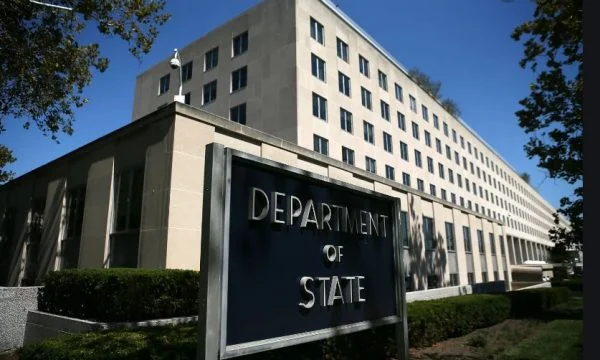
(5 years ago)The State Department released a report Thursday on human trafficking for 2021. This year's report comes at a time when many countries faced COVID-19 pandemic. It is considered the world's most comprehensive source of anti-trafficking government efforts and reflects the American government's commitment to obtaining a [...]
This year's report comes at a time when many countries faced COVID-19 pandemic. It is considered the world's most comprehensive source of anti-trafficking government efforts and reflects the American government's commitment to taking a global role in this key human rights issue and law enforcement.
In a message accompanying the release of the report, US Secretary of State says that “through it calls on governments to join the United States in improving collective efforts to address the overall trafficking of human beings”.
This calls for the expression that “ease the harmful practices and policies that cause socioeconomic or political weaknesses that traffickers often exploit”.
The United States recognises two main forms of trafficking in persons: forced labour or so-called modern slavery, as well as sexual trafficking.
While COVID-19 caused a global economic downturn and increased the number of individuals vulnerable to human trafficking, traffickers adopted their existing tactics to benefit from the unique circumstances of pandemic. Traffickingrs of human beings targeted the increasing number of people unable to adapt or build stability in conditions of worsening economic and social effects. They also exploited situations when examining and identifying the victims became even more difficult.
The report divides countries to three levels -- first, those countries and territories -- whose governments fully comply with the minimum standards required. Level 2 enters countries and territories, whose governments do not fully comply with minimum standards, but are making significant efforts to comply with them. While at the third level, countries that do not fully comply with minimum standards are not making significant efforts for such a thing.
Albania and Kosovo continue to rank in the report at the second level, reports VOA.
Kosovo
The Kosovo government is reportedly not fully meeting the minimum standards for the elimination of trafficking, but is making significant efforts for such a thing. The government demonstrated increased overall efforts compared to the previous reporting period, taking into account the impact of COVID-19 on its anti-traditional capacity, so it remained at level 2. Efforts included adopting new standard procedures to increase the efficiency of prosecutions and assign a trafficking point to all seven key prosecutorial offices. The government increased resources for the protection of victims, including funds for anti-trafficking shelters run by NGOs and by the state. But, however, it says in the report, the government did not meet minimum standards in some key areas. Fewer traffickers were sentenced, and judges continued to impose insufficient sentences on convicted traffickers.
As for prevention efforts in the report, it is said that the government reduced efforts to prevent trafficking, especially due to pandemic.
Trafficking Account
The report says criminal networks exploited victims in domestic sexual trafficking. Many victims of sexual trafficking in Kosovo are girls, although traffickers have also forced women -- from Albania, Moldova, Montenegro, Romania, Serbia and other European countries for sexual trafficking. Women and girls are exploited for sexual trafficking at homes and private apartments, nightclubs and massage parlors. Children from Kosovo, Albania and other neighbouring countries are forced to beg within the country. Traffickers subject Kosovo citizens to sexual trafficking and forced labour across Europe. The marginalised Roma, Ashkali and Egyptian communities are vulnerable to forced begging and sex trafficking. The report also says that even LGBTQI+ community members, migrants, asylum seekers and refugees also experience a higher risk of trafficking.
Prosecution
The report reportedly maintained efforts by law enforcement structures in this direction. But corruption and the co-operation of officials in trafficking crimes reportedly remained a concern, hampering actions of law enforcement structures during the year. The report issues a case in 2016 when prosecutors charged two police officers with two separate cases allegedly abused by the official position and the sexual exploitation of trafficking victims. In 2019 the Pristina Foundation Court released one of the officers.
The report recommends to the Kosovo government that it strongly investigate, prosecute and condemn traffickers, including collaborative officials, and punish the traffickers sentenced to prison, in accordance with established sentences.
Albania
The report says that Albania's government does not fully meet the minimum standards for the elimination of trafficking, but is making considerable efforts to do so. The government demonstrated increased overall efforts, compared to the previous period of reporting, taking into account the impact of pandemic on its anti-trafficking capacity and thus remained at the second level. These efforts included prosecuting more defendants and increasing significant resources for shelters for victims, which are financed by the government.
Prosecution
The report reportedly reduced the efforts of law enforcement structures in this direction. The courts are also said to have condemned no traffickers (while condemning five in 2019). The appeals court reviewed and confirmed the verdicts on three traffickers (just as many in 2019). The government suspended court activity from March until April 2020 due to efforts to ease pandemic when judicial staff proved positive with COVID-19.
Prevention
The report reportedly maintained efforts to prevent trafficking. It continued implementation of the national action plan for the years 2018-2020 and allocated a $4.87m fund for its implementation. The State Committee against Trafficking in Persons, made up of representatives of relevant ministries, monitored and implemented various anti-trafficking efforts.
Trafficking Account
The report says that both over the past five years, human traffickers exploit domestic and foreign victims in Albania, as well as abroad. They exploit Albanian women and children for sexual trafficking and forced labour within the country, especially during the tourist season, becoming false promises such as marriage or job offers. Traffickers usually force children to beg or perform other types of forced labor, such as selling small items. They exploit Albanian children, mainly from Roma and Egyptian communities from different Balkan countries, for seasonal jobs and forced begging. According to some isolated reports, traffickers exploit children through forced labor in the fields of cannabis in Albania, and some traffickers are likely involved in drug trafficking. Traffickers use Albanian victims for sexual trafficking in countries across Europe, especially in Kosovo, Greece, Italy, Belgium, Germany, Switzerland, Northern Macedonia, Norway, the Netherlands and the United Kingdom. Foreign victims from European countries, Gambia and the Philippines are exploited for sexual trafficking and forced labour in Albania. Migrants of the Middle East, Central Asia, and Africa cross Albania to get to Western Europe are vulnerable to trafficking, especially unaccompanied children.
The report recommends the investigation by force, prosecution and condemnation of traffickers, including collaborators.
The report on human trafficking for 2021 reflects the efforts of some 190 countries to sexual trafficking and what is known as modern slavery. Several second-level countries are classified to what is considered the second level under observation, while three countries, such as Libya Somalia and Yemen, are considered special cases.











