 3 hours ago
Also seen at weddings in Serbia, how Ratko Mladic was captured after 14 years of freedom
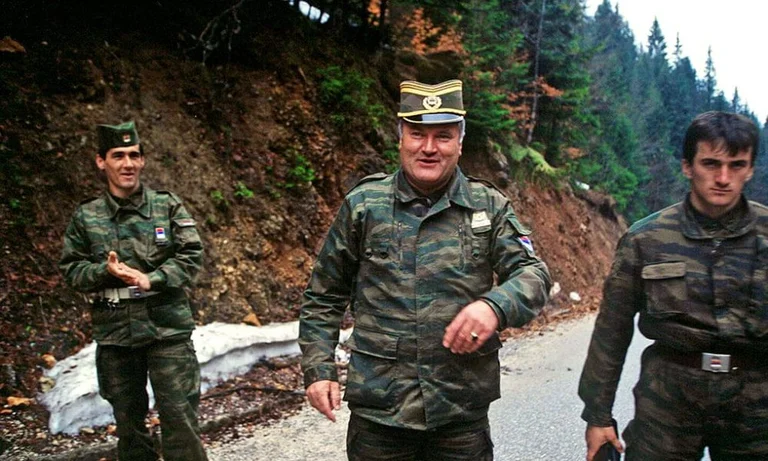
Periskopi(5 years ago)
(5 years ago)The Serbian general was convicted of killing thousands of civilians in Srebrenica and Sarajevo -- the worst atrocities in Europe since the Nazi era. Journalist Julian Borger of The Guardian has told the internal story of how he avoided capture for so long and was finally caught by a mistake [...]
In July 1997, a Yugoslav Army officer named Milan Gunj received an urgent call at his Belgrade home. Something strange was going on at work, and he needed it right away.
Guney's staff sergeant's work may well be described as an army hotelkeeper. He had been raised to his ranks by the cooking of barracks and the food supplier to fairly pleasant tasks to seek a series of closed and preserved holiday houses that the Yugoslav Army had traditionally provided for its senior class. The man who called him this summer day was a soldier who worked on one of these attractions, in a place called Rajac in the forested hills of central Serbia. Some unexpected guests had arrived. The soldier stopped talking on the phone, but he was persistent that Güney come as soon as possible.
A few moments later, he received a second call. This time it was from an assistant to the Yugoslav Chief of General Staff's office, ordering Guney to go immediately to Rajac and deal with his visitors. He would be told what he should know when he arrived. He got into his car and headed south.
Two hours later, he arrived at Rajac after dusk and found a group of about 12 armed men with civilian clothes running around the entrance, and then the reason for all these calls and fatigue came out of the hotel hall: the picture with their breasts and the soft, red face Gunj had seen in a hundred war news reports in Bosnia was General Ratko Mladic.
I was kind of surprised, scared and confused by this turn of events,” recalls Güney. “S first, because this was in my complex and I had no information that this was going to happen. And secondly, I know that Mr. Ratko Mladic has been charged with actions specified by The Hague tribunal. So at that moment in time I was in a panic”
Güney wasn't alone in his sense of terror in the presence of Mladic. The general was accused of the worst atrocities Europe has seen since the Nazi era. The Serbian general had monitored three years of the siege of Sarajevo and the daily tightening of its residents from shelling and sniper fire. He was also there when the Muslim enclave of Srebrenica was occupied by his troops in July 1995. Presenting himself as an instrument of national punishment, he declared the siege of Srebrenica in retaliation against “," for a massacre of Serbs under the Ottoman Empire. Mladic assured Muslim women caught in panic that their loved ones would be safe at the same time as his soldiers were gathering and slaughtering 8,000 men and boys. Guney's house of vacation was the most wanted man in the world.
Mladic and his associates stayed for a month in Rajac before going back in the middle of the night for another military resort, in Stragari, near the town of Kragujevac, a more detailed secret place with sports grounds, swimming pools and table tennis. For the benefit of hunters, the surrounding forests were filled with deer and a species of wild sheep with splendidly curved horns.
General Djordje ♫určin, an old family friend of Mladicić, described a typical day with the fugitive: “We talked, we walked through the woods, played a little chess. We also played cards, table tennis. We did. And then we walked a few more”, says The Guardian, broadcast the Express newspaper.
Such was the determination of the Yugoslav General Staff to keep Mladic calm and hidden that an entire department, the 30th Staff Centre, originally established to oversee the social welfare of former Bosnian Serb officers, was tasked with caring for him. An essential force of personal protection was created.
There was a $5m gift on Mladic's head and it was considered necessary to establish a unit that would protect him from various hunters. This unit was attached to the 30th Centre of Staff in Belgrade and consisted of members of the Republika Srpska Army, in some cases about 100 of them”, said Jovo Djogo, a former centre officer who continued to be Mladic's personal security chief.
Slobodan Milosevic's Yugoslav government firmly denied any responsibility for the mass atrocities committed by the Serbian Army in Bosnia, but the detailed measures taken in Belgrade to have the security and comfort of Mladic after the war are a testimony to close ties with the Serbian leadership. After the war in Bosnia, the Yugoslav Army was a Serb force. And as for the opinion of its commanders, Mladic was one of them.
Along with a frightening guard falanga, Mladic had a driver, his cook, even his personal waiter who would travel with him again to Rajac at the end of the winter of every year. By the time the season ended and the deer hunters had left, the siege would become like a traveling field. During this period, Mladic also spent a considerable time in Belgrade, at his family home on Blagoja Parovía Street on the outskirts of Košutnjak market. He went to restaurants and football matches in the Serbian capital. The video of these days shows a relaxed Mladic playing table tennis in Stragari, insulting after a lost blow and leading family celebrations.
Men and women who helped keep the fugitive general in this pleased bubble saw him as a national hero, enmandling the martial virtues of Serbian legends from other ages. Somehow they managed to convince themselves that within this raw stump of a man was a echo of Serbia's heroic era. But only if their loyalty will ever waver, have pictures of their children been shown a characteristic memory of the high price paid by potential informants.
In his 14 years on the run, Mladic depended on a series of institutions and groups to keep him free: first the Serbian military institution; then a closer collection of his wartime Bosnian Serb lieutenants; and finally, when those concentration rings were destroyed, like layers of a dry onions, his troubled family. But fear was the common factor.
Mladic arose in conflict. He was the wartime child of a Partizan family in the mountains of southern Sarajevo. His father, Ned, was killed in 1945 in a battle with the Nazi-backed Ustasha forces. After a brief lesson as a tennis officer, Mladic attended him in the army, going to officers' school and commanding Yugoslav Army units in Macedonia and Kosovo.
By the time the country was disbanded in 1991, Mladic was a colonel and was sent to fight for the Yugoslav Army against Croat separatist forces. There he gained a reputation for courage that is limited by recklessness by personally leading the demining expeditions, for example. When the war spread to Bosnia next year, Mladic and other Bosnian Serb officers changed their uniforms and marks, transferring official integrity inside Yugoslavia to Republika Srpska. But the mission and final leader remained the same, occupying territory for Serbs under a chain of command that led to President Milosevic in Belgrade.
As the newly cut general, Mladic helped cut and shell his former neighbours in Sarajevo in May 1992, beginning the longest siege of a city in modern war. Three and a half years later, 10,000 city dwellers would have died. Alongside Radovan Karadzic as leader of the Bosnian Serb Army, he led a vicious campaign to break Bosnia and create an ethnically clean Republika Srpska. But General Mladic was never so busy with the war that he could not take the occasional vacation to play cards and relax with his wife and two grown children, Darko and Anna, who kept them safe in Belgrade.
On these nights, no one was allowed to mention politics or war, but that did not prevent the conflict from breaking up the family. Anna was in her early 20s and had fallen in love with a young doctor... a human rights activist who believed his alleged father-in-law was a war criminal. He would marry Anna only if she gave up on her father. Unable to do that or give up her dreams of love and marriage, she took her father's favorite gun from her window after a game night in February 1994 and shot herself.
Mladic could not accept his daughter's suicide. He found comfort in the land in the theories of conspiracy that blamed his enemies. It was a conviction that removed the burden of guilt from his shoulders and deepened a reservoir of hatred against non-Serbs, writes The Guardian, broadcast the Express newspaper.

A view where Mladic was present at a wedding in Serbia while requested.
Serbian generals at the Yugoslav military institution were willing to host Mladic, regardless of what terrible acts he was accused of, but in the wake of the millennium, Serbia itself was undergoing rapid changes. Milosevic had been defeated in Slovenia, Croatia and Bosnia, and then again in 1999 in Kosovo, supposedly the cradle of Serbian civilisation. The dream of a Greater Serbia had collapsed, leaving a poor crowd.
Milosevic's fall from power on October 5, 2000, and his surrender to The Hague next June, Mladic placed him at the top. He had not been a Milosevic worshiper, but the regime had provided him with help and protection, and now she had disappeared. In fact, Mr. Rainsford thought that the night Mr. Milosevic was arrested, he was at his house, in his apartment, and that night he left. When I saw him later and talked to him, he was evidently concerned about his safety and those close to him. And he was determined not to surrender alive. ”
Mladic was good enough to understand that he could no longer rely on the Belgrade government to protect him. He rushed the camp to another base, Krčmar, near Valjevo, a Tito-era shelter located in the village, as beautiful as Stragari, but with stronger fortifications and underground bunkers. From now on, Mladic would be in permanent withdrawal, as the post-Milosevic government in Belgrade repeatedly affirmed its authority over the country's security device. The new government officially declared Mladic's retirement from the military in March 2002, and early next month a decree legalising co-operation with the International Criminal Tribunal for the former Yugoslavia (ICTY) was issued. The era when Moody could live his time on the run in the luxurious army spas was about to end.
The generals would like to tell Mladic that he would have to leave Krčmar, but his initial response was a challenge mixed with fraud. He ordered his bodyguards to resist, causing a serious clash in May 2002, during which the army scuffled the helicopter base in mocking attacks intended to shake him away. On June 1st, Mladic finally prostrated himself to pressure and negotiated safe passage from the base, while the military agreed to secure a convoy of personnel vehicles to take him to the next secret location.
Mladic left behind the comfort of full military protection and launched a steady descent into isolation and privacy. His support network contracted almost overnight from the entire Yugoslav Army to a handful of old friends from the Bosnian war.
The network was run daily by Djogo. This former Bosnian Serb colonel, and Mladic's ardently loyal, was from the same district of Bosnia, and he managed to rent a series of apartments for the general at the tower blocks in New Belgrade. Green fields, forest walks and the life of a privileged military veteran were replaced by concrete realities of urban Serbia.
“After the army said they wouldn't take care of him, he went to Jovo Djogo and a small team of people who took care of him,” said Mladic's lawyer, Milos dealtaljiić. “In New Belgrade, he stayed inside the apartment and he was brought food and paper, and unlike military objects, his family could not come to see him. ”
<x0) Rakiić, the Serbian deputy president who co-ordinated the escapes. “They were supposed to be in large buildings, but they couldn't be on the first floor or on the last floor. He didn't want anything with security guards or security cameras”.
It was an unresolved existence for the first few months, until the network found an apartment on Yuri Gagarin Street in which Mladic felt safe. He was living only a few doors under Karadzic two fugitives from genocide charges in the space of several blocs. Despite the proximity, there is no evidence that both paths were crossed. They couldn't bear each other until this time and investigators believe there was little or no communication between their support networks.
Both men also approached the life of a fugitive with completely different strategies. Karadić hid in plain sight, under the supposed excellent identity of a popular healer. Mladic was weakened and maintained military self-discipline, preventing the use of mobile phones in his apartment and rarely going out, except for an occasional evening walk along the Sava River with Darko, his only surviving child.
Meanwhile, for a small part of the men and women in Mladic's immediate circle, he was a wanted guest. He wanted warm milk and early morning honey before his exercises. He demanded that all his food be fresh, bought on the same day as it consumed them. If he did not eat until the evening, he was thrown away. Fruits and vegetables were to be purchased from a series of stalls in the plots they purchased from a single supplier would cause some suspicion, writes The Guardian, broadcast the Express.
For most of his time on the run, Mladic was careful about his appearance, shaving and fixing him every day. One of his stewards asked him why he was concerned. After all, it wasn't like he was holding business meetings, she said. He replied that the way you look at the moment of your death is the way you would look at eternity of afterlife. He was also precise for teeth but for more common reasons. He feared that a trip to a dentist would endanger his safety.
Such were Mladic's life parameters until March 12th 2003, when the whole country was again plunged into turmoil by sudden violence. Zoran '%inić, Serbia's prime minister, was shot by a sniper as he entered a government building in Belgrade, killed on the orders of a consortium of paramilitary gang leaders and crime bosses. They warned the assassination with a preliminary strike against '%in' plans to destroy organised crime and its readiness to co-operate with The Hague tribunal.
The shooting at '%in '%i' came as an ugly shock to a country's thirst for a country after the years of Milosevic's riots and bloodshed, and there was a response from key security forces his killers could not have predicted. The wave of more than 13,000 arrests that followed came close enough to Mladic's network for him to tighten house rules even further. Until this point, his close defence team had stayed with him, sometimes sleeping on the floor. After the murder of '%i', Mladi changed residences but did not take the bodyguards with him. They were keeping a phone call away, with only a steward at a time who knew his address.
He had a handful of such minds - men and women - who each had a few months of tricks. It became clear to them that if Muhammad revealed doubt, he would fall upon them. They presented themselves with portraits wrapped in gifts from their children or grandchildren, and reminded them that Muhammad's associates knew where they lived and went to school. It was the most ruthless and effective threat imaginable, and Mladic's men used it freely.
When the threats came from Mladic's camp, there were every reason to take them seriously. The men who handed them over had an undisputed history of violence, and there is evidence that people were killed to ensure Mladic's whereabouts remained hidden.
On 5 October 2004, two soldiers -- Dragan Jakovljevicić and Draquen Milovanović -- were found killed at their stations at the barracks in Topracxide, a Belgrade district. The hasty military investigation that followed came to the conclusion that they had clashed in which one of them had shot the other and then committed suicide from repentance.
Amid public unrest, a civil investigative commission was established, but it continued to stop on a wall of hostility by generals. Crime scene destroyed by the military. According to the lawyer from Belgrade, who headed the commission, a military intelligence colonel approached a member of the commission and said: “You have two good girls. Why are you making trouble? “
In the end, the commission concluded that the two soldiers had been shot by a third party, without any conclusion to who that third party was. The victims' parents were convinced that they were killed because they had encountered evidence that Mladic was hiding in the maze of underground tunnels under the barracks.
Topčider is a virtual underground town, dug by the Tito regime in the intestines of a hill in downtown Belgrade, and is where Milosević fled during the 1999 NATO bombing. After the conflict in Bosnia, part of the complex became staff's 30th headquarters until it was officially disbanded on March 2002. Some investigators believe it continued to function outside the law, as a shadow entity, long after that date.
In mid - 2005, Mladiić was back on Yuri Gagarin Street in another apartment and felt more and more shocked. In September of that year, investigators discovered later, a policeman asking routine questions about an incident in the block of the tower knocked on his door, adding Mladici's preventance. In December 2005, he moved to Ljuba, a village near the northern Serbian town of Sremska Mitrovica, where one of his network of defenders held a villa in a village. It seems that it was a desperate move, intended to save both the sound mind of Mladiʹ and the mental health of his fearful and constantly harassed stewards.
The rural intervention was short, perhaps because Ljuba was a very small community in which to hide at a time when Mladic's secret life walls were closing. That month Djogo was arrested along with eight of the general's associates. Mladic suddenly knocked down the network he had supported until then, believing he was compromised. In the middle of the night of February 4th, 2006, he appeared on the outskirts of Belgrade at his brother-in-law's residence, Krsto Jagdiić. He introduced himself only as the “son of Bosnia”. Jagdić assumed there was a brother living in eastern Bosnia and allowed him in, just to find Mladic on his doorstep, carrying a backpack and a double bag, which inside had his two constant friends, a Heckler gun. & Koch and two pistols.
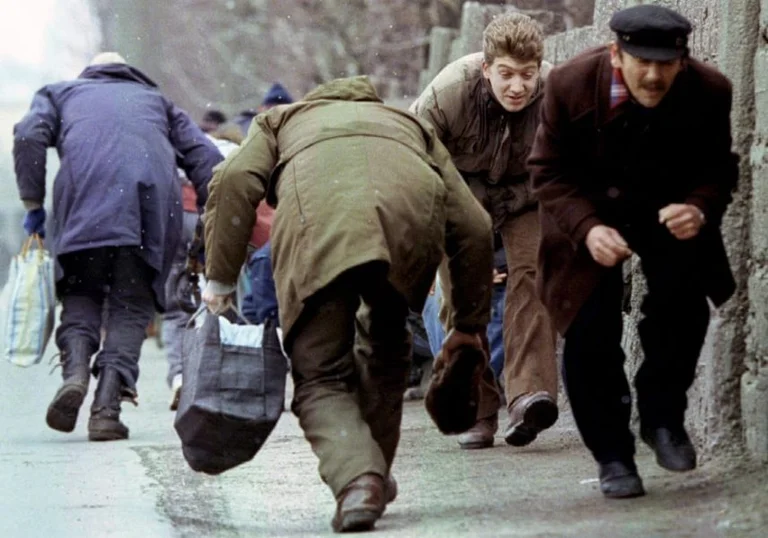
Mladic was clearly nervous and had grown dramatically from the last time Yegdij had seen him, but that did not stop the general from leaving orders. He sent the son of Jegdiić to help sack the driver who had brought him there, and while the teenager was away, Mladij made a comment that meant that the boy's life could be risked if he was donated.
In this case, Mladic's common threat gave an opposite effect. Jagdij's wife was furious and insisted that she would not share her home with a relative who made such threats. Instead, Yegdiić offered to take his unwanted visitor to the home of another brother, Jagdijić, Miroslav, who lived about 30km away, to the village of Mala Moštanica.
Mala Moštanica is a charming settlement not far from the Sava River, its houses are scattered through several square miles of a rolling forest. Miroslav Jagdi's house had three unfinished floors of red brick and concrete balconys without tins. There are cherry trees on the back and a grape vine climbing into a soft improvised cage on the western wall. Its owner returned to his homeland in Macedonia in 2011 to escape the fame of connection with Mladicić, and his home has since deteriorated.
When I visited him in 2013, Miroslav's sister-in-law, Djuka Jagdij, came out of a house a little lower to ask me, hoping that my translator and I, notebooks, would be asset agents from Belgrade. The family had been trying to sell it and leave for years.
Dioka denied that she cooked meals for Mladic and Miroslav and took them across lanes in the evening, insisting that she had heard of the general's presence only years later, following his arrest. She later admitted in our conversation that her husband, Vukas, had told her that Mladic had been hiding in Miroslav's house, but she did not believe her because his mind had become increasingly disorderly.
He started hallucinating and I thought it was just another hallucination. He would have imagined that he saw all kinds of people”, she said. In retrospect, she blamed the pressure of Mladic's presence and the police's harsh tactics for his breakup.
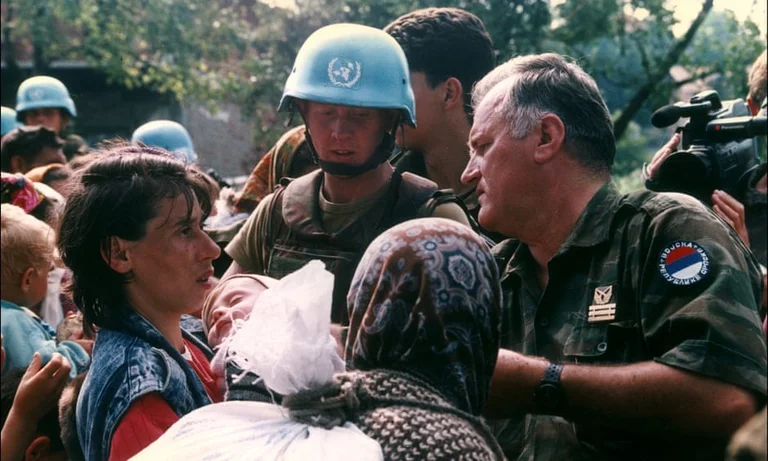
“After they came and took us both and we couldn't warn our 15-year-old son, so he thought we were gone, waiting for us at home himself”, she said, crying in memory. In an incident in April 2006, men from the Security Information Agency (known as BIA) were thrown into a early morning raid in Mala Moštanica. Mladic, looking down under the wooden windowspans of his second floor window, must have thought his time had finally come, just to see the heavily armed agents flocking around the wrong house, belonging to the wrong jugdij gybukin.
A Western investigator who was involved in the hunt said, the 2006 “Mastership was either foolish or intentional, a way to warn Mladic to leave while doing a favour to Carla Del Ponte [the chief war crimes prosecutor in the former Yugoslavia], appearing to be looking for Serb criminals. “
Deception or conspiracy, Moody's gone. He came out of the back door in the woods to return the next morning. A few days later, he left Mala Moicatanica forever.
However, as each month passes and each successive secret country, the climate in Serbia was cooling for Mladic. His military friends were withdrawing from the ranks, the public was forgetting him, worrying more about Serbia's growing isolation and political currents were turning against him. Former deputy of '%inić, Boris Tadic, was elected president in June 2004 by tired voters who saw hope of looking west and towards the European Union, even at the price of handing over Serb fugitives to The Hague. In the summer of 2008, new elections put reformists first in the ministry and at the head of the security device.
The eupporia resulting in the ICTY generated hope that Mladic's capture would follow soon. But optimism was groundless. The general was much more careful and deeply hidden. Even under new management, BIA continued with the old methods, increasing pressure on the Mladic family.
In Serbia, he was considered a hero against genocide. This is his wall in Serbian Repbulic.
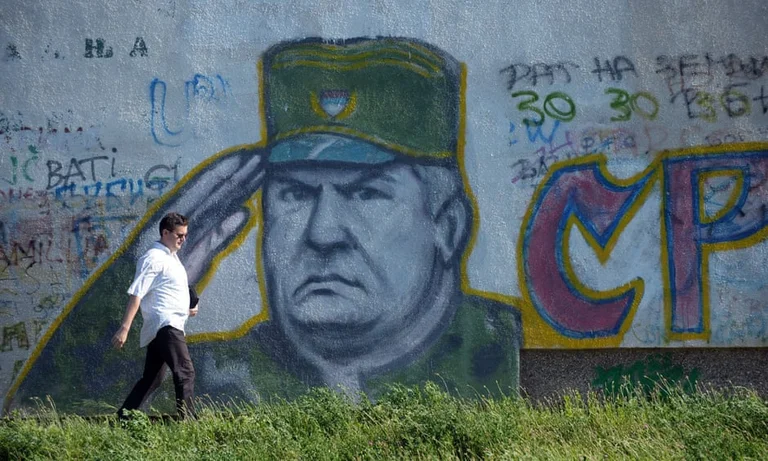
In November 2008, when Mladic's son Darko's computer systems firm tried to sign an 800 thousand-euro business agreement with a Serbian company, future partner factories in the western town of Valjevo were raided and searched for five hours by police, scaring him away from the deal. Darko's wife, Biljana, in her career as software expert in Serbia's telecommunications corporation beginning to suffer, and she sat down from the branch in Belgrade to a periphery post.
None of the pressures worked, and it wasn't even possible to happen sometimes. No family member would betray Mladic, especially since they had a much stronger protector than BIA: Russia's Federal Security Bureau (FSB). In Vladimir Putin's Russia, Putin's former employer's successor, the KGB-based spy agency, received a defensive interest in Mladiić for a variety of reasons. Moscow saw him as a Slavic military hero fired by Western powers trying to deepen their influence in Serbia, an old Russian ally. According to a zero-to-zero approach to world affairs, gaining the West in apprehending Mladic would be Russia's strategic loss. Furthermore, the Russians were nervous about what Mladic could find out about Russian support for Republika Srpska at the height of ethnic cleansing.
BIA operators tracking Mladic's support network found themselves increasingly playing spy against FSB. Every time we approached one of the people in his circle to cooperate with him, they went for a long session at the Russian Embassy and walked out of it with cold feet to talk to us”, recalls Miodrag Rakiić, the man trusted with the leadership of the prosecution during Tadic's presidency. He suspected Russia was making regular payments to the Mladicic family and the district to ease pressure on them to give the general's whereabouts.
Rakiić also felt the unerring presence on the shoulder of the FSB seeking. In 2008, he and a colleague made a preaching trip to The Hague tribunal to discuss the Mladic affair. They travelled on a road with a fence, and Dutch defence officers were taken directly to the underground park of the tribunal's cars. In his return, however, Rakiić received a visit from one of Mladic's supporters to security services, warning him that his family would be in danger if he continued to co-operate with the tribunal. For no doubt about the seriousness of the threat, he recited daily details of Rakic's young son.
Shocked by the threat, Rakiić angrily denied that he was co-operating with the tribunal, insisting he had never been to The Hague. Without a word, the visitor received a piece of paper and drew a diagram of a conference table. He then wrote the name of each person who had attended his meeting in The Hague, showing exactly where each of them were sitting. Rakiić described it as the most shocking moment of his life. From then on, until his cancer death in 2014, he traveled with a two-person protection team.
There was little doubt in his mind that only The FSB had the determination to infiltrate The Hague Tribunal so deeply. So in 2010, Rakiić decided to face the Russians face to face. At an international conference in Moscow, Nikolai Pattrusev, Putin's leader, a former head of FSB, and secretary of the Russian Security Council, stuck.
“I smell a very cold wind in our face coming from east”, Rakiić told Patrol. Russia claimed the defence for Mladic was sanctioned above, clearly implying Putin himself. In the Kremlin, there was no one higher than Patoshev.
I'm gonna talk to my bosses and do what I can”, Patushev offered. Whatever was said or done in Putin's security cabinet, it clearly made a difference. Russian support for the Mladic network fell. Moscow was also leaving the general.
Mladic's life as a fugitive ended in the destroyed house of his cousin Branislav, in a northern Serbian village called Lazarevo. Living in a single room, heated only by a small electric heater, his health suffered a major decline, and Branislav found him lying on the floor a day after a visible blow. But Mladic, even more afraid of capture than of a lonely and scandalous death, refused to be sent to the hospital. Now his isolation was almost total. He did not allow his wife or his son to visit. Despite all these precautions, however, it was the family feeling that finally gave him.
On May 6th, 2008, Darko brought his children, Anastasija and Stefan, to visit the country's cousins in Lazarevo for St George's Day, an important holiday in Serbia. The party was in another cousin's house, but the family made a diversion to Branislav's house, walking in the central courtyard and standing around with no apparent intention for 20 minutes before leaving, in the shock of the police who followed them. Only after Mladic's arrest did it become clear what they were doing.
He was looking out the window. He wasn't well. He couldn't let the kids see it, but he wanted to see them, “said Tadic. The Mladic family then called Lazarevo twice in three days. Why twice? This is what eventually led us to that house”.
At the dawn of May 26, 2011, civil clothing officers from a special interior ministry war crimes unit went to the village to search the homes of cousins.
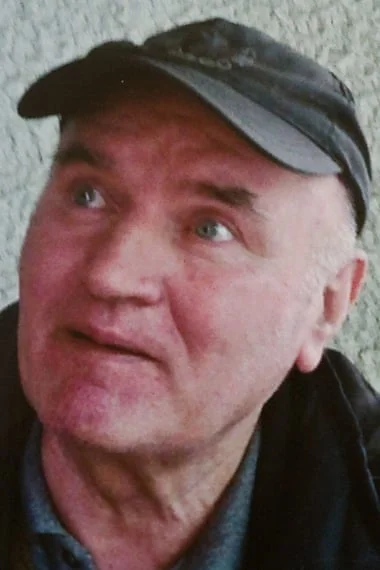
Two of them climbed the stairs to Branislav's house and found a difficult door to open. There was something or someone behind it. When they pushed him, they found a regular room that was clearly occupied. They looked behind the door to see an elder with a black baseball cap standing behind her.
The officers requested his ID, and the old man handed it over. She was named Ratko Mladic on it, but men still couldn't believe it. This bewitched figure did not look at all like the deceitful general they had expected.
They asked for it.
“You have found what you are looking for”, the man responded with a severe light. I'm Ratko Mladic.” It was the end of 14 years on the run.
At one point Mladiić had told his elderly cousin Branislav to shoot him instead of letting him be taken alive. He even showed her the gun she needed to use. But Branislav was out on the morning of his arrest. However, Branislav told khaaljiić, he could never have brought himself to pull the trigger. Not even Mladic, as it turned out, couldn't. Heckler & His Koch was found lying between filthy socks in the lower part of a wardrobe.
President Tadic was doing his exercise this morning when he received the call from Saša Vukadinov, BIA chief who was on an official visit to Washington at the time, but was being kept informed by his office.
 “At that moment, the sick kidnapper was headed from Lazarevo to Belgrade in a police car. Now the president was in a state of enthusiasm. The hunt for Mladic had come to determine his presidency. For more than five years, he had been under pressure from the rest of the world to make this arrest. If this really were the missing general, it would be the climate moment of his career.
He asked if there could be a test of DNA, but it was informed that the results could last for days. “What other evidence did you get?” Tadic wanted to know.
The people who arrested him say it's him,” answered Vukadinov. And we'll send pictures when he gets here. ”
A little over an hour later, the photos were sent, downloaded, printed on a computer, and put in Taddy.
The president took a look at them and immediately declared, “This is Ratko Mladic! ”
He was summoned to Belgrade's special war crimes court to see his long-lossed client. When he entered Mladic's cell, he was shocked. He actually looked blue and his mouth and face were twisted. I wouldn't have met him on the street”, the lawyer remembers. When the old man saw him, he stood up and climbed to him, crying.
The next morning, Rakiić brought the prisoners breakfast and family photos. He was terrified. He asked if I'd kill him. I said: No. I'm just bringing you breakfast, ” said Rakiić. He tried to use the moment of vulnerability to ask the captured fugitive about the networks that helped hide him. The prisoner pulled back: “You got me. What do you want with these people? These people sacrificed themselves for me. Let them go. ”
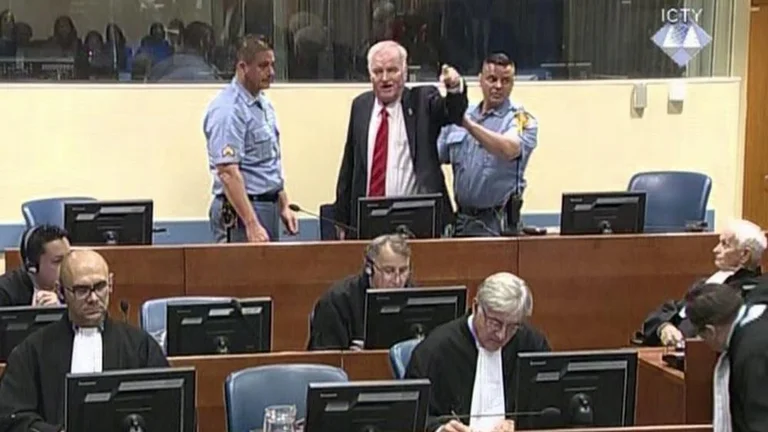
Efforts to prevent Mladic's transfer to The Hague for health reasons failed. Mladic's trial before the International Criminal Tribunal for the former Yugoslavia in The Hague opened in June 2011 and ended today on 8 June 2021. However, a Belgrade judge gave the general his last request on Serbian soil to visit the grave of his daughter, Anna, the fragile young woman who had killed herself seven years earlier with his favorite pistol.
Mladic was given 45 minutes in the grave and his caretakers withdrew at a respectful distance, forming a dark ring around him. You could see his lips moving”, recalls Rakiić. He was talking to her. ”











