 5 hours ago
War started in Yugoslavia thirty years ago. What the End of It Teaches
Periskopi(5 years ago)
(5 years ago)Norbert-Mappes Niediek in 26.06.1991 started the war that destroyed Yugoslavia. Today other multiethnic states and state-like organizations face challenges such as the multiethnic state before its breakup. The map of the former Yugoslavia before the move was worth it? A decade of wars? Escape, expulsion? No, most would say [...]
In 26.06,1991, war broke out that destroyed Yugoslavia. Today other multiethnic states and state-like organizations face challenges such as the multiethnic state before its breakup.
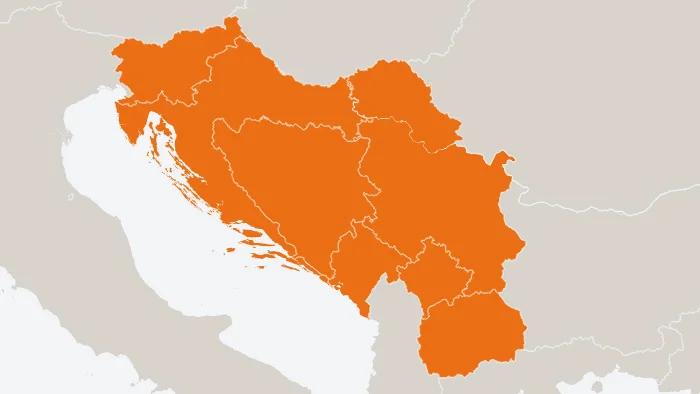
Former Yugoslavia Map Before Rescue
Was it worth it? A decade of wars? Escape, expulsion? No, most citizens of seven successive Yugoslav states would say, as if a collective representative were asked, whether among the elderly, who have experienced that event, or among young people who know nothing other than the Yugoslav post.
But such a collective does not exist. There are no more Yugoslav societies to be represented by him. If you ask people in the former republics today, the answer is very different. In Slovenia alone, memories regarding the multiethnic state for most people are relaxed. It was okay, all right, some things you're sorry about, but it didn't go any more. This is the most popular formula there. But was it really okay?
Among the Kosovo Albanians, there are almost no <x0-Nostalgic” Yugoslavia. The memory of the last decade of the state is extremely traumatic. There was no war in Kosovo until 1999, but police terror. On the other hand, Yugoslavia's collapse is openly mourned by many contemporaries in Serbia, northern Macedonia, Bosnia and Herzegovina, Montenegro and even in Croatia, though not open or behind the third glass of beer.
In a wide survey, conducted more than ten years after independence and war, most named Josip Brozin” Tito”, Yugoslavia's top controversial figure, as the greatest Croat of all time. The effort to replace that country with Croatia's 1991 independence father, Franjo Tudjman, did not really find admission. Stipe Mesic, the country's second president after independence, had proudly titled his book of memory: “How we destroyed it in Yugoslavia”. This was not well received. In the second edition the same work was called: “How Yugoslavia” was destroyed.
Diversity Was Not the Problem
The country has long held the plague. The cultural diversity of residents was not the problem of other nations, from India to Switzerland to immigration countries like the United States, manage to live on much larger differences. The problem is how to deal with them.
In the first “Yugoslavia” of the period between the two world wars (1918-1941) the slogan was that national, cognitive or cultural differences be ignored as much. The opposite happened of what you wanted: since differences should not be a problem, the relative majority -- the Serb -- were more strongly imposed.
Consideration by Communists
After the attack by Nazi Germany and later the 1940s civil war with strong ethnic connotations, the Communists vowed not to repeat the old mistake. In “, the second Yugoslavia” (1943-1991) was knowingly taken into account of the old national identities, and the new ones were stimulated, such as those of Macedonians, Bosniaks and finally Roma.
As long as the Soviet-based national identity was understood as folklore and the only responsible for politics was the united communist party, this system functioned. But when communism became increasingly controversial, when parliamentary democracy proved superior at the world level, and when the myth of the partisan war finally waned, national affiliations became increasingly political.
Josip Broz Tito, former Yugoslav president
Ethnic Persistence Instead of Democracy
Positions, jobs, financial resources, highways, locations of production companies for everything in the socialist Yugoslavia were respected “the ethnic key”. Many decisions were prohibited because one nationality was always stronger than the other. Everything was aimed at the optical balance. But balance was able to be maintained only as inconsistent. When things began to slip, as in Croatia in the early 1970s, Tito intervened and brought in those who broke the calm.
The potential descendants of Tito, the great arbitrator, had to have been a reached intersection of ancestors from all Yugoslav nationalities. One did not. In the presidium of eight members, who had to take over this role, the decisions in large numbers were formally possible. But when a nation was passed by by others, the existence of the state was always immediately questioned. When Slobodan Milosevic, Serbia's “reform president”, as originally considered, ignored his Serbian “blockade” of the necessary care and consideration, the state really came to an end.
The Logical Breakup
Jugo-nostalgics again set up the multiethnic state model today as an example; they say the country has been destroyed either by hostile foreign countries or by malicious politicians. But a society that distributes its wealth and power according to ethnic quotas should not be surprised when conflicts between ethnic groups dominate everything. Separation was at the end logical consequence. Miserable people, who led the project to a bloody end, as elsewhere in the world, were not absent even in Yugoslavia.
That doesn't mean Yugoslavia never had a chance. In the late 1960 ' s, when there was almost a spirit of optimism everywhere in the world, young people also fought for liberal values in Yugoslavia. Most were dealt mainly with civic equality, not national equality. But the old guard in power, with Tito at the helm, didn't want to dare more democracy. Instead, she decided to balance ethnic balance even harder than before. Everyone finally felt exploited. And all right.
Yugoslavia will never again exist. But other multiethnic countries and organisations similar to the state form are facing challenges similar to those of the multiethnic state before its collapse. Enough reason to avoid any show of arrogance by looking back.
Norbert Mapries-Nideiek has been working for 30 years as a correspondent for Southeast Europe for German media. His new book “Qill divided Europe. Why the West does not understand the East” was published on February 15, 2021 by the Christoph Links publishing house, Berlin.











