 3 hours ago
VV Commissioner: What's the importance of the Information and Private Agency?
Periskopi(5 years ago)
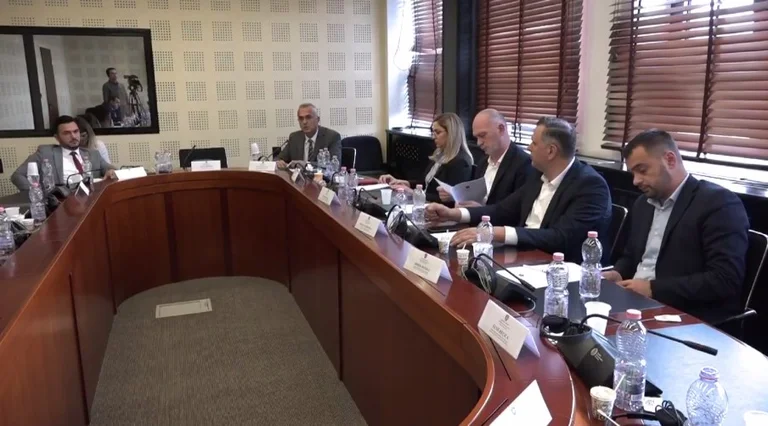
(5 years ago)The Security Commission has just voted for Enver Bujar, Crenare Sogojevo Dermaku and Endon Miftari to be sent to the plenary session of the Kosovo Assembly for voting for the position of the Commissioner for Information and Private. However, the process of selecting this commissioner was criticised by opposition and Civil Society Organisations because of what they say [...]
However, the process of selecting this commissioner was criticised by the opposition and Civil Society Organisations, due to what they say, disrespecting previous practices and not meeting the criteria on the part of candidates.
What, though, is the importance of the Information and Private Agency, and why should a person of integrity be at its helm?
The Information and Private Agency (AIP) is an independent agency responsible for overseeing law enforcement no. 06/L-081 for access to Public Documents and Law No. 06/L-082 for the Protection of Personal Data in order to protect the fundamental rights and freedoms of the French person, in terms of personal data processing, as well as guaranteeing access to public documents. The agency acts with full independence in fulfilling the tasks and exercise of competencies, in accordance with this law and responds to the Kosovo Republic Assembly. In fulfillment of its duties and the exercise of its competencies, it acts free from external influence, direct or otherwise, and does not require or receive direction from anyone.
The AIP's tasks and competencies are defined in the two laws provisions it is responsible for monitoring.
Based on the Law on Access to Public Documents, the Agency is competent for the enterprise and pronunciation of the previous measures under this law, as well as for the promotion and training of public institutions in the implementation of this law. In addition to other tasks and responsibilities envisioned by this law and other laws, the Agency also has duties and responsibilities like:
to monitor and report on the compliance and respect of this Law from public institutions; to recommend changes and reforms of general nature, but also specific, run by a special institution regarding the right to access public documents; to co-operate with institutions responsible for organising and maintaining training for public officials for access to public documents and effective implementation of this law; to publish the obligations of public institutions that stem from this law and the rights of each person envisioned by this law; to take and pronounce any measures envisioned by this law for effective implementation.
The agency is also competent to initiate the procedure for declassifying classified documents under the relevant law for file classification.
On the basis of the Law on the Protection of Data and Without violating other tasks defined under this law, the Agency has duties and responsibilities like: oversees the implementation of this law; provides public and private advice on data protection; informing the public about issues and developments in the field of data protection; promoting and supporting and supporting fundamental rights for protection of personal data; decides on complaints of the subject of data; advises Parliament, Government, institutions and other internal organs on legislative measures and administrative provisions in the protection of rights and freedoms for individuals as long as it meets inspections; implementation of the case, and reviews of the case; and other claims of the mail, such as in the case of personal payment of individual claims, and specific claims can not be met by the criteria.
The agency co-operates with state, international and European Union bodies on issues considered important for access to public documents and personal data protection.
That's what PAN did: VV votes commissioner who was nominated by British Commission
Otherwise, the people who have voted for sending these names were members of Vetevendosje to the commission, Enver Dugolli, Arber Rexhaj, Mefail Bajqinovci, Albanian Mehmeti Selimi, Fatmir Humolli and community representative Erdjan Galushi, as mostly provided for Enver Bujar.
In the meantime, the repetition of this contest has been requested by civil society.
According to them, there have been irregularities in procedures followed in the fourth process of selecting the Commissioner for Information and Privateness.
The “in the undersigned organisations and activists expresses our deep concern with irregularities and procedures followed in the fourth process of selecting the Commissioner for Information and Private”, the civil society's response reported.
According to them, Kosovo's Defence and Security Commission interviewing panel, consisting of deputies Fatmir Humolli, Albanian Mehmeti Selimi, Mefail Bajqinovci, Arber Rexaj and Enver Dugolli from the Vetevendosje Movement, Srdjan Galushi and the Kosovo Roma Progressive Movement and Slavko Simiić from the Serbian List, have interviewed candidates on June 7th 2021, without the presence of commission members from the opposition.
According to civil society, the process of verifying submitted documentation, interviewing and positionomi have not guaranteed merit assessment of candidates interviewed.
“For this position, Edon Miftar, Enver Bujar, Crenar Kupiska, Crenare Sogoeva Dermaku, Sadik Kryeziu and Xhemsit Brajshori. Three of them were interviewed, respectively, Edon Miftar, Enver Bujar and Crenare Sogojevo Dermaku. A few minutes before the interview, Sadik Kryeziu withdrew. Present MPs mostly praised candidate Enver Bujar, with 69 points respectively, candidate Crenare Sogojevo Dermaku with 63 points and candidate Edon Miftar with 61.5 points. From direct monitoring of this process, we estimate that the process of verifying the submitted documentation, interviewing and position after the interview has not guaranteed merit assessment of the candidates interviewed, for some reasons”, is said further in response.
Criticism they also had for the candidate who received the most points from the assessment commission. According to the same civil society, it has not delivered the same biographies from what has delivered it in preliminary processes.
The first “, from the biography analysis of all candidates, we have noted that the biography delivered into this process by Mr. Brad is not the same as the biographies he has delivered in previous processes on several points. According to the biography delivered in 2019 in the Kosovo Assembly, Mr. Bujar had stated that he worked as the head of the unit for narcotics investigation in 2006-2019, in the biography handed over in 2020 he had claimed to have worked in that position in the 2009-2020 period, while in the biography handed out in 2021 he has declared working in that position in 2009-2019. Also, the record of biographies is disproportional in study dates. According to the biography handed over the first and second time, he has conducted the Faculty for Political Science and Public Administration at the “College. Fame” for two years (2010-2012) while according to the third-time record, he has performed the faculty for three years in another period of time (2007-2010). He has also changed the dates in which he conducted studies in the field of engineering, including the name of the educational institution. We express our concern that the recruiting panel has not verified this information”, declared by civil society.
<x) The questions were compiled without the presence of monitors from civil society, unlike past processes when we were invited to be part of the whole process. Similarly, MPs have recently made the assessment transparently, announcing the points of appreciation after each interview and offering justification for the assessment made. This time, MPs have anonymously praised candidates by not giving rationale for the points given. We remember that the highest rated candidate from the Commission this time ran even in all past processes, but British experts who had helped the recruiting process in 2019 and 2020 had not assessed it with passing points and recommended it for the position of Commissioner for Information and Private”, said in the civil society response.
The opposition's absence in the interview panel has also been of concern to them.
“We also refocus our concern about the composition of the interview pane. With the Vetevendosje Movement proposal, the panel is made up of all members of the Commission and not only one representative of political parties, such as parliamentary practice so far. While the ruling parties have failed to reach consensus to keep the opposition parties involved, at the same time we consider that the opposition has failed to fulfill its commitment to represent the interests of its voters by participating in the Assembly and by making its contribution”, it is said in response.











