9 minutes ago
Seven years from early parliamentary elections in Kosovo
Periskopi(5 years ago)
(5 years ago)Today, seven years are filled with holding early parliamentary elections in Kosovo, after the breakup of the then Assembly, which had been dysfunctional for several months because the government had lost the support of the majority. It was May 7, 2014, when the ruling coalition PDK-AKR collapsed at the initiative of then Prime Minister Hashim Thaci, [...]
It was May 7, 2014, when the ruling coalition The PDK-AKR collapsed at the initiative of then-Prime Minister Hashim Thaci, without the will of AKR President Behxhet Pacolli.
It was then the country's president, Atifete Jahjaga, who had waited at the meeting for Thaci, Pacolli, but also the then opposition leader, Isa Mustafa, where it was decided to disperse the Parliament. The motion was demanded by 57 deputies from the PDK and the LDK, as a result of a preliminary agreement between these two parties.
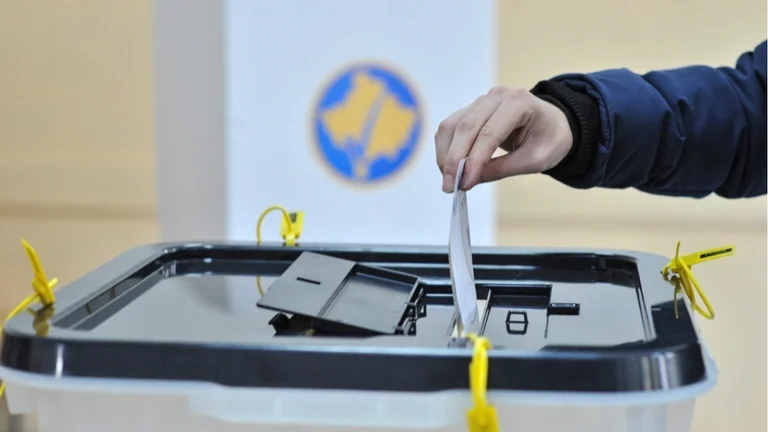
The Kosovo Assembly was distributed on May 7th 2014, with 90 votes per, 4 against and 3 abstentions. This breakup forced the country to go to early parliamentary elections June 8, 2014, even though it was not the first time the country went to early elections.
The 2014 elections were held under the old election law, as despite the reform then launched, political subject leaders failed to comply with the new election law.
In these elections, 30 political subjects competed, including 18 parties, 7 civic initiatives, 1 independent candidate and 4 coalitions. The Democratic Party of Kosovo (PDK) along with the coalition parties got 222.181 votes or 31.38 %, the Democratic League of Kosovo (LDK), 184.596 votes, or 25.24 %, Vetevendosje Movement 99.397 votes or 13.59%, Alliance for the Future of Kosovo (AAK) 69.793 votes, or 9.54%, Serbian List 38.199 or 5.22% votes, and the Initiative for Kosovo 37.681 or 5.1.5%.
Immediately after the elections, the LDK, Vetevendosje, AAK and Initiative, known on the political scene as V LAN, they were barricaded against The PDK, unanimously declaring they do not co-govern with the PDK. They had even formed a coalition where the majority were and tried to create Government with Ramush Haradinaj candidate for prime minister.
However, Kosovo's Constitutional Court had seen the act of non-profit parties unconstitutional and unable to take the leadership of the Government to them. According to this court, the mandate to create Government belongs to the winning election party, which in this case was the PDK.
The 2014 political stalemate lasted for six months, until the LDK had decided to remove “L” to “VLAN”, leaving him alone as VAN.
In December of that year, Isa Mustafa had accepted Hashim Thaci's offer, then the PDK chairman. The deal provided for Isa Mustaf as prime minister and Hashim Thaci to the republic after the end of Atifete Jahjaga's mandate.
The LDK-PDK government was voted in December 2014, where Isa Mustafa was voted for prime minister, and Hashim Thaci was originally his deputy and foreign minister until his time for the presidency came.